





Dreame is a Chinese consumer-tech company known for robot vacuums, cordless cleaners, and premium smart home appliances. It began as a marginal supplier within the Xiaomi ecosystem before building its own brand. Over the past two years, Dreame has drawn attention for an unusually aggressive expansion strategy – pushing simultaneously into smartphones, electric vehicles, and even futuristic robotics.
Yu Hao (俞浩), Dreame’s founder, was born in 1987. A physics prodigy admitted to Tsinghua University’s aerospace program, he abandoned academia for engineering and founded Dreame in 2017. He is famous for his explosive thinking and some call him a madman, while some say “he is exactly the kind of maverick entrepreneur China needs”.
Recently, Yu sat down with Chinese tech outlet LatePost for an extraordinary 6.5-hour interview. It was full of sharp, provocative statements – dismissing many industry peers and declaring Dreame’s goal to become the greatest company in human history with 100 trillion market cap.
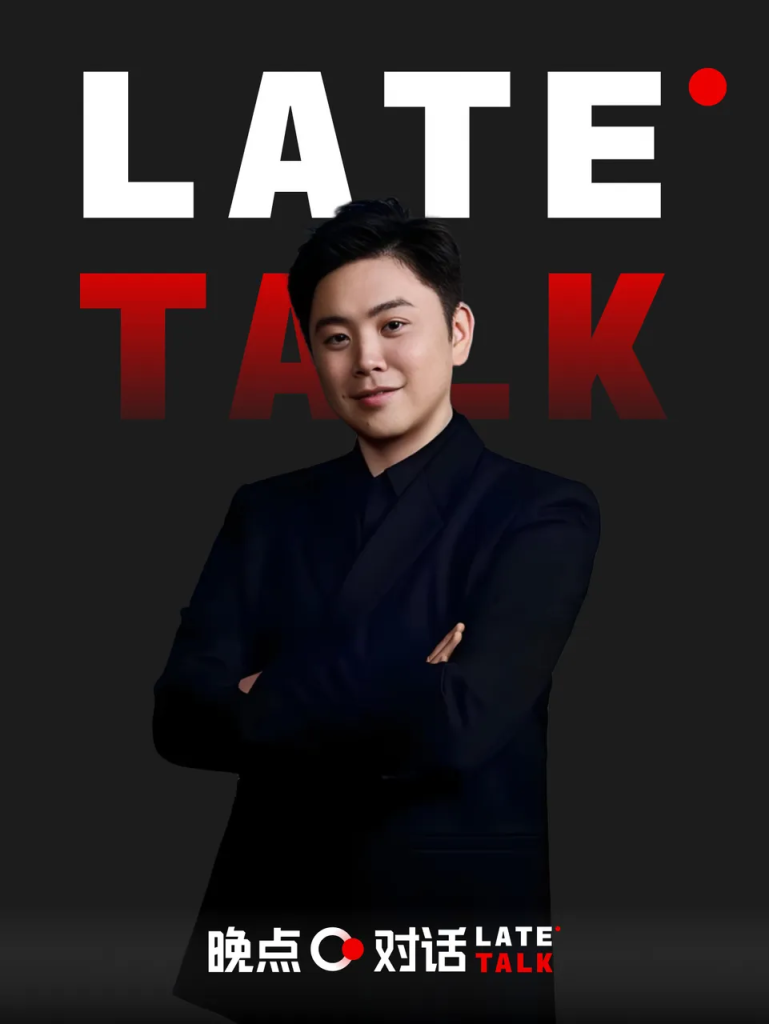
The interview went viral in China, with comment sections flooded by readers calling him arrogant. To us, beyond the spectacle, it reflects something deeper – a widening gap between China’s younger generation of entrepreneurs and both their predecessors and their counterparts abroad.
Below, we’re sharing some of the sharpest judgments from Yu’s interview. We have paraphrased some quotes and added context for easier comprehension by non-Chinese readers.
Note that we do not necessarily agree with these points – but Yu’s radical ambition might actually reshape how you think about what a hardware company can become. You can also read the original Chinese interview here.
- Speaking about Meituan founder Wang Xing: Wang Xing is extremely capable. When the mobile internet era arrived, he proposed the “four verticals and three horizontals” – what to do and what not to do. Then Zhang Yiming (ByteDance founder) came along and said: you’re right – we’ll do all of them. Wang Xing represents the ultimate form of what I’d call the “Tsinghua methodology”. He likes to fully understand every problem. But once your path is clearly planned, if you don’t adjust or explore beyond that plan, it means that in practice, you won’t gain truly new knowledge. If I were him, a few years ago, I would have been more aggressive in attacking Alibaba and ByteDance – expanding across categories – and more proactive in going global. Of course, you can choose not to attack, but that only works if others don’t attack you either.
- Expansion as a methodology: Traditional methods aim to eliminate uncertainty. But we assume the world is chaotic, constantly changing, and that uncertainty cannot be eliminated. So we try to find a method where, through combinations of probabilities, we can achieve a much higher success rate than traditional approaches. I believe that in today’s China, a company capable of operating across multiple categories is inherently stronger than one focused on a single category. And a global company is inherently more advantaged than one limited to a local market.
- Prefer testing to planning: From point A to point B across a field, there are two methods. One is a clearly defined path – but that assumes all knowledge about the world is already known. The other is continuous testing and feedback – testing, adjusting, testing again. In today’s increasingly globalized and technologically diverse world, the second method may be better.
- Insta360’s success and cross-category expansion strategy: For a long time, Dreame’s expansion was seen as incorrect. Then Insta360 went public, and as it and DJI entered each other’s domains, suddenly “cross-category expansion” became a positive term. At its core, this shift happened because Insta360’s valuation suddenly reached 100 billion RMB, and people needed to explain how it succeeded.
Insta360 is an action and 360° camera company; DJI is a drone company. The two are now launching products in each other’s territory. After going public on the Chinese stock market, Insta360’s market cap quickly surpassed 100 billion RMB.
- On involution (内卷, a popular term in China describing a situation where competition becomes so intense that everyone works harder and harder without achieving meaningful gains): That ambition to “do great things” is, at its core, a Chinese way of trying to change the world. In China, it’s often misread as “involution”, but in Silicon Valley, it’s called “making the world better”. It’s actually the same impulse.
- Idealism and realism: When people are young, they’re full of ideals. But as they reach their thirties, they become more and more pragmatic. At that point, it becomes even more important to ask yourself: “What do I really want to do?” Recently, I changed my WeChat profile picture to Le Petit Prince – as a reminder to return to a more pure state of mind.
- Building cars more expensive than Tesla: We decided to start building cars. Two or three years ago, everyone said they wanted to be cheaper than Tesla. I decided we would be more expensive – because Musk is missing a piece in his core (referring to mixing things together to innovate the new), and we can make up for it.
- On big company disease: Most companies, after establishing a core business, don’t dare to take risks on large projects – because failure would drag down the main business. If this problem isn’t solved, their investment in any new category will never exceed what they invested in their original business, and they’ll never enter “deep water”.
- On innovation methodology: Our innovation system has “four quadrants”, which we use to tackle expansion into deep water:
- What the most successful companies in the industry are doing – we learn existing knowledge and try to innovate incrementally;
- What innovative companies in the industry are doing – we either learn from them or avoid their paths;
- Cross-industry transfer – we apply proven methods from other sectors;
- First principles – we rethink everything starting from fundamental needs.
Many people think they are innovating, but they are actually following paths that leading companies have already tried – and failed. The most efficient approach is not to start from scratch, but to inherit industry knowledge (N), avoid failed paths, and then innovate incrementally (+1) on top of that.
- Speaking about Chinese companies’ old approach: In the past, Chinese hardware companies followed an “N–1” model: when the world’s best product is N, we remove some features, reduce costs, and sell cheaper. But in the next 40 years, the biggest opportunity is N+1 – when the best product is N, we add something extra. If that “+1” is perceptible and valuable to consumers, it can command a premium. I believe this approach has 10 times the commercial value of traditional models.
- Pursuit of extremes: People are willing to pay several times more for something more extreme, more perfect. Tesla’s 0–100 km/h in two seconds – most people will never push it to the limit. But they still want it. Buying a house is the same – you’d rather have 200 square meters than 20, even if most of it sits unused.
- Don’t go blindly all-in: You asked me earlier about my preferences or priorities – I refused to answer. Because once a CEO answers that, the team tends to blindly go all-in on a single direction.
- Reason for building EVs: Do you know when the right time is to enter an industry? It’s when the industry as a whole is close to profitability. Right now, the moment people hear “building cars”, they shake their heads and refuse to invest. That means the industry is returning to rationality – and that, in turn, means it is getting close to making money.
- LatePost: Do you ever have nights when you can’t sleep? Yu Hao: Never.
- Speaking about Masayoshi Son: Masayoshi Son’s operating ability is actually quite weak. SoftBank Group lost money for three consecutive years and only returned to profit in fiscal 2024. What he is truly great at is taking storytelling to the extreme.
- On Chinese vs the U.S. systems for entrepreneurs: At its core, that is because the American system makes it easier for them to capture one-sided upside. Sam Altman is betting on AGI: if he wins once, the payoff is exponential. That is a classic asymmetric bet. The American startup model is “make one move and win everything”: AI, capital, and narrative are bound together and pushing in a single direction. There are no especially complex decisions, no real pressure of system-level operations, and no true trade-offs in allocating resources. Chinese entrepreneurs are completely different. We have to make Xiaomi OEM products while also wondering who to call that evening. We have to plan aggressively for the future while also worrying about capital, cash flow, supply chains, and teams. American brands are born premium and born global. Chinese brands have to climb upward from the low end. We all know that in 50 years we may well succeed – but what if you can’t live long enough to see your own victory? Chinese entrepreneurs are always balancing left and right. We have to dream, but also survive. This environment has produced the strongest entrepreneurs in the world.
- 100 trillion’s ambition: We hope to become the greatest company in human history – a $100 trillion company, surpassing every company humanity has ever produced, including Apple, Tesla, and Google.
- Reading: I do read books. But I would suggest reading every book by skipping the main body and reading only the preface. That’s one of my big recent realizations. In almost every book humanity has written, the first three pages tell you what knowledge is being presented, and the next 300 pages are just examples explaining it. If you truly read a book from beginning to end, your knowledge horizon may actually become extremely narrow.