




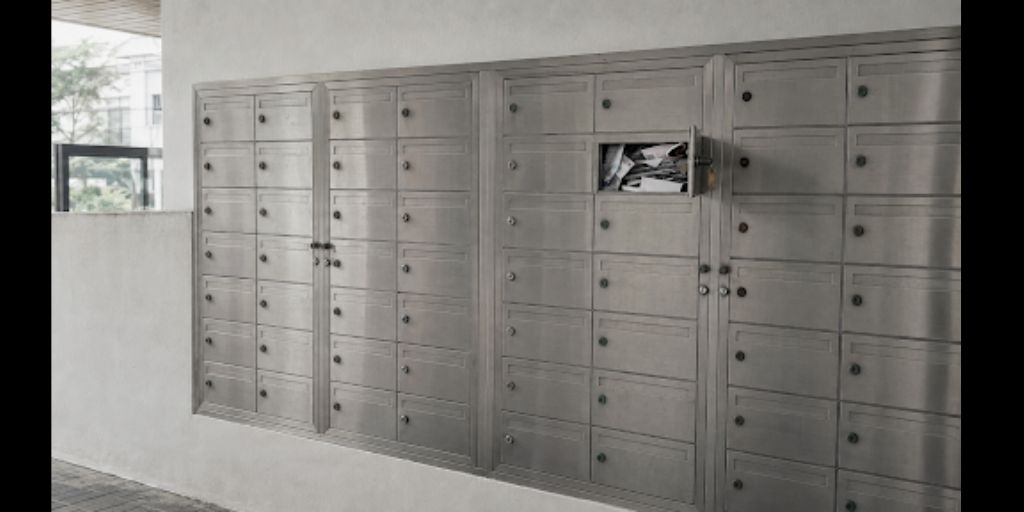
Last week I bought another piece of electronics from iShopChangi, for a little over S$200. We’ve used iShopChangi several times and liked it, but always collected items at the airport; this was the first time we had something delivered. An entirely ordinary transaction: the confirmation showed “Regular Delivery,” my address, an expected date, and fulfillment handled by the seller, Metapod Singapore. I clicked through and forgot about it.
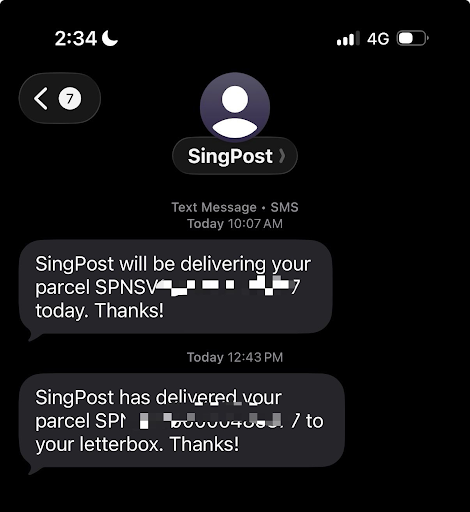
Two days later SingPost texted to say it would deliver my parcel that day. A few hours after that, another message arrived: the parcel had been delivered – to my letterbox. That genuinely surprised me.
I could not remember the last time I’d checked our letterbox. It might have been a year ago, or longer. Our letterbox still has a purpose, just no longer much of a role in daily life. Bills, statements and routine government correspondence have largely moved online; I certainly did not think of it as an ecommerce delivery point.
Ecommerce parcels, on the contrary, arrive constantly, and years of ordering from Shopee, Lazada and TikTok Shop have built up a very specific expectation. A parcel comes to the door – or, if it’s going somewhere else, you’re the one who chose that.
That expectation isn’t unusual. On platforms such as Shopee, the checkout explicitly distinguishes doorstep delivery from self-collection; TikTok Shop similarly surfaces delivery options at checkout. The carrier may be allocated behind the scenes, but the customer-facing delivery mode is not. Even a S$3 order tells me where it’s going to end up. This one, worth more than S$200, simply said “Regular Delivery” – and then decided, on my behalf and without telling me, that “regular” meant the letterbox.
When I mentioned this on LinkedIn, a SingPost representative explained that my tracking number began with “SPNSV,” its Speedpost Saver service, under which letterbox delivery is the default where the parcel fits. Which is true, and operationally unremarkable: SingPost markets Speedpost Saver to merchants precisely for small parcels that fit into a secured letterbox, and for a carrier trying to hold unit costs down, the logic is obvious. The response was revealing in its own way. It answered the operational question perfectly – what SPNSV is, why the letterbox is standard. My question was how a customer buying “Regular Delivery” was supposed to know any of that.
Because here is what I can actually establish. I don’t know which party in the chain selected Speedpost Saver – it could have been the merchant, the platform, or some automated fulfilment mapping. What I do know is that iShopChangi showed me “Regular Delivery”; downstream, the parcel entered SingPost’s network as SPNSV; and within SingPost, SPNSV meant the letterbox. Nothing in that sequence appears to have failed operationally. Each party was precise about its own segment and silent on the one thing that spanned all of them – what I, the customer, was actually promised.
And the promise, on the consumer side, pointed the other way. iShopChangi’s own terms place fulfilment responsibility with the retailer and/or the airport operator; its consumer-facing language talks about couriers, delivery windows, notifications on the day, and arranging redelivery if no one is home to receive the parcel. Taken together, that language gives little indication that “delivery” might simply mean depositing the parcel into a residential letterbox. The outcome was delivery to a slot in a lobby.
Companies organise themselves around internal classifications; customers experience only the outcome. So the question isn’t whether letterbox delivery is good or bad – some people will prefer it, cheap and predictable as it is. It’s why a method that materially changes the experience can stay invisible until after it has happened, when the platforms consumers across Southeast Asia shop on every day manage to surface exactly this before you pay.
That question sits against a company mid-transformation. SingPost entered ecommerce from a different starting point than the SPX and J&T networks that were built around parcel density, automated sorting and doorstep delivery at scale – it had a nationwide postal network and existing infrastructure of letterboxes to optimise around. Its numbers show both why ecommerce still matters and how unfinished the job is: 29.4 million domestic ecommerce items in FY2025/26, roughly 80,000 a day – a surprisingly modest figure for Singapore’s national postal incumbent – even as it has put S$30 million into its Regional eCommerce Logistics Hub, lifting capacity to as much as 400,000 parcels a day and targeting more domestic share and lower cost-to-serve. Over the same period, its Logistics & Letters segment swung to an operating loss, and the chairman’s own word for what the business now needs was “repair.”
Letterbox delivery isn’t backward; it’s efficient. The oddity is that an order can pass through all of that increasingly sophisticated infrastructure, handled precisely at every step, and still arrive at a mode the customer was never meaningfully told to expect. My delivery was executed exactly to specification. That’s precisely what makes it useful: nothing needed to fail operationally for the customer experience to go wrong.
A sorting centre can be automated to 400,000 parcels a day. The harder question is whether the merchant, the platform, the carrier and the customer mean the same thing by “delivery.” In my case, iShopChangi called it “Regular Delivery.” Downstream, the parcel entered SingPost’s system as SPNSV. At SingPost, that meant letterbox delivery by default.