




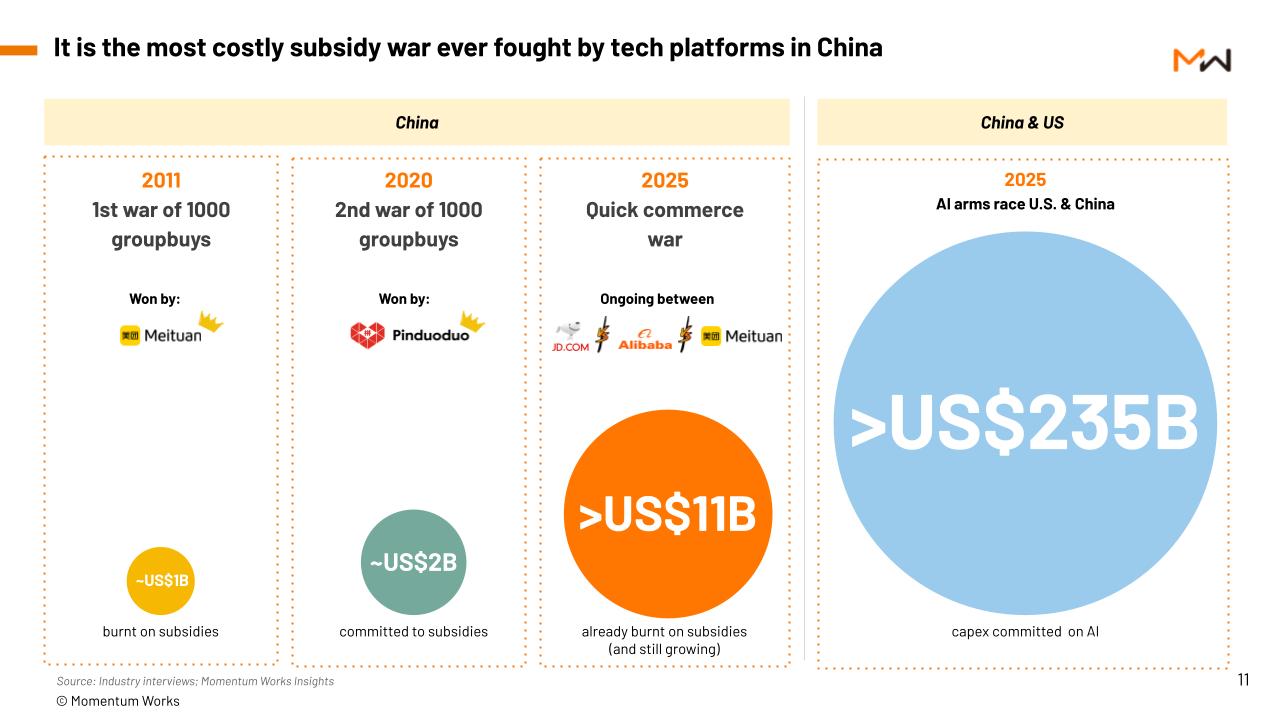
China’s biggest internet platforms have spent the past year locked in an aggressive, billion-dollar war over quick commerce — the fastest, most expensive subsidy battle ever fought by tech companies in the country.
At its peak, Meituan, Alibaba, and JD together fulfilled more than 230 million orders a day. While many were driven by subsidies, the war has undeniably pushed quick commerce into the mainstream of consumer life.
In less than a decade, what began as a niche delivery experiment has become everyday infrastructure.
Today, Chinese consumers can buy almost anything — from fruit to electronics — and have it arrive within an hour.
But beneath the surface lies something far more significant: a systems-level transformation in logistics, consumer behaviour, and retail operations.
This quiet revolution, built over the past decade, is now shaping how entire cities — and soon, other markets — move goods and serve demand.
Our new report, Quick Commerce in China 2025: How instant retail became everyday infrastructure, unpacks this transformation.
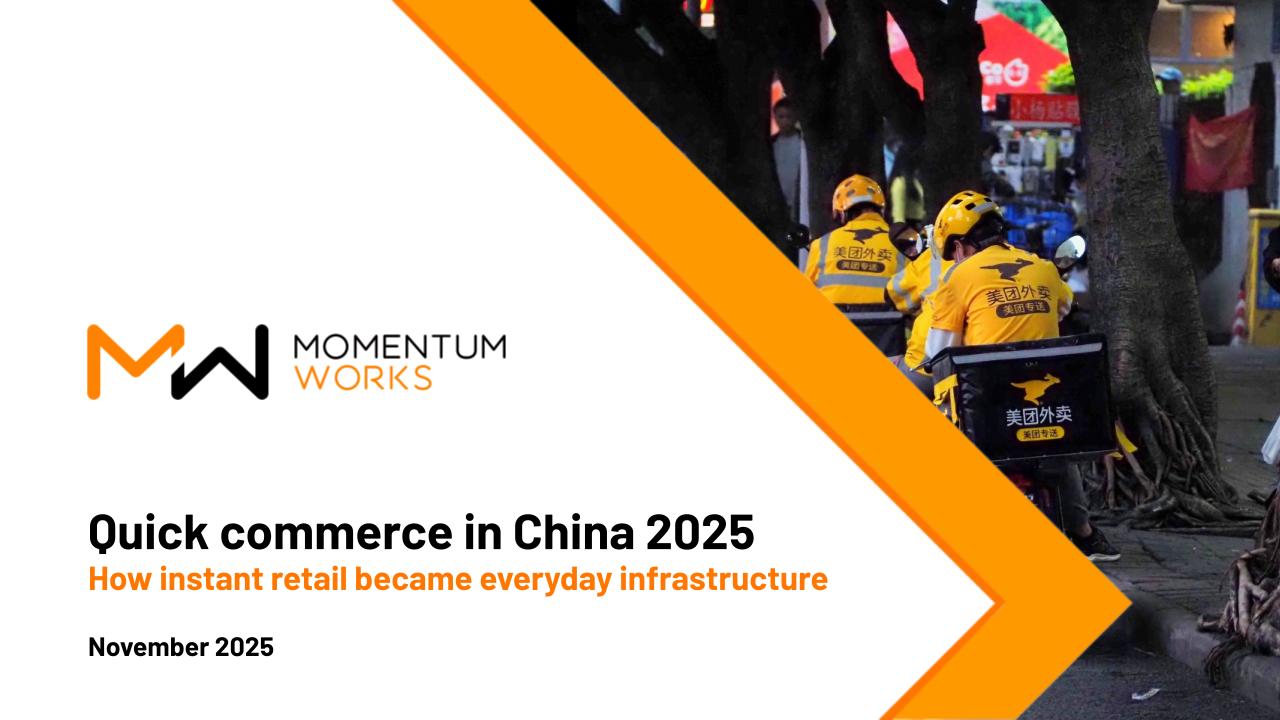
It explains how China’s top platforms built the systems, habits, and logistics that made instant retail possible — and what lessons this holds for ecommerce platforms, retailers, and consumer brands around the world.
Get your copy for US$52.95 here.
Here is the outline of the full 43-page report:
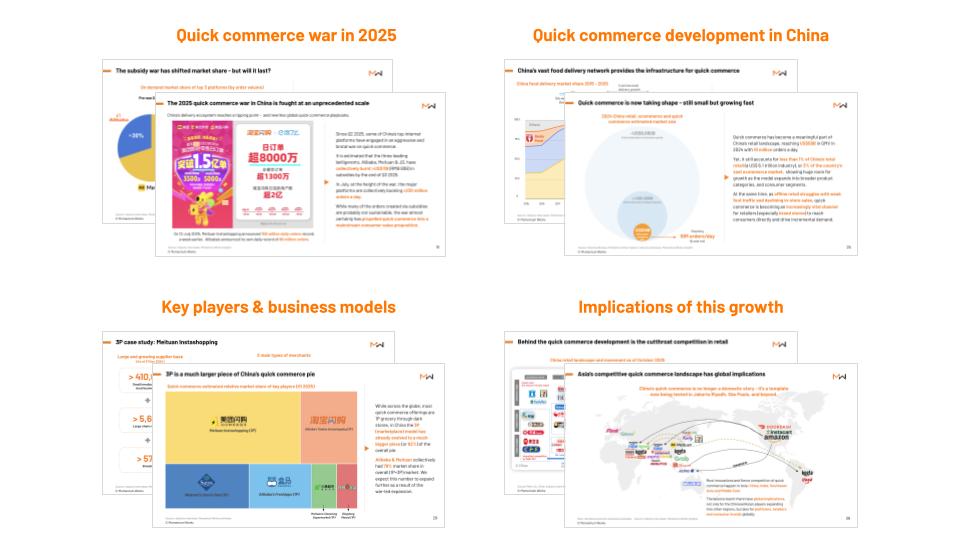
1. The quick commerce war in 2025
- The 2025 quick commerce war in China is fought at an unprecedented scale
- It is the most costly subsidy war ever fought by tech platforms in China
- The different roles of the three protagonists of the war: JD, Meituan & Alibaba
- The war broke the balance of value propositions of major Chinese platforms
- Meituan’s introduction of “Instashopping” changed the calculus of JD & Alibaba
- A brief timeline of the war
- The subsidy war has shifted market share – but will it last?
- Weapons: intensive voucher subsidies supported by algorithms and precise targeting
- Case study: how Meituan spends less than rivals for the same vouchers
- What looks like a subsidy war is actually a systems war
- How is this war going to end? A few possible scenarios
2. Quick commerce development in China
- China’s quick commerce sector took a decade of building and iterations to get to here
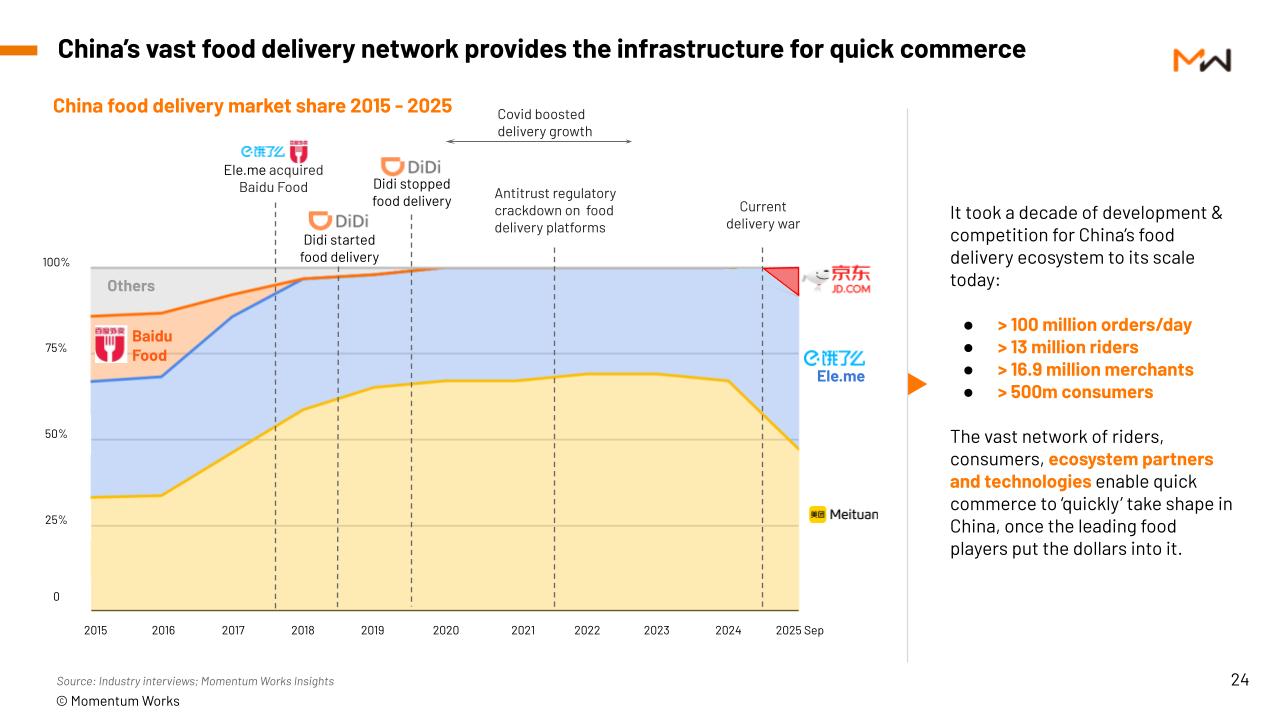
- China’s vast food delivery network provides the infrastructure for quick commerce
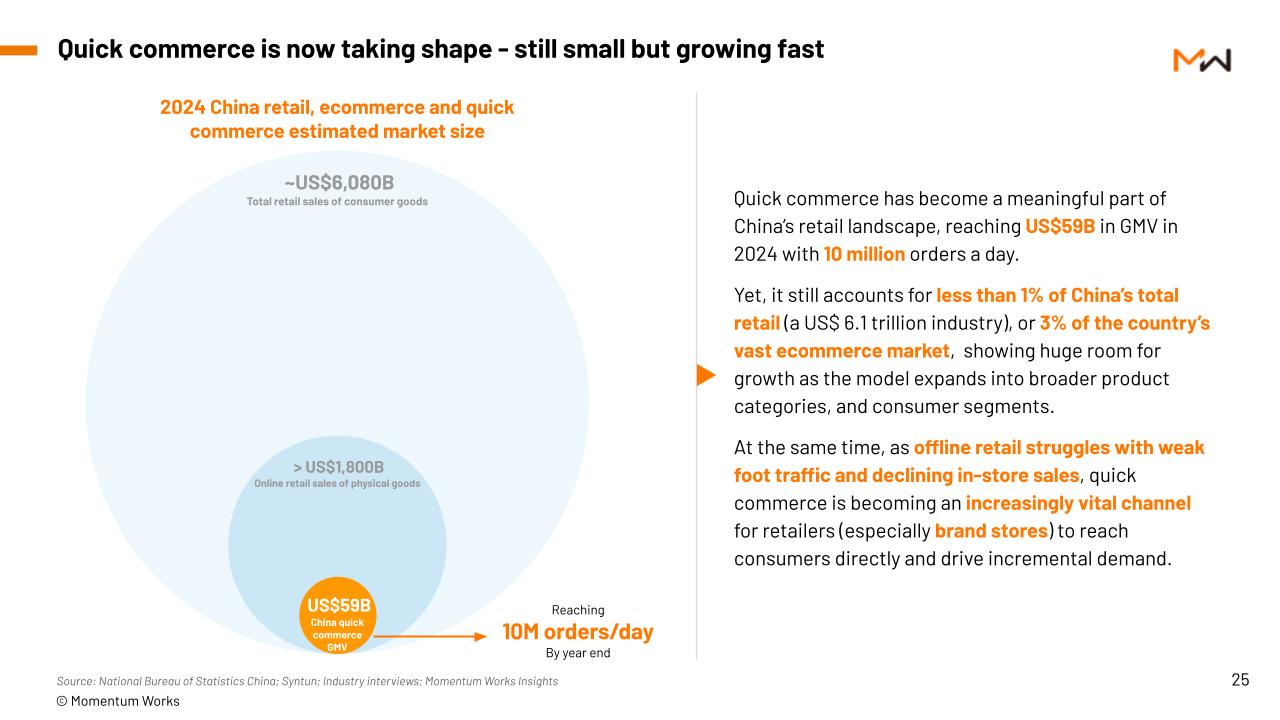
- Quick commerce is now taking shape – still small but growing fast
- China’s quick commerce players are part of a larger ecosystem
- Dynamics in the ecosystem also help lay the foundation for quick commerce surge
3. Key players & business models
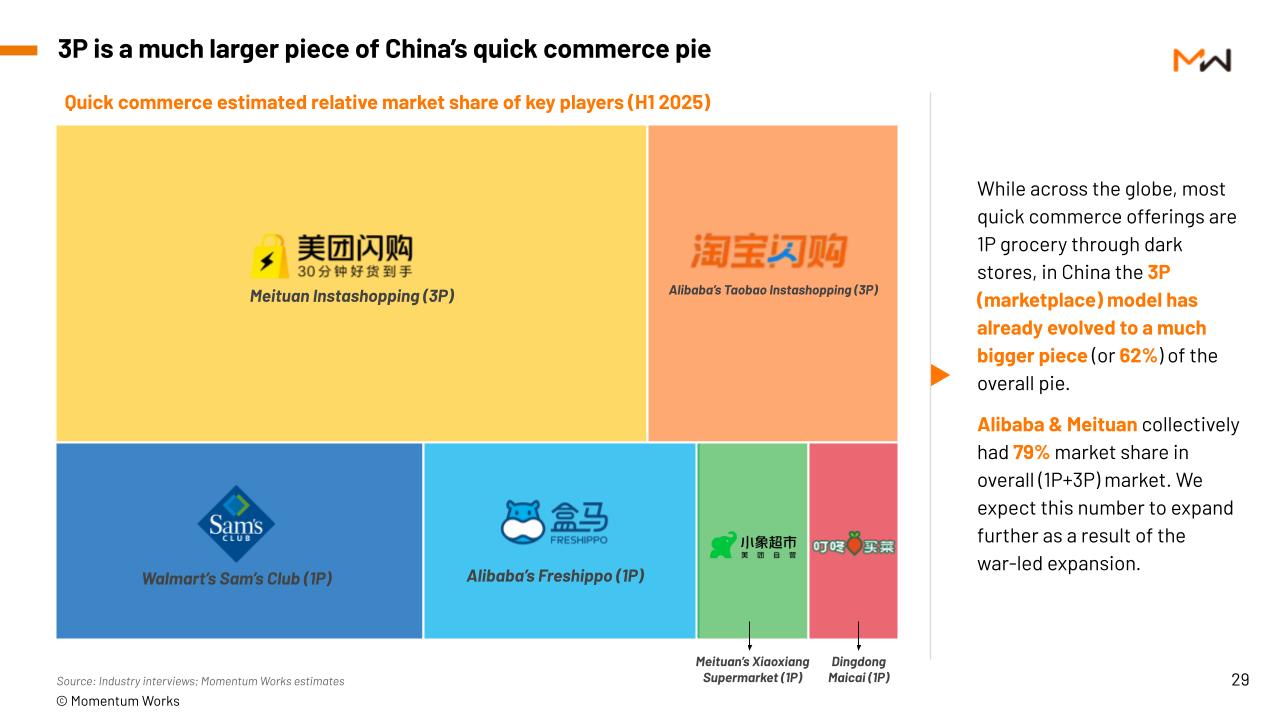
- 3P is a much larger piece of China’s quick commerce pie
- 3P case study: Meituan Instashopping
- We visited many (types of) dark stores during Momentum Works China Immersions
- Meituan has built supply chain tech solutions to enable/strengthen the ecosystem
- 1P case study: Xiaoxiang & Dingdong Maicai’s dark store model
- 1P case study: Sam’s Club’s store + satellite warehouse model
- 1P case study: Freshippo’s store-warehouse integration model
4. Implications of this growth
- Behind the quick commerce development is the cutthroat competition in retail
- Many of these players are also expanding globally
- Asia’s competitive quick commerce landscape has global implications
- The next phase: drones, autonomous supply chain and AI
5. Conclusion & perspectives
Some highlights of the report:
 Get your copy here!