




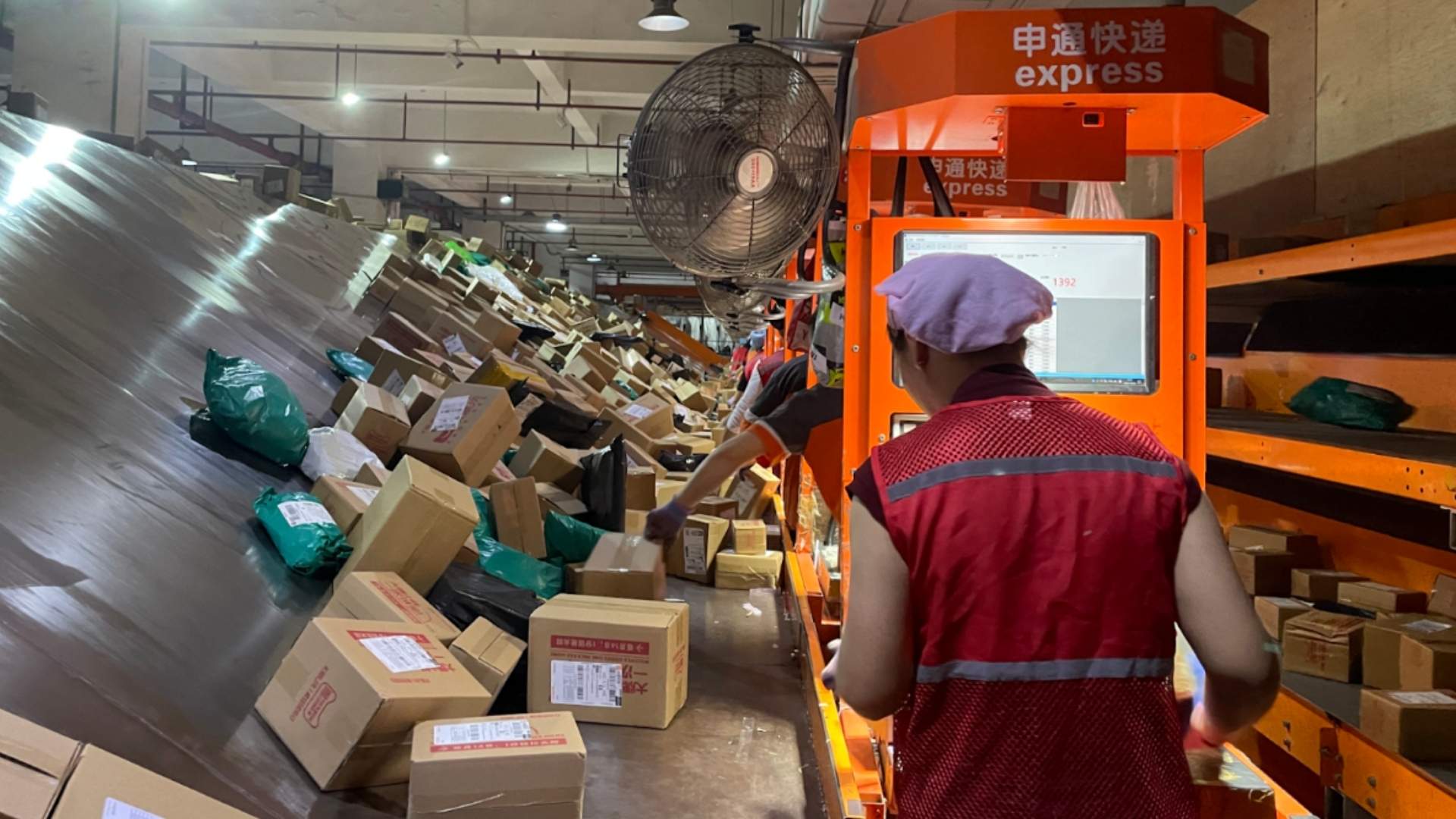
China has officially crossed 180 billion ecommerce parcels so far this year, according to the State Post Bureau. At this pace, China will ship close to 200 billion parcels in 2025.
That number is hard to grasp until you compare:
- Total US parcel volume for an entire year: ~23–25 billion
- Entire EU combined: ~18–20 billion
- The whole of Southeast Asia: ~23–25 billion
China ships nearly three times the parcels of the US–EU–SEA combined.
But this is not about volume — it reflects structural shifts that will define global ecommerce for the next decade.
China delivered 175 billion parcels in 2024. Volume is rising again in 2025 – but not because consumers are spending more.
It’s growing because:
- Low-priced categories are taking a bigger share
- Purchase frequency is increasing
- PDD/Douyin/Wechat are pushing a low-ASP, impulse-buy, ultra-conversion model
The real battlefield is no longer just GMV, but also fulfilment efficiency and supply chain depth. Platforms that win are the ones who can:
- Access cheaper supply at scale
- Shorten pathways between suppliers and consumers
- Lower fulfilment cost per parcel continuously
At less than 1.5 RMB per parcel, China’s logistics costs have entered a range other markets cannot approach:
This comes from:
- ultra-dense delivery networks
- automated sorting at massive scale
- village-/town-level last-mile penetration
Together, this creates a flywheel:
- density → lower cost → more parcels → more density
This isn’t “cheap logistics”. It is the world’s most advanced fulfilment infrastructure — and the base layer for China’s global ecommerce strategy.
Through Temu, TikTok Shop, SHEIN and others, China is exporting this infrastructure globally. The underlying logic is the same:
- Millions of SKUs
- Ultra-dense supply chain aggregation
- High-frequency demand
- Aggressive cost compression
- Turning fulfilment scale into a strategic weapon
Cross-border small parcels already make up nearly a quarter of Europe’s total parcel volume, and Chinese platforms are expanding aggressively in Brazil.
Trump tariffs had an unintended effect:
Instead of slowing these platforms down, they deepened their penetration in non-US markets – accelerating growth everywhere else.
Meanwhile, an entire ecosystem of Chinese-founded logistics players — iMile, Gogo Express, UniUni, J&T Express — is scaling globally by riding the parcel growth of these platforms.
The same networks increasingly serve Chinese brands expanding overseas.
The bottom line
China’s 180 billion parcels are not a headline.
They are an early indicator of where global ecommerce is heading:
The next phase of competition will be determined by who can drive the cost
down the fastest.
China is already two orders of magnitude ahead.