


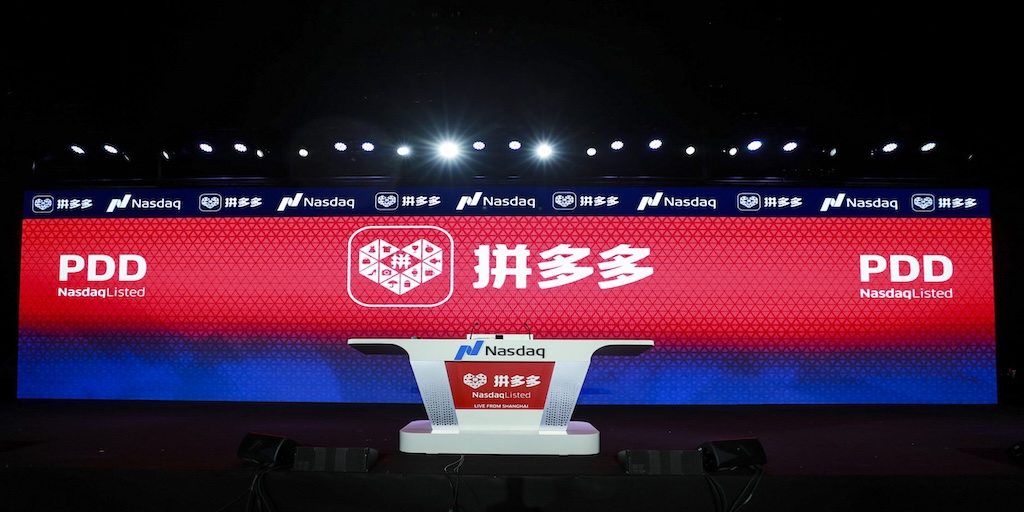
On 19 November 2026, PDD Holdings announced its Q3 2026 earnings – the same day as Alibaba Group. Revenue was flat year on year at RMB108.3 billion (US$16.2 billion), while net income attributable to ordinary shareholders edged up to RMB29.5 billion from RMB29.3 billion a year earlier.
Investors were pleased. PDD’s shares closed up 11% at US$86.00 that day.
The management did not give any surprise during the earnings call this time, and they took questions from just two analysts. The whole call could have been conducted via a written statement. You can read the previous surprises here (Q2 2026, Q1 2026)
Co-chairmen and co-CEOs Zhao Jiazhen and Chen Lei, as well as financial director Li Jiong took part in the call. Below is the transcript of the Q&A session, translated into English and lightly edited for readability.
We will publish some of our thoughts and observations about the earnings shortly.
Q&A Session
Q: Alicia Yap – Citigroup
Over the past two quarters, we’ve seen competition among ecommerce platforms ease somewhat in quick commerce. How does management view the competitive landscape in China’s ecommerce market at this point? Has the market reached a new equilibrium? How will the company pace its investments going forward?
My second question is about the rapid changes in trade and tax policies in key overseas markets, which have had a significant impact on the company’s global business. We see that the company is actively expanding its local fulfillment model. How does management view the impact of these changes on cross-border merchants on the platform? And how can the company offer differentiated value to high-quality local merchants in overseas markets?
A: Zhao Jiazhen, Co-Chairman and Co-CEO
On the first question, looking at the ecommerce market as a whole, competition in China remains very intense. That’s a feature of the industry itself. Every time consumers shop online, they compare prices, quality and service again, and they can easily switch from one platform to another.
So no platform is going to back down. We see each platform playing to its strengths and continuing to build its capabilities across the board.
In this competitive environment, we’ll continue to decide how much and how quickly to invest based on the practical problems consumers and merchants face. These investments may take considerable time to pay off, but we’re committed to investing in areas that create long-term value for our merchant ecosystem and strengthen the platform’s capabilities.
The company is about to enter its 12th year. Thanks to the capabilities we’ve built up over time, we’re now better equipped to address some problems that we hadn’t been able to fully resolve before.
Our investment in logistics and fulfillment is a good example. Recently, we’ve focused on building logistics infrastructure in remote areas, strengthening logistics support there and moving forward with our “Free Delivery to Villages” program.
We want to meet consumer demand that has been underserved because of factors such as the distances involved in shipping.
In remote rural areas, for example, last-mile delivery has long been difficult because orders are spread out and road conditions are challenging. The cost of delivering each parcel can be very high, which makes it difficult to build a delivery network that reaches villages directly.
In the past, many parcels could only be delivered to nearby towns or townships, and some consumers had to travel more than 10 kilometers to pick them up. Fresh products could spoil in transit, and large items were also difficult to transport.
To address these issues, we launched the “Free Delivery to Villages” program with our logistics partners. The platform covers the cost of delivery from county-level transit hubs to village pickup points, so parcels can reach villages directly.
We’ve already seen changes from the program. First, it has changed how rural consumers shop by making ecommerce more accessible to people who were previously underserved. Second, it has opened up new markets for merchants on the platform. For example, one merchant selling a specialty food received more than 20,000 orders for delivery to villages over the past six months.
Similarly, it’s now easier to deliver large agricultural equipment to rural consumers. That opens up a wider market for products that used to rely mainly on traditional sales channels. Going forward, we’ll continue to invest heavily in the supply chain and platform infrastructure, with the pace varying by project.
For example, if a service that improves the delivery experience has proven effective in some areas, we’ll assess whether we can roll it out reliably and at a reasonable cost to more areas before deciding how quickly to invest in expanding it.
For projects that still need to be validated, we’ll take a careful look at how they perform in practice. We’ll continue to support projects that benefit consumers and help upgrade the supply chain.
A: Chen Lei, Co-Chairman and Co-CEO
On overseas markets, the global trade environment is changing rapidly. These changes make it more complicated for merchants to plan their businesses, manage inventory and arrange fulfillment. Small and medium-sized merchants are under considerable pressure and face a number of challenges.
As we said earlier, our platform connects a large number of merchants with the everyday needs of billions of consumers worldwide. These close links between supply and demand help us see new opportunities to improve how supply chain partners work together.
As a platform, we believe we have both the ability and the responsibility to keep strengthening our capabilities and proactively increase investment to help merchants adapt to these changes. Historically, ecommerce growth has relied on a few basic capabilities, chief among them mobile internet, online payments, and logistics and fulfillment.
In our key markets, smartphone adoption and online payment penetration are already relatively high. We believe the next phase of growth will depend on logistics, fulfillment and supply chain capabilities. That’s why we’re committed to investing in the supply chain.
Specifically, we’re simplifying each step in the logistics chain. By bringing together warehousing and logistics services that merchants can share, we hope to help more merchants deliver goods to consumers more easily, affordably and on time. This would significantly lower the barriers to doing business in a complex trade environment.
To that end, we’re building a logistics network that can coordinate different stages of ecommerce fulfillment and multiple modes of transportation, giving us end-to-end global fulfillment capabilities.
The value of this network depends on how many logistics points it connects and how efficiently they work together. So we’re continuing to expand our network of logistics partners and combining their strengths with our own to extend the reach of the overall fulfillment network.
We’re also working with partners to strengthen logistics and warehousing capabilities in key markets, covering receiving, putaway, sorting, packing, dispatch and returns processing. We’re replicating the full ecommerce warehousing process across markets and making it available as a supply chain service to small and medium-sized businesses around the world.
Most small and medium-sized businesses lack the capacity to build and operate their own warehouses in every market. With the supply chain infrastructure we’re building with our partners, merchants can hold inventory closer to consumers without making large upfront capital investments.
That gives merchants more flexibility and helps them fulfill orders more efficiently. Inefficient logistics and high costs are common problems for small and medium-sized merchants around the world. Our ongoing investment in supply chain and logistics infrastructure is intended to make it easier for merchants globally to operate across markets.
At the same time, we believe these long-term investments will give consumers a better and more reliable shopping experience. So we’ll continue investing in these areas.
Q: Joyce Ju – Bank of America
Given that ecommerce penetration is already relatively high and the industry is gradually maturing, how does management see the company’s next phase of growth?
My second question is about expenses. We saw that the company did a very good job managing its expense ratio this quarter. Can investors expect these efficiency gains to continue? And if spending pressure eases, could that affect the platform’s standing with consumers and its market share over the long term? Thank you.
A: Zhao Jiazhen
On the first question, looking at the industry as a whole, ecommerce penetration is already relatively high after more than 20 years of development. But when we look at individual product categories, we still see room for many more products to shift online, as well as considerable potential to upgrade supply chains.
We can still help merchants in these industries improve their products, strengthen their operations and reach wider markets. We see these as opportunities for long-term growth. Agricultural products are a good example. They’ve been a focus since the company was founded, and we still see tremendous potential in this area today.
Many agricultural regions produce distinctive, high-quality products. But gaps in standardization and operating capabilities make it hard for those regions to turn product quality into a competitive advantage or reach a wider group of consumers.
By helping these regions address those issues, we can make high-quality products available to more consumers and generate additional sales for merchants. This year, we launched an enhanced version of our 2026 Agricultural Product Upgrade Program to help agricultural merchants improve product quality and standardization and provide more support for products with geographical indications.
By improving certification, setting up dedicated shopping channels and providing targeted support, we hope to make it easier for consumers to identify regional specialties. At the same time, we want to help merchants improve their products and expand into new categories based on consumer demand.
Take one apple-growing region as an example. Over the past two years, local merchants have continued to improve product standardization with training, resources and market feedback from the platform. In response to consumer demand for health products and newer styles of tea drinks, they’ve also developed products such as dried apples and apple tea.
These products give consumers more ways to enjoy apples beyond eating them fresh. They add value, meet a wider range of consumer needs and create more sales opportunities for merchants.
As the range of specialty agricultural products grows, we also need to help those products reach more consumers. In the third quarter, we launched a Harvest Season campaign that brought together 300,000 agricultural merchants on the platform from more than 1,000 agricultural regions across China. Through a dedicated shopping section on the platform, subsidies and support in driving traffic, we helped more consumers buy high-quality agricultural products.
The long-term impact of these efforts depends on how effectively the platform helps merchants improve their operations and expand into new markets. It also depends on whether merchants themselves can earn repeat purchases through consistent product quality and service. We’ll continue offering support in areas such as product development, quality management and market expansion, based on the needs of each category and merchant.
We believe that as more merchants develop the capabilities to operate over the long term, the platform will have a stronger foundation for sustainable growth.
A: Li Jiong, Financial Director
On the second question, as we’ve said before, our financial performance and expense ratios in any given quarter fluctuate with the pace of business initiatives and the timing of investment returns. A single quarter’s figures should therefore be interpreted in that context. Extrapolating from them gives an unreliable indication of future trends.
We’re still in the strategic investment phase of our RMB 100 billion support program. We continue to allocate resources based on what will strengthen the supply chain ecosystem over the long term and improve the platform’s lasting competitiveness.
As Chen Lei and Zhao Jiazhen just explained, making full use of our supply chain capabilities is the most important priority in the company’s overall strategy. We believe that improving the quality of products on offer, enhancing our service capabilities and expanding our fulfillment network can unlock significant growth potential for both the ecommerce industry as a whole and the platform itself.
As for how consumers perceive the platform, we believe their overall opinion is shaped more by the price they pay and the service they receive each time they shop than by short-term marketing spending.
That’s why continuing to build core ecommerce capabilities, especially in the supply chain, is fundamental to our long-term competitiveness.
We’ll continue to take a prudent and disciplined approach to investment, paying close attention to the long-term returns of each initiative. We remain focused on whether these investments actually improve the consumer experience and strengthen merchants’ ability to run their businesses, and whether those improvements can be sustained.
Even amid intense market competition, we’ll maintain that investment discipline and ensure our resources go to areas where they can create lasting value.
[THE END]
Momentum Works translated this account from Chinese-language notes of Pinduoduo’s 19 November 2026 earnings call and edited it for readability. The translation may contain errors or omissions. For the official figures and webcast, refer to PDD Holdings’ earnings release and call webcast.