



Sea reported Q1 2026 last night. The share price went up more than 13%.
Shopee GMV grew 30% YoY, while Shopee’s segment adjusted EBITDA declined 9% YoY. Both numbers are in the release. Almost every sell-side note we’ve read focused on the first one.
Management framed the Q1 narrative around three themes: investments in delivery, fulfillment, and the Shopping VIP programme. The sell-side notes that followed largely restated these themes. Many major houses reiterated Buy rating, often with reduced price targets.
We think this misses what’s actually happening.
Quick commerce is now a meaningful share of Shopee GMV – and it isn’t broken out.
Management mentioned that instant delivery order volume grew 35% YoY in Q1, with cost per order down 20% YoY, and that Shopee now has 7,000 offline stores (pharmacies and convenience chains such as Indomaret) on the platform.
Based on our estimates, quick commerce is already approaching a meaningful single digit percentage of Shopee’s total GMV. We also believe that with Shopee’s push, Southeast Asia’s quick commerce market size has already surpassed that of on-demand online grocery.
As Grab moves steadily into expanding GrabMart categories and volume, the quick commerce competition in Southeast Asia would be interesting to watch.
Why this matters: this is a TikTok defense play, not a logistics upgrade.
Shopee’s traditional moat – buying traffic and converting it through a wide-assortment marketplace – is being eroded in Southeast Asia by TikTok Shop. Content-driven commerce has structurally lower customer acquisition costs because the traffic is endogenous to the platform. In a couple of markets, TikTok Shop’s parcel volume has already overtaken Shopee’s, while closing in on GMV in some.
What TikTok Shop cannot structurally replicate – at least not quickly or reliably – is instant delivery. That requires local fulfillment infrastructure, a rider network, and merchant onboarding at the store level. Shopee already has most of that through the ShopeeFood operations.
Quick commerce is the one battlefield where TikTok Shop cannot easily follow. It is also high-frequency, which keeps users inside the Shopee app and pulls them away from opening TikTok. In addition, TikTok Shop might find it hard to distribute content-driven consumer traffic with hyperlocal precision.
This is the same playbook the Chinese platforms ran when Douyin’s e-commerce started eroding traditional shelf commerce. Taobao, JD and Meituan all use essentially the same defensive maneuver: use high-frequency, geographically-bound retail to defend against content-driven, geographically-unbound commerce.
Shopee is running the same play in Southeast Asia. It is running well – the logic of which is not well covered in analyst reports.
The segment numbers don’t tell the full story.
Quick commerce GMV carries a structurally different take rate than standard marketplace GMV – heavier fulfilment costs and competitive consumer pricing. High growth in this segment shifts the blended take rate.
Order volume up 35%, cost per order down 20% – but this is not the key reason why Shopee EBITDA declined 9% YoY despite revenue growth of 38%.
The other piece sits in a different segment entirely. Monee’s (formerly SeaMoney) loan book grew 71% YoY to $9.9 billion. Monee adjusted EBITDA grew 14%. (The loanbook would probably have hit $10 billion if not for the exchange rate movements caused by the conflict in the Middle East).
For a credit book of that size growing at that pace, the underlying net interest income and fee income are substantially larger than the reported $275 million in segment EBITDA. The gap reflects, among other things, how costs and allocations move between segments within a group structure.
Monee’s underwriting discipline and portfolio quality are, in our view, more robust than what segment reporting suggests – which makes the group-level capital allocation logic all the more deliberate.
If you read Sea’s three segments as three independent businesses, the Q1 numbers look fragmented: Shopee margins compressing, Monee scaling impressively, Garena recovering. If you read them as one capital allocation system – where Monee’s cash generation funds Shopee’s defensive investments in quick commerce, fulfillment, and user acquisition – the picture becomes coherent.
This is not a criticism. It is, in fact, a sign of maturation. Ant Group, JD Digits, and even ByteDance – every major Chinese internet group has gone through a phase where the fintech arm’s cash flow underwrites the ecommerce arm’s investment cycle. Sea is now operating with that same group-level sophistication.
What the sell-side missed.
The questions we did not see asked on the earnings call: What is the GMV from quick commerce? What is the segment EBITDA contribution from instant delivery? What is the provisioning rate on the loan book at 71% YoY growth, and how does it compare to the run-rate from twelve months ago? How are corporate costs and intra-group services allocated between Shopee and Monee?
These are not adversarial questions. They are the questions you would ask if you were trying to understand the business as a system, rather than reconciling segment KPIs against a static model.
The fact that none of them were asked – by any of the analysts on the call – tells us something about the state of sell-side coverage on Sea, and probably about coverage of Southeast Asian platforms more broadly.
The analytical framework most banks are using was built for an earlier phase of these companies. It does not fit the sophistication Sea has evolved to be.
What to watch in 2026.
Q1 2026 was a strong quarter for Sea by most measures. It was also a quarter that revealed how Sea now operates: as an integrated group, defending against TikTok with quick commerce, funded in part by a rapidly scaling consumer credit business.
That is a more interesting story than “GMV grew 30%.”
It is also the story most analysts are not telling.
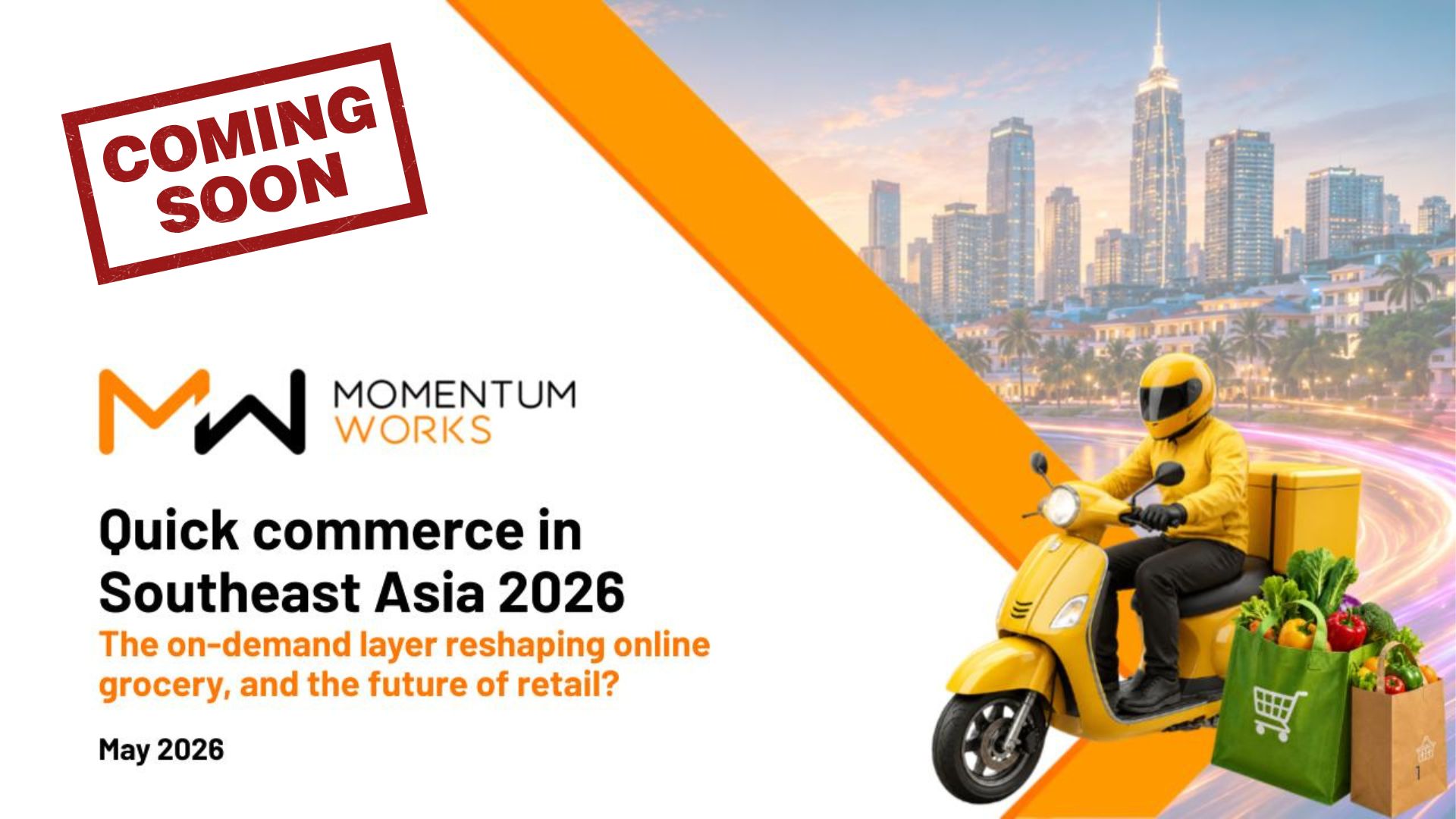
Momentum Works’s upcoming report, Quick Commerce in Southeast Asia 2026, examines the competitive dynamics, unit economics, and platform strategies shaping this fast-evolving battleground – including the players, partnerships, and strategic imperatives that lead to capital allocations. Get a copy on insights.momentum.asia when it launches next week.