




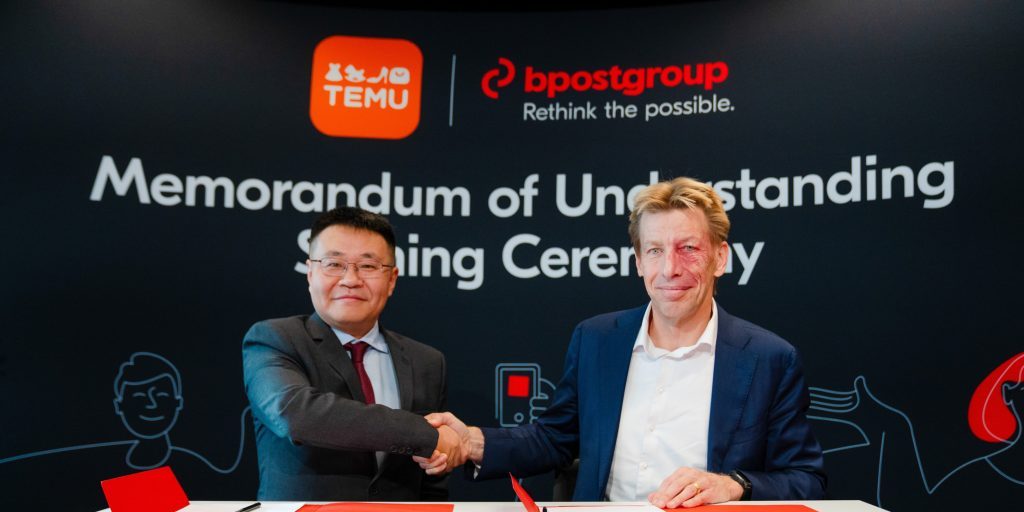
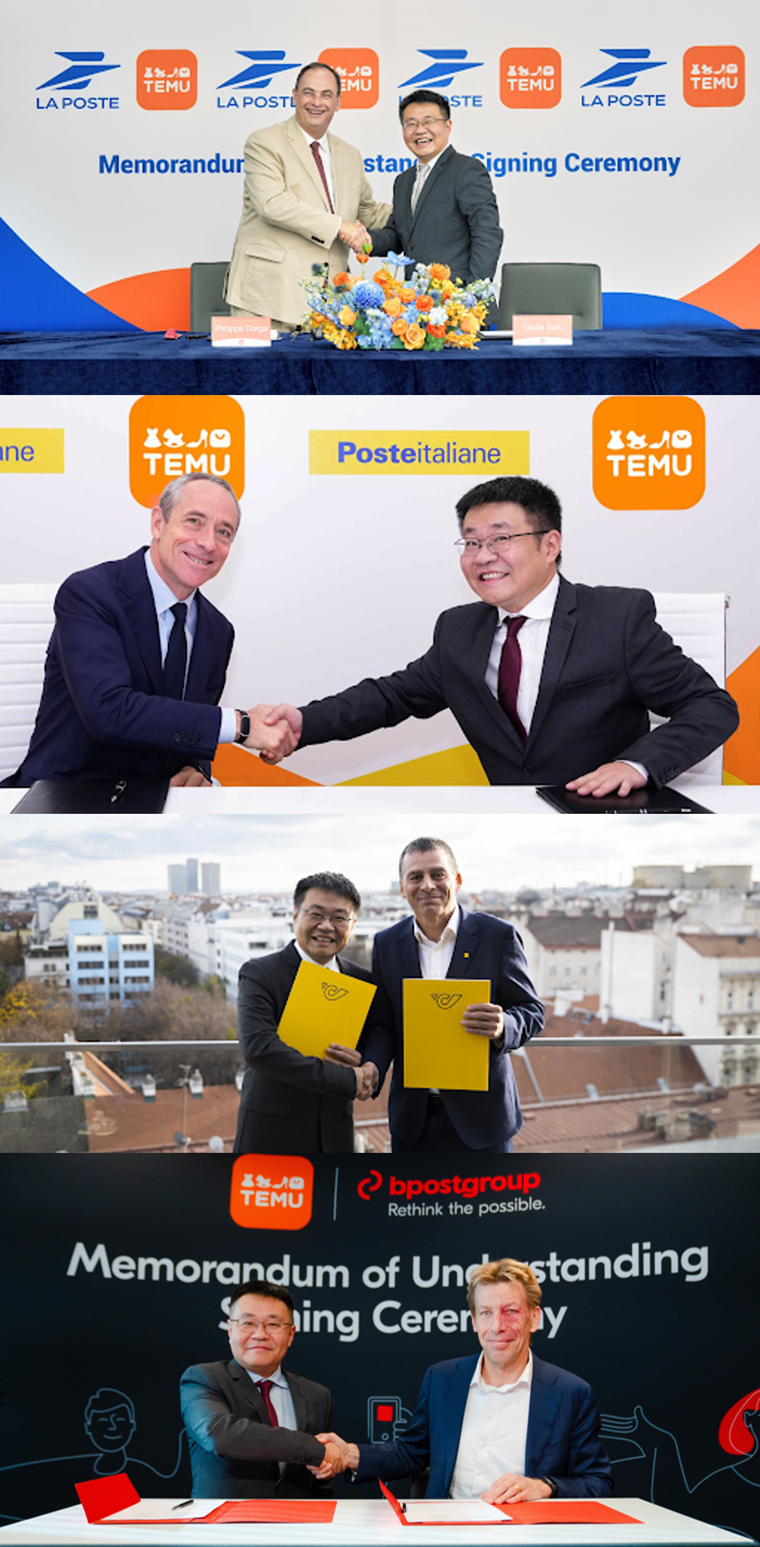
Over the past few weeks, Temu has rather quickly signed a series of Memorandums of Understanding with 4 national postal groups in Europe – including France’s La Poste, Italy’s Poste Italiane, Austria’s PostAG, and Belgium’s bpost.
If this were merely routine logistics collaboration, it might not have drawn much attention – after all, both sides have already been operationally connected for a long time. But against the backdrop of Europe’s tightening regulatory environment, the strategic meaning behind these partnerships becomes far more intriguing.
The EU is preparing a sweeping overhaul of cross-border small parcels, while SHEIN has recently faced intense scrutiny in France. In this context, Temu’s decision to publicly align itself with Europe’s “national teams” suggests a pre-emptive repositioning ahead of the coming regulatory shift.
What the potential regulatory tightening could be
Two major policy changes are now moving forward within the EU:
- Eliminating the tax exemption for cross-border parcels under €150, and
- Introducing a €2 administrative fee for every cross-border small parcel.
If the second measure takes effect within the next year, it will directly raise operating costs for platforms built on low-price direct-from-China shipping, and reshape the barriers to entering the European market.
According to EU statistics, Europe received more than 4.6 billion tax-free cross-border parcels in 2024, over 90% of them from China – nearly double of the previous year. For regulators, small parcels have shifted from a “supplementary flow” to a “systemic phenomenon”, one that must be brought under a stricter supervisory framework.
With policy winds blowing clearly in this direction, Temu’s decision to formalise partnerships with national postal systems is both a hedge against regulatory risk and a strategic message: Temu wants to be seen not as an outsider, but as a participant willing to build long-term ties with public institutions in Europe.
Why European postal groups want this too
Why did several European postal giants choose to sign with Temu in such a concentrated time window? The answer lies in both incentives and pressure.
The incentive: The parcel mix in Europe has shifted dramatically. Over the past year, cross-border small parcels have accounted for more than a quarter of all e-commerce shipments in the region – and nearly all incremental growth has come from Chinese platforms. Without deeper partnerships, postal systems risk losing their most important source of future volume.
The pressure: The competitive landscape is changing. Historically, Chinese logistics companies have struggled to scale in Europe due to high compliance costs and fragmented operations.
But this year looks different. Zongteng Group’s Gofo Express is expanding rapidly in France and other countries. Germany-based Shaoke is also gaining visibility in the market.
If Temu and others ramp up local warehousing and domestic shipping in Europe, these emerging logistics players could become direct competitors to national postal systems.
Against this backdrop, collaborating with Temu is not just about “winning a customer” – it is a proactive step to avoid being marginalised in the next phase of competition.
Why SHEIN is facing a storm
While Temu intensifies cooperation with postal groups, SHEIN is experiencing a very different situation in France.
Just 2 days before SHEIN opened a store in Paris’s BHV department store, French regulators announced they had found “child-shaped sexualised dolls” on its website. Shortly after the store opened, authorities suspended SHEIN’s online sales in France and later claimed to have discovered “weapons” in certain packages.

The timing suggests a strong degree of targeting, but the causes are multifaceted. SHEIN’s ultra-fast-fashion model, its impact on local apparel supply chains, and pressure from interest groups have all been building for years. A photo displayed in BHV featuring SHEIN Chairman Donald Tang and BHV owner Frédéric Merlin also fueled public backlash.
Temu, by contrast, is still in the relatively early stages of scaling its European business (though order volume may already surpass SHEIN’s), and its supply-chain footprint affects local industries differently. Their regulatory sensitivities are not identical.
Temu’s choice has been to align early with Europe’s national postal infrastructure – essentially front-loading compliance and lowering political risk by sending a clear signal of cooperation.
It is important to note that SHEIN is also significantly investing in compliance globally, including in Europe. Regulatory attention does not necessarily mean a platform is “less compliant” – rather, it often reflects tensions among industries, interest groups, and national priorities.
In this sense, Temu’s approach – formalising partnerships with institutions it was already working with – may offer a reference point for how other Chinese platforms navigate similar dynamics.
Executives signing the MOUs
Temu:
- Sun Qin (Dada), Co-founder of Temu
La Poste:
- Philippe Dorge, Deputy GM in charge of mail-parcel services branch
Poste Italiane:
- Matteo Del Fante, CEO
PostAG:
- Peter Umundum, COO of parcel & logistics and Deputy CEO
bpost:
- Chris Peeters, Group CEO
You can also make reference to the following Momentum Works reports and articles for more:
- Ecommerce in Southeast Asia 3.0
- Temu: 2 years on
- Quick Commerce in China 2025
- Food delivery in Southeast Asia 5.0