



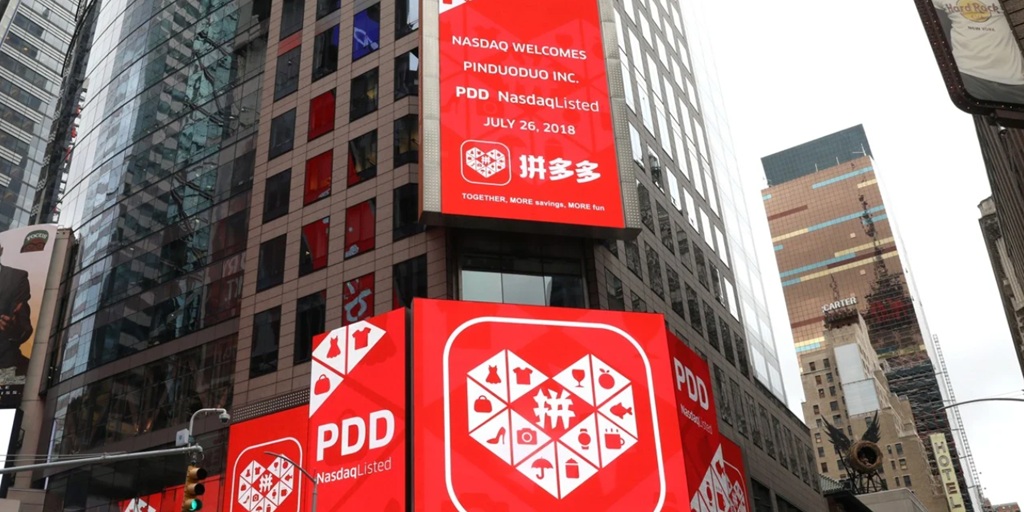
Temu’s parent company, PDD Holdings announced their Q4 2025 earnings yesterday. After the earnings call, PDD’s share price rose by 4.6% compared to the previous trading day.
This was PDD’s first earnings call following its senior management restructuring in December last year, with Zhao Jiazhen and Chen Lei now both serving as Co-CEOs and Co-Chairmen. And again, as in the previous earnings call, AI was not mentioned at all during the Q&A session.

We will share our views shortly, but first, here is the transcript we translated from the executives’ Chinese responses in the Q&A part of the earnings call. The text here might differ from the translation provided by officially appointed 3rd party interpreters during the earnings call itself. You can find the full earnings report on PDD Holdings’ investor relations web site.
Q&A Session
Q: Alicia Yap – Citigroup
Good evening, management, and thank you for taking my questions. I have two questions. First, toward the end of last year, the company made certain adjustments to its organizational structure at the shareholder meeting. At the same time, we see that the company is now operating in more than 90 markets and facing increasingly complex regulatory environments. Could management share how the company plans to maintain team agility and execution capabilities under such conditions?
My second question is, over the past quarter, we’ve seen a slowdown in e-commerce platform growth, and PDD’s advertising revenue growth has also decelerated over the past two quarters. Could management share your views on the current state of China’s e-commerce market, and where you see the next phase of industry growth coming from?
A: Zhao Jiazhen, Co-CEO and Co-Chairman:
Let me take the first question. Over the past few years, our global business has indeed made breakthrough progress. We now cover nearly 100 markets and have achieved a certain scale. However, during this process, we have felt that our corporate governance and internal talent development have not fully kept pace with the rapid growth of our business, and in many areas, we have been stretched.
At the same time, the international geopolitical environment has been evolving rapidly, with trade and regulatory policies changing quickly across different regions. This has also placed new demands on our overall organization.
Therefore, we believe this is both an opportunity and a necessity to carry out a systematic and structural transformation of our organizational culture and corporate governance.
Of course, this will take time. The co-chairman structure we announced at the shareholder meeting in December last year, along with the appointment of new leadership, marks the beginning of this systemic transformation. Going forward, we will devote greater financial, human, and operational resources to upgrading and reshaping our supply chain, aiming to achieve a comprehensive upgrade of our supply chain operating model.
A: Chen Lei, Co-CEO and Co-Chairman:
Let me address your second question. As you mentioned, over the past few quarters, we have observed that the e-commerce industry has entered a phase of intensified competition alongside slowing growth. In this new stage, our decision to significantly invest in the supply chain reflects our belief that an e-commerce platform should not merely be a transaction platform, but can and should do more to create value for all participants across the supply chain. Our investments in the supply chain cover multiple areas. Over the past period, initiatives such as Duoduo Specialty Products (多多好特产) and our health-related programs are all international projects centered on empowering the supply chain.
Here, I would like to highlight two specific initiatives. The first is free delivery to villages, a new program we piloted in the fourth quarter of last year. Its original goal was to address the high logistics costs and low shipping incentives for merchants serving remote administrative villages. We aim to bring more remote rural areas into our service coverage. Currently, Pinduoduo has established county-level transit warehouses in multiple regions across China, and the platform bears the cost of the second-leg transportation for orders delivered to villages. Under this new model, merchants only need to ship their goods to these transit warehouses. The warehouses then handle transportation from the warehouse to village-level delivery points. Building on our existing experience, this approach extends the segmented transportation and consolidation model to the last mile in rural areas, improving the shopping experience in remote regions while also helping merchants unlock incremental demand from these markets.
The second initiative is our “new-quality supply platform” (新质供给平台). For high-quality merchants who are willing to improve product quality and optimize services, we provide support across the entire lifecycle—from R&D, production, and manufacturing to sales—through industry insights and supply chain collaboration, helping upgrade and reshape the supply chain system. There are many things the platform can do here. For example, in product development, traditional new product launches often involve a degree of trial and error. However, within our ecosystem today, key product insights are aggregated by our merchant onboarding teams and quickly shared with merchants. Combined with traffic support for testing new products, this helps merchants iterate more effectively and improve the return on their R&D investments.
These are two concrete examples of our supply chain upgrade efforts. In the face of slowing industry growth and intensifying competition, we have proactively chosen to allocate resources toward building a high-quality supply chain. Our continued investments in foundational capabilities—such as new-quality supply and delivery to villages—will serve as key drivers for sustainable and healthy growth over the next decade.
Q: Kenneth Fong – UBS:
Thank you, management, for taking my questions. I have two questions. First, regarding the company’s global business, we have seen notable volatility over the past period. Since last year, some key markets have initiated regulatory inquiries, and there have also been significant changes in trade policies that are closely related to the company’s operations. Could management share your current views on the external environment? And under these conditions, where will the focus of the company’s global business development be going forward?
My second question is about margins. We have seen some fluctuations in the company’s margins this quarter. Could management share how the different business models introduced recently have impacted margins? And how should we think about the company’s long-term margin profile?
A: Chen Lei:
Let me take your first question. Over the past period, we have indeed received inquiries from certain regulatory authorities. As our global business has expanded rapidly and reached a certain scale in multiple countries, the concerns, scrutiny, and stricter regulatory policies we are seeing are, in our view, understandable. That said, we believe that the current regulatory developments are laying a solid foundation for our next phase of growth, and they also provide guidance for how we should continue to evolve our operating model in a rapidly changing geopolitical and policy environment. Since embarking on our globalization journey, we have remained committed to a long-term mindset, focusing on sustainable development. Building on our strong foundation in the supply chain, we aim to achieve sustainable growth in each market while creating real value for consumers.
As our business continues to scale and regulatory environments evolve quickly across regions, we have come to deeply recognize that compliance is a fundamental baseline. As an international company, we must align with local requirements, stay true to our core principles, and fulfill our responsibilities to contribute to local societies. To that end, the management team has made substantial investments in strengthening internal compliance. At the same time, we are seeing significant changes in trade policies, tax regulations, data requirements, and product compliance standards across different countries and regions. These requirements can vary widely—and at times even conflict with one another—inevitably creating additional pressure, challenges, and uncertainties for us.
In response, we are actively learning and adapting, continuously enhancing our compliance capabilities in order to create sustainable value for society. As you mentioned, global trade policy changes have been particularly notable since last year. While staying focused on our core business, our teams have rapidly iterated on our business models based on local regulatory environments and market conditions across regions. We have been able to maintain reliable consumer services, thanks in large part to the supply chain capabilities we have built over the years.
Looking ahead, the focus of our global business will continue to be on investment. Every part of this process has a direct impact on the consumer experience, and this will remain a key area of investment for us.
A: Zhao Jiazhen:
Let me address your second question. First, I would like to emphasize that we remain firmly committed to our strategic investments. The current external environment and competitive landscape are evolving rapidly. To meet continuously changing consumer needs, we are working closely with merchants on our platform to explore and roll out new business models that can adapt to this new environment. Any new model requires strong upfront investment from the platform before it can be fully scaled. Whether it is exploring new business models or making strategic investments in our supply chain, these are all fundamental, long-term initiatives. The timing mismatch between investment and returns will inevitably have a direct impact on our financial performance in certain periods.
As we have communicated previously, when faced with a choice between short-term financial performance and the long-term value of our platform ecosystem, we will firmly prioritize the latter. As we continue to make substantial investments, and given the current complex and dynamic macro environment, our margins will continue to show fluctuations across different quarters. This should be considered the norm.
Over the past few months, the major strategies we announced at the shareholder meeting are being translated into concrete initiatives. Both our business and organization are undergoing profound transformation. We would encourage investors not to focus too much on single-quarter margin metrics, but instead pay closer attention to the high-quality development of our platform ecosystem. Ultimately, only a healthy ecosystem and a strong supply chain platform can drive sustainable, long-term intrinsic value growth.
Q: Joyce Ju – Merrill Lynch:
Thank you, management, for giving me the opportunity to ask questions. I have two questions. My first question is related to margins. Since last year, the company has rolled out a number of ecosystem investment initiatives, including various merchant support programs. Management also just mentioned significant investments in the supply chain. Could you elaborate on how the company is thinking about the investment return cycle for these initiatives, and what kind of impact they are expected to have on the company’s business performance over the long term?
My second question is that online retail growth has been quite strong in the first two months of this year. Could management share your views on the current consumption trends? And for categories that are growing faster in the market, does the company have any targeted strategies to better capture these opportunities?
A: Zhao Jiazhen:
Let me take your questions. About a year ago, we further recognized the importance of building a sustainable platform ecosystem over the long term. As a result, we launched a series of initiatives such as the “RMB 10 billion fee reduction” and “RMB 100 billion support” programs. We have committed real financial resources to support merchants and industries, creating ample room for supply chain upgrades and transformation.
Our management team firmly believes that as the platform grows into one with broader social influence, we should approach corporate development from the perspective of broader public interest and the long-term health and sustainability of the industry ecosystem. The strategy we announced at the shareholder meeting at the end of last year—focusing on our core business and making significant investments in supply chain upgrades—is a continuation and deepening of this direction.
After years of development, the industry ecosystem has become increasingly mature, and merchants are placing more diverse demands on platforms. The role of the platform has evolved from being a simple transaction venue to a comprehensive business partner that empowers merchants. What merchants need from platforms has also expanded—from direct traffic support to broader areas such as R&D, production, and sales. This requires us to operate at a more granular level, tailoring solutions based on the characteristics of different industries and building more competitive supply chains. These investments involve a vast number of merchants across the value chain and cannot be accomplished overnight. We are fully prepared to commit to long-term, patient investment.
We are also encouraged to see that some of these investments have already begun to yield results. For example, under the support of our “new-quality supply” initiative, some merchants have chosen to reinvest the cost savings from platform fee reductions into expanding their R&D teams and pursuing long-term upgrades. With the help of the platform’s digital capabilities, they are moving toward product differentiation. Such long-term, structural investments will not immediately be reflected in short-term financial performance, but they are a critical component of sustainable growth for both the platform and the broader e-commerce ecosystem.
We will continue to execute these long-term investments in a disciplined manner—reinvesting real resources into the ecosystem, lowering merchant costs, improving supply chain quality, and enhancing the consumer experience. By focusing on the supply chain as the core lever, we aim to reshape the platform and drive a step-change in ecosystem value.
Regarding your second question, we are pleased to see continued improvement in overall consumption trends. At the same time, we clearly recognize that in the current highly competitive environment, we still face significant challenges. The future performance of e-commerce platforms will increasingly depend on how much incremental value they can create for the entire supply chain, rather than relying solely on traffic acquisition and allocation.
At this critical juncture, we have made a firm decision to invest deeply in the supply chain and across different product categories. Our merchant development teams will work closely with sellers and provide tailored, industry-specific solutions based on insights, helping them achieve high-quality transformation and drive high-quality growth. We firmly believe that these investments are essential for advancing the e-commerce supply chain to the next stage of high-quality development, and we will remain committed to this path.
[THE END]
Disclaimer:
This translated transcript was compiled by Momentum Works from the publicly available earnings call of PDD Holdings held on 25 March 2026. It is intended solely for informational and analytical purposes. The transcript may contain unintentional errors or omissions of some details due to audio quality, accents, and real-time interpretation during the call.
All spoken content remains the copyright and intellectual property of PDD Holdings. Please refer to the company’s official recording or transcript for complete accuracy and authoritative reference.
Any analysis, commentary, or opinions provided by Momentum Works are independent, based on our own research and perspectives, and do not represent the views of PDD Holdings or any other organisations mentioned.