


This article was originally published on Momentum Works Intelligence. For a deeper read on how businesses in Asia operate, compete and grow, visit Momentum Works Intelligence for more analysis across commerce, logistics, food delivery, AI and robotics.
When Meituan’s international food delivery platform Keeta made the move to enter Saudi Arabia in 2024, people in the ecosystem asked us whether Meituan would be acquiring local platforms.
We received the same questions from Brazil a year later – “Would Keeta buy Rappi to gain a quick foothold in the market?”
The expectations were understandable. Food delivery expansion is often fueled by acquisitions. Uber is buying Delivery Hero, iFood-owner Prosus acquired Just Eat Takeaway, while DoorDash gobbled Deliveroo.
Beyond food delivery, acquisitions used to be a fairly common approach for Chinese internet companies during their earlier attempts at international expansion. Alibaba acquired Lazada in SEA and Daraz in South Asia, Didi took Brazil’s 99, and ByteDance bought Musical.ly to form TikTok.
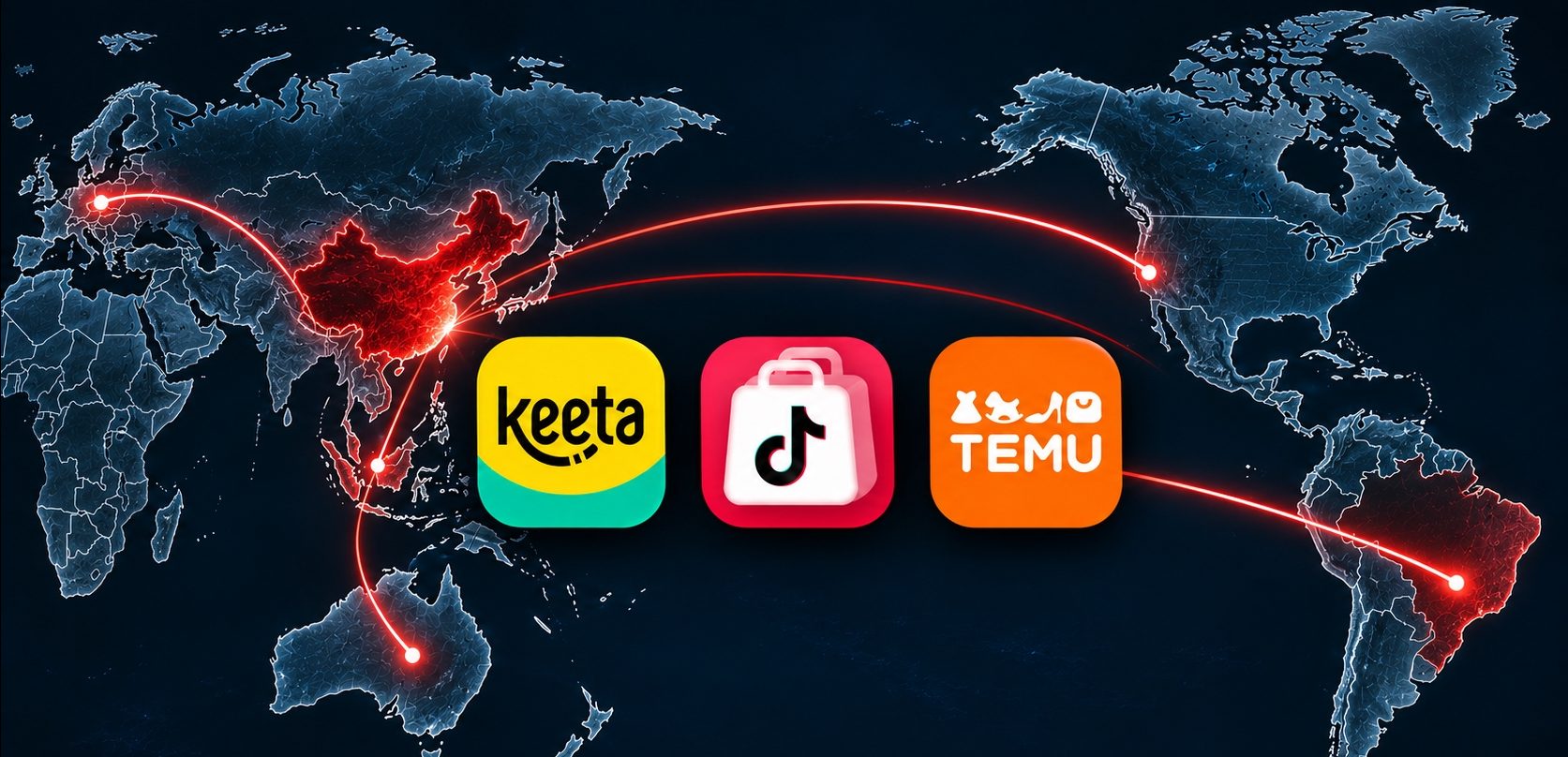
The most ambitious Chinese internet giants expanding internationally today – Meituan with Keeta, PDD with Temu, and ByteDance with TikTok Shop – have all chosen to build their own operations. One notable exception was driven by unique regulatory circumstances – TikTok Shop’s acquisition of a controlling stake in Indonesia’s Tokopedia to (re)gain market access.
What has changed?
The same thing has happened in China
The same shift has actually happened in China’s domestic tech market. Back in the mid-2010s, most Chinese internet companies used to have large strategic investment teams. (PDD was a notable exception.)
A good friend of ours used to helm a Strategic Investment team that consisted of more than 100 investment professionals and analysts.
The same company now has an investment team of fewer than 15 – which made a total of fewer than 5 investments and zero acquisitions this year. Our friend has left, but he told us that the current team spends most of their time “doing deep research to support operating teams rather than evaluating investment opportunities”.
According to CMB International, Alibaba made just nine external investments in 2025 as of October, compared with nearly 90 in 2018. Tencent, which made 340 investments in 2021 alone, made just 17 over the same period in 2025. That’s even including the company’s major investments in promising AI startup teams.
ByteDance is probably the most direct illustration. In 2022, it disbanded its central strategic investment department, and said it wanted to “reduce low-synergy investment activities in order to strengthen the coordination between strategic research and actual business operations”.
Some observers blame the regulatory environment and capital market conditions for this change. We think these factors do not explain why these Chinese tech companies prefer to spend billions of dollars building operations from scratch overseas, when there are clearly existing businesses they could acquire.
A friend who was involved in Didi’s earlier international expansion offered an interesting perspective when we discussed this recently. The people who are making such expansion decisions today are very different from those a decade ago.
Read the full analysis on Momentum Works Intelligence
Who makes the call when a Chinese internet giant enters a new market today? If Meituan bought a local food delivery platform, how much of the business would it actually keep? And what does that mean for founders and investors who have been counting on a sale? We examine these questions in our full MWI analysis.