


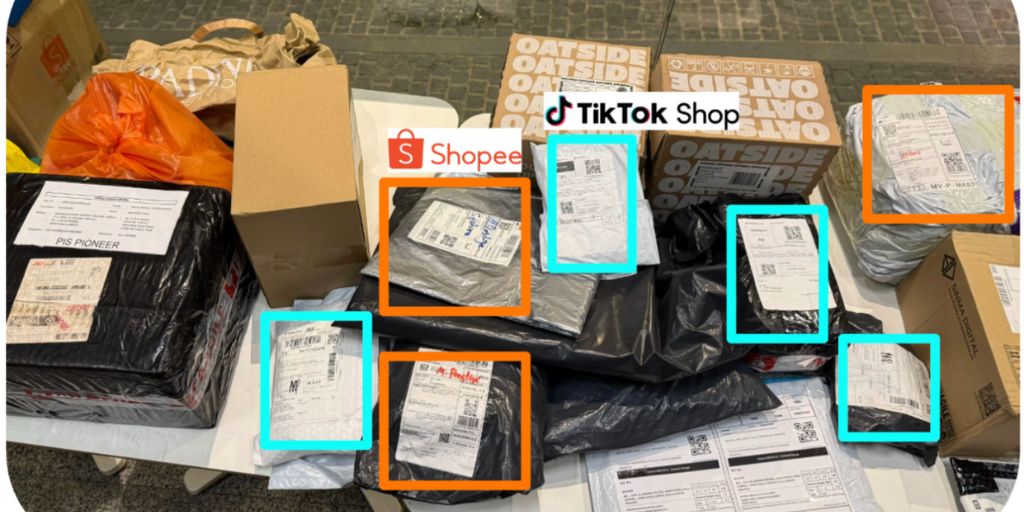
The photo above was taken by a Momentum Works colleague in Kuala Lumpur, Malaysia, last month. Walking through several parcel collection points, the pattern was consistent: almost equal numbers of parcels from Shopee (delivered by SPX) and TikTok Shop (delivered by J&T Express).
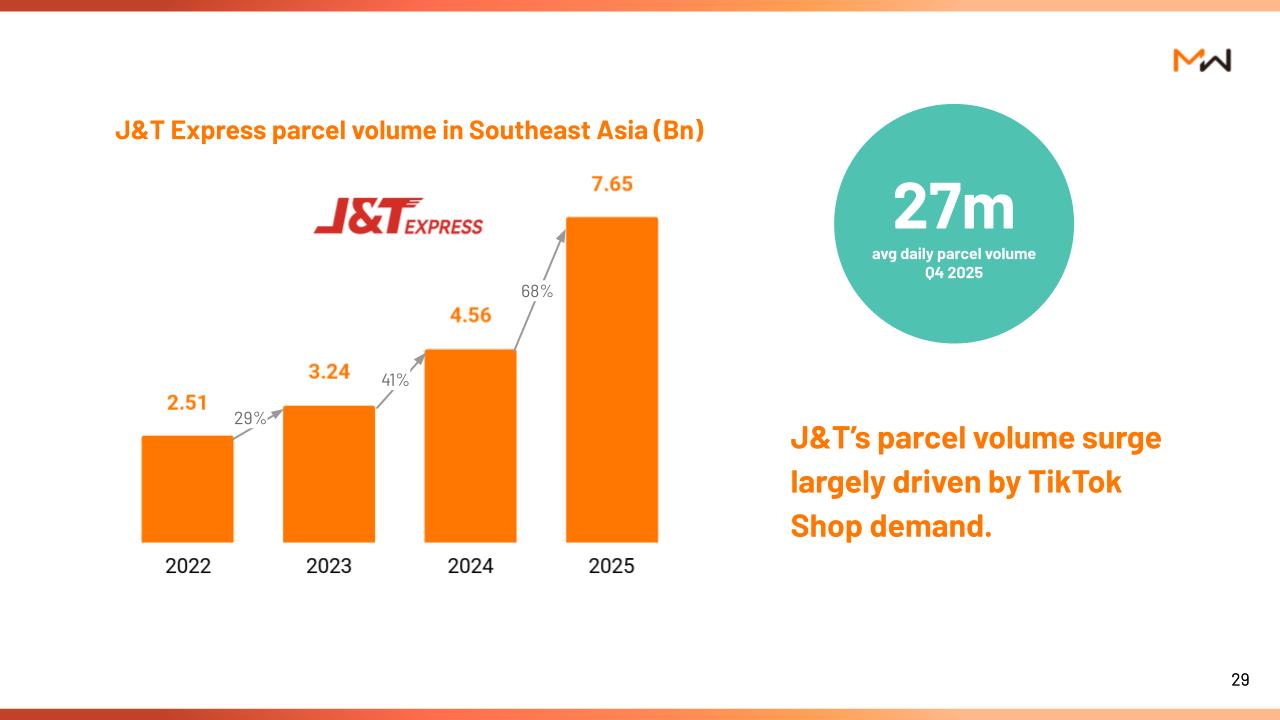
This anecdotal observation aligns with what the data is telling us.
In Q4 2025, J&T Express’ average daily parcel volume grew 73.6% year-on-year to 26.5 million. TikTok Shop is driving most of that growth. Based on J&T’s own estimates, it is now delivering around 18% more parcels than SPX Express – and the gap is still widening.
From the preliminary data points we’ve collected, TikTok Shop appears to have doubled its GMV in Southeast Asia in 2025.
(We will publish the consolidated numbers in a new report next month.)
In absolute terms, TikTok Shop was still behind Shopee in GMV in 2025. Our calculations also suggest Shopee remained ahead in order and parcel volumes – but the gap was clearly narrowing across the region.
This is why, in our 2026 Southeast Asia predictions, the first two were:
- TikTok Shop catches up with Shopee in parcel volume
- Shopee’s defence puts more focus on instant delivery
What’s different this time is not just the numbers – but the nature of competition.
This is no longer the 2023-style “race to the bottom” voucher war. The pressure today is more internal: on managers, operators, and executives on both sides to deliver efficiency, execution, and defensible growth.
Unable to break TikTok’s closed-loop conversion funnel – from entertainment to transaction within a single app – Shopee has doubled down on two value propositions consumers can immediately feel: speed and savings.
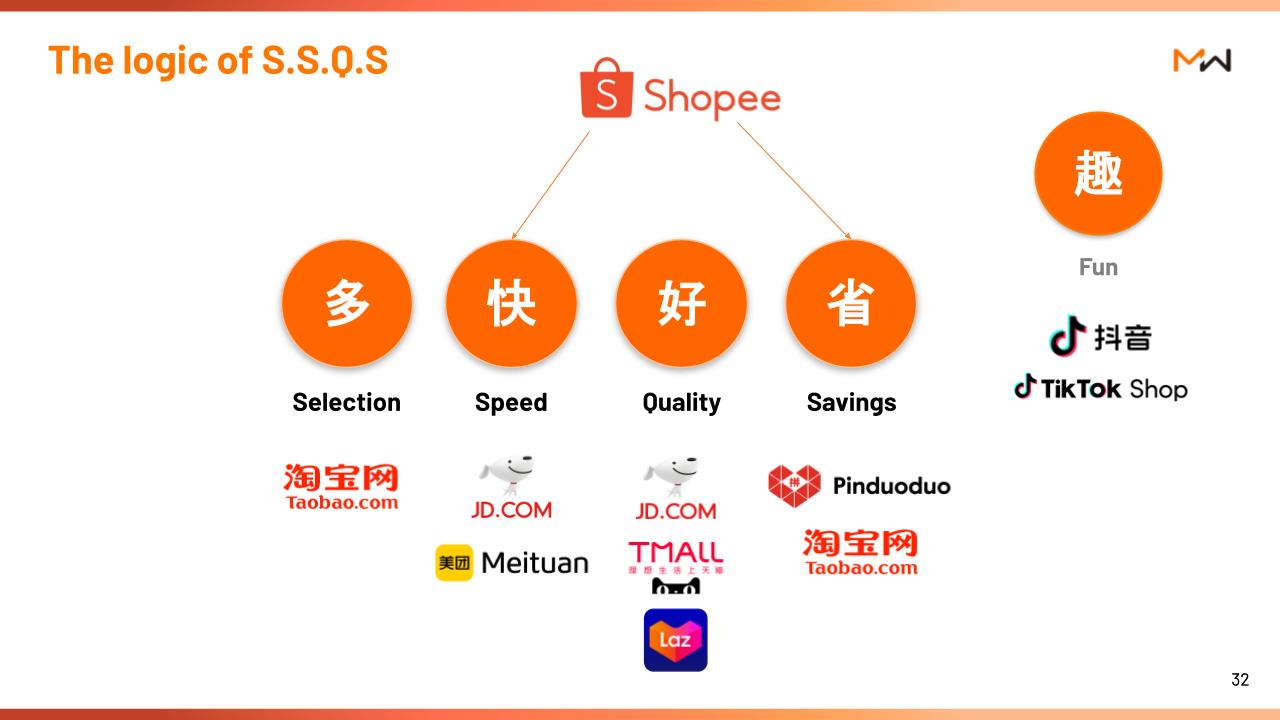
“Instant delivery” (within four hours) is being rolled out in another Southeast Asian market as we speak, leveraging ShopeeFood’s rider network. In parallel, Shopee teams are aggressively benchmarking prices across platforms to defend price competitiveness.
With its hybrid logistics capabilities in-house – spanning conventional and on-demand delivery – as well as a highly profitable digital lending business, Shopee appears determined to defend its market position.
So the question may no longer be whether TikTok Shop can grow fast enough.
The more consequential question is whether Shopee’s defence will actually hold.
And if it does — at what cost?
Who benefits from this defence, and how does it reshape the incentives for merchants, brands, and the broader ecommerce ecosystem?
If TikTok Shop does overtake Shopee, and content becomes the default organising logic of ecommerce in Southeast Asia, the impact will go far beyond rankings.
2026 may not produce a clear winner in Southeast Asia’s ecommerce war.
But it is likely to be the year when the old playbook stops working – and a new one quietly takes shape.
That shift, more than any league table, is what we are watching.
P.S. On a related (and much more food-related) note – we’ll be sharing our latest report on food delivery platforms in Southeast Asia next week. More soon.