




Meituan (3690.HK) announced their Q3 2025 earnings last week (28 November). Market reaction was weak. Meituan opened lower yesterday, and as of press time, its share price was down 5.6% from last week’s close.
On the one hand, Meituan reported its first loss in three years; on the other, management signaled that the market is likely to return to rationality after the subsidy war.
The Q&A session focused on 3 of Meituan’s initiatives: grocery retail, AI and Keeta. Management stated that Meituan’s competitive advantage in quick commerce is even greater than in food delivery; and emphasised that the company will continue to invest in AI. But the most striking part is that Keeta turned profitable in Hong Kong after 29 months of operation.
Here is the transcript we captured from the Q&A session of the earnings call. The text here might differ from the transcript provided by the company itself. You can find the full earnings report on Meituan’s investor relations web site.
Q&A Session
Q: Ronald Keung – Goldman Sachs:
Can management comment on any notable changes in the competitive landscape of the food delivery sector? Basically we are heading into the 4th quarter, have we seen any industry subsidies that are starting to scale back? And we’ve noticed competition has stepped up by investments in membership programmes like 88 VIPs and these membership programmes, so how’s the engagement and retention trending for your core customers?
From a financial standpoint, I want to also ask how should we expect 4th quarter performance for the food delivery and has there been any change in the long-term outlook for growth and profitability of the business?
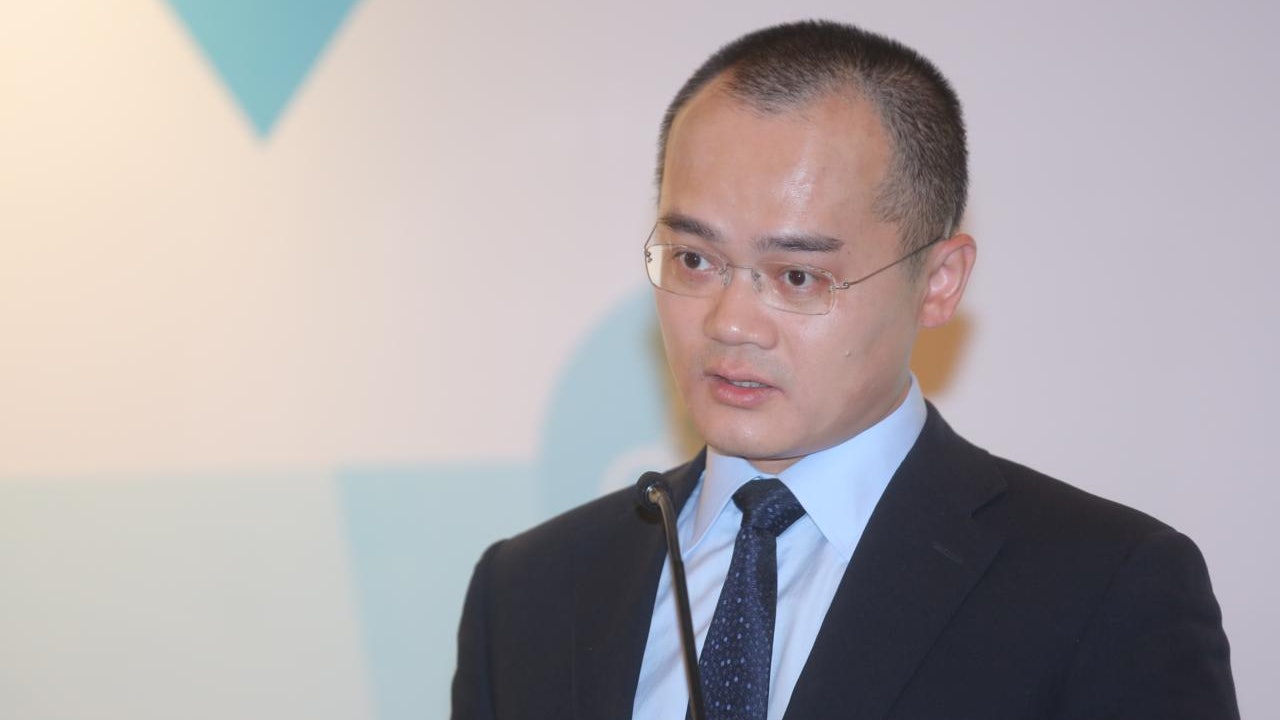
A: Wang Xing, CEO:
Before I get into the question let me restate what we have said very clearly over the last 2 quarters. First, I think the food delivery price war is an example of a vicious cycle: low price and low quality, and essentially a race to the bottom. We are firmly against it. And the last 6 months have proved one thing – it doesn’t create any real value for the industry and it cannot be sustainable. And second, we are doubling down on couriers’ rides protections and on supporting small and mid-sized merchants. That’s the only way to keep the industry healthy in the long run. Third, we will focus on doing the right things that are serving consumers and merchants and couriers well. And we are fully confident in defending our leadership in on-demand delivery and creating real long-term value.
In October and November, in the industry, subsidy level temporarily went down versus the summer peak session, especially after the double 11 promotion period. And we are still closely monitoring the market dynamics and will adjust our strategy accordingly. Recently we have seen a rebound in our market share in order volume. We maintained a consistent leading position in GTV market share for mid to high-AOV orders. For example, I think it’s very important to focus on higher AOV sector: Our GTV market share for orders with a net AOV above 15 RMB is more than 2/3, while our GTV market share for orders with a net AOV above 30 RMB is about 70%. I think those are more valuable sectors we want to focus on. And our net AOV per order remained much higher than other platforms.
Our core users continue to show a high retention rate, with their consumption frequency and stickiness still growing steadily. I think this clearly reflects the strong user mindset we have built in the food delivery sectors as well as our competitive edge in serving our core users. It’s common for consumers to have multiple local service apps installed on their phones. However, Meituan remains the go-to platform for food services for hundreds of millions of consumers. And this is especially true among our core users. Their consumption frequency has been several times higher than that of the average consumers. Even in such a highly competitive market, they show strong brand recognition and deeper consumer loyalty. This is because high frequency or high AOV consumers value the delivery experience, supply quality, and service reliability far more than just a lower price. Our faster and more reliable delivery provides greater certainty, particularly during extreme weathers and holiday periods. Our diverse and valuable many offerings across all price ranges allow us to process then match consumers’ needs.
Through our Meituan membership programme, we offer more attractive deals and exclusive service upgrades to our core users. And we are confident in our ability to deliver higher quality and more comprehensive services to our core users. This will help us further strengthen their stickiness and engagement in the long run. In addition, the food delivery investments by industry peers in the premium user segment will expand the overall market, benefitting us as well. We will leverage our strengths in service quality and brands to further strengthen our position among a broader base of premium users.
In terms of financial data, although I believe food delivery loss has peaked in Q3, our food business will still incur substantial loss in Q4. We will make a necessary investment to maintain our leadership, but we are not interested in engaging in price wars, so we would adjust our investments dynamically based on the competitive landscape. We will continue to strengthen our advantage in service experience and operational efficiency.
In the mid to long-term, the competitive landscape will remain dynamic: the business or industrial revolution typically follows a clear trajectory from capital-driven to efficiency-driven and ultimately to innovation-driven. China’s food service has now entered a stage where the innovation and service upgrade and technological solutions are critical for sustainable growth, and traffic gain and scale expansion purely driven by very aggressive subsidies will not be sustainable. And we believe the current irrational competition in food delivery will inevitably transit to a more rational and mature phase. Ultimately, the platform with deeper industrial insights and proven operational excellence and the ability to sustain high quality growth will be the industry leader.
Therefore, as I mentioned last quarter, Meituan will stay focused on doing the right things to extend a high quality service to ensure fast and reliable delivery and offer consistently affordable prices. We will defend our market position while continuing to create greater value for the whole industry. Food delivery has become a high certainty lifestyle for more and more consumers. With clear long-term growth prospects, our long-term target of reaching 100 million high-quality daily orders remains unchanged. We remain confident in maintaining industrial leading unit economics with proven operational efficiency advantages. Long-term, even with higher subsidies in a dynamic market, we expect food delivery profits to return to a reasonable level.
Q: Gary Yu – Morgan Stanley:
I have a question regarding Instashopping. The other ecommerce platforms are doubling down on quick commerce and bringing more traditional ecommerce brands to the space, how does management view our competitive edge? And after our own double 11 event, could you share Meituan Instashopping strategy going forward? Will you scale up investment in the 4th quarter?
A: Chen Shaohui, CFO:
First of all, I would like to highlight that we have a particularly strong competitive advantage in our quick commerce native supply that is even stronger than that of our food delivery business in which we are already a leader. From our perspective, quick commerce operates on a fundamentally different logic than traditional ecommerce as well as half-day delivery or next-day delivery. Quick commerce means no stockpiling – you get what you see right away. Platforms need to identify real consumer needs and get the right supply in place. Leveraging years of understanding of the market demand, merchants’ pain points, we have digitalised offline supply and deployed our instruments to better address the quick commerce demand. Simply shifting traditional ecommerce supply to the quick commerce channels creates no incremental value for either merchants or consumers.
To better serve the lifestyle shaped by quick commerce, we are also driving industry-wide upgrades in infrastructure and service experience. For example, we expanded 24/7 Meituan Instamarts and pharmacies, rolled out chilling facility for alcohol and beverages, and introduced quality, guarantee services for fruitcut, such as Bright Kitchen “明厨亮灶” and Damage Guarantee “坏必赔”. More importantly, our food delivery business has already cultivated a group of users who highly rely on 30-minute certainty. Our platform is the best fit for quick commerce. We deliver the highest conversion rates and incremental sales for merchants. As such, we manage to solidify mind share among our core user groups and defend our leadership across categories despite intensified competition.
Under the new competitive landscape, we are deepening omnichannel partnerships with brands beyond physical stores and Meituan Instamarts. We also launched Branded Flagship Instamarts “品牌官旗闪电仓”, which operate 24/7 operations for 30-minute delivery of diversified and quality brand products through the native quick commerce channel. We provide brands with full quick commerce infrastructure with housing, delivery and digital system. Hundreds of brands have already joined during double 11. We also stepped up user education for this initiative on the first day of the double 11 event. Hundreds of brands saw 300% sales growth in their Branded Flagship Instamarts. We hope to help brands move beyond the evolution in traditional ecommerce and tap into new growth opportunities in quick commerce. Our Branded Flagship Instamart enables lower operating costs, faster turnover, stronger brand awareness, and more sustainable repurchase for brands. We are also enhancing our brand service tools, for instance, we offer smart distribution tools and AI-powered decision hub for our FMCG partners. We will keep working to remain the go-to platform for brands to unlock growth in quick commerce.
In Q4, we will keep investing in supply side operations while ensuring best-in-class user experience. We also stepped up investments in user education around double 11 and other campaigns. Operating loss for Meituan Instashopping in Q4 may slightly widen versus Q3. That said, our competitive modes across supply, user base, and fulfillment will allow us to sustain leadership with higher subsidy and operational efficiency. We are confident in restoring profitability and achieving a reasonable and sustainable margin in the mid to long term.
Q: Kenneth Fong – UBS:
Recently Amap has introduced a 3-star initiative, Taobao also launched group buy deals, so how do management view the impact for these moves on the competitive landscape to our in-store business? And under this new competitive environment, what specific measure will the company implement to address these challenges?
A: Chen Shaohui:
Our in-store business model and operational strategy differ from those of competitors across category mix, merchant scale and type, and marketing of ROI. By building authentic, accurate and easily accessible POI data over time, we have established a dominant consumer mind share as the go-to platform for local services. Consumers complete most of their local service transactions on our platform. On the other hand, Amap has a very clear consumer image as a navigation tool, which makes it difficult to cultivate consumer mind share for searching for local services. We built a comprehensive user review ecosystem based on our operations in the past decade, accumulating over 25 billion authenticated reviews. This constitutes one of the key reasons why consumers trust and consistently choose Meituan as their go-to platform for local services. We also have the broadest category coverage and selections in the local service space. We offer consumers one-stop service and seamless experience, including table reservation, diverse group-buy deals and coupons, and store ordering, payment and membership benefits. Moreover, we maintain industry-leading merchant coverage. Leveraged by our experienced offline business development team and deep industry insights, we deliver best-in-class service to merchants. These are all the core competence that we believe other people cannot quickly replicate.
In response to the evolving and dynamic competition, we continually iterate our product and operational capabilities to provide more diversified and personalised services to more quality merchants and consumers. First, we continue to cultivate an ecosystem conducive to quality merchants, by expanding the coverage of our Must-eat List, Must-visit List, Black Pearl Guide and by introducing more specialised lists. We are able to provide merchants with more targeted traffic promotion and better transaction conversion. Second, we have also refined our rating criteria to encourage merchants to focus on product and service quality rather than just a number of consumer reviews. We utilise big data to intelligently identify and help merchants automatically block abnormal reviews, significantly optimising both merchant and user experience. We believe with the AI technology further pinched into our business, we will be able to further improve the system. Additionally, we roll out more consumer-friendly products such as VR merchant tool for reservation, pre-order while queuing and smart in-store ordering. These digital solutions further enhance consumer experience and improve merchant operational efficiency.
The above are just a few examples. In the future, we will continue to focus on 3 key directions: ecosystem optimisation, service innovation and operation upgrade. We will drive to provide consumers with a seamless experience and merchants full lifecycle empowerment across customer acquisition, conversion and retention. We will continue to foster sustainable industry growth through digital transformation. Competition may temporarily impact margins for our in-store business, but we expect long-term competitive landscape for in-store business to remain unchanged. With full confidence, we believe we can maintain our leading market position and continue to lead the evolution of the industry ecosystem.
Q: Thomas Chong – Jefferies:
Company has rolled out AI agent Xiao Mei for testing. What’s the current progress and future plan for Xiao Mei? Additionally, will Meituan app integrate in-app AI agents directly in the future? Could management share more about our future plans and investment strategy in AI?
A: Wang Xing:
In this quarter, we continue to iterate our AI capability across 3 core dimensions. The first is training our in-house LLM. The second is AI in products. And the 3rd is AI at work.
We have rolled out multiple open-source LongCat Flash series models. We trained the LongCat large language model in-house, so these models continue to get quite favorable feedback from the broad developer communities. So I think that’s the beauty of open-source model. And now LLM is deeply integrated with our core application use cases. It drives effective innovation based on our real world needs to support our long-term strategic growth and then the online to offline convergence.
For AI applications, we have upgraded a bunch of AI tools for local services, offering smart, more tailored services to our merchants. For example, our Kangaroo Advisors “袋鼠参谋” can help restaurant merchants with product selections and location planning. And another application our Smart Operator “智能掌柜” integrates multifunctional capabilities such as AI reception, AI operational analysis, and AI review responses, enabling intelligent and efficient store operations for merchants. And we also launched our smart life assistant, Xiao Mei app for users, which is now in quite a large scale testing period. We also introduced our AI agent “问小团” (Wen Xiao Tuan) in our Metuan app. So that answers your question – we are testing both standalone AI agent app, but at the same time, we are going to integrate AI agent function in our main Meituan app. And these 2 agents knock up various aspects of local services, including dining, accommodation, and transportation, travel, entertainment, and shopping, and they can complete the process from searching to price comparison and to order placements which can provide the users with more intelligence, more personalised service.
We’ll also continue to develop tools like AI coding. We have an application called NoCode to help employees improve their work efficiency.
Looking further forward, we will further enhance our competitiveness in our in-house foundational model and explore more AI agent applications in local services. We will also iterate our AI agent strategy based on operational insights and user feedback and drive deep AI-enabled empowerment in our ecosystem.
Q: Ya Jiang – CITIC:
My question is about the new initiatives and related businesses. For your Keeta in Hong Kong, is it on track to reach the ideal scene? And additionally, for the Middle East, following our Q3 expansion into several new GCC countries, how is performance shaping up in this market? And also with recent reports about Keeta entering Brazil, even when there are strong existing players like iFood and Didi, what will Keeta do differently in Brazil playbook to take a decent share there?
Given the particularly intense competition, what’s your strategic rationale to compete at this juncture? And how is this aligned with our overall capital allocation framework? And how should we project losses for new initiative segment next year?
A: Wang Xing:
Thank you for your interest in our new initiatives. Regarding Keeta in Hong Kong, I have very good news to share. In this October, Keeta in Hong Kong has turned profitable, so I think that’s a major milestone for us. Remember that we launched Keeta in May 2023, and it becomes profitable in October 2025. So it took us 29 months to get to that milestone. It’s actually ahead of our original 3-year’s plan, so I think that proves what really works in this industry is a customer-centric approach. It proves our deep operational know-how and strong technology capability can bring better unit economics in and we are going to keep improving on that basis. It will bring more meaningful quarter-over-quarter improvement. Also we expect to follow the similar paths in other markets, for example, in Saudi Arabia and other GCC markets.
Regarding the GCC region, building our foundation in Saudi Arabia, we launched in several additional markets in GCC. Right now they are still in very early stages. It’s important to point out that we launched in Qatar in August, launched in Kuwait and UAE in September – again, still in very early stages, so I think it’s premature to share more details. But given the common market structure, user behavior across the Gulf region, I think it’s reasonable to believe it remains one of the most attractive markets for food delivery. And also compared to Saudi Arabia, consumers in some other GCC countries not only have more mature food delivery habits, penetration rate there is already higher, but they also benefit from a more diverse, richer restaurant supply. So that suggests there’s a lot of untapped penetration potential in this market.
And regarding our latest market Brazil, I have already shared some source in previous earning calls — Brazil ranks among the top 5 food delivery markets in terms of GMV globally, and it’s still growing at over 20% annually. But when we did the market research in Brazil, we noticed that the transactions are fulfilled through more traditional channels, such as through WhatsApp or very old ways like phone calls or websites. They are still a very big portion, maybe even exceeding the online food delivery platforms. This indicates immense potential for online penetration over the next few years. And I think it provides an opportunity for Keeta to enter this market in spite of already, there are already some encompass.
In the past, our food delivery operation in China has established the world’s most efficient tech platform, including algorithms and the whole tech system. That system can support over 150 million peak daily orders for very organised and very fast on-demand delivery. And furthermore, Keeta’s early success growth in Hong Kong and Saudi Arabia over the past 2 years further proves our capability to localise our operation for different markets. So I think we are confident in bringing better experience and service to those markets. Because I believe in this industry, it’s always important to go back to the basics because there are different stakeholders in the industry. What do consumers want? Maybe they have different preferences for different cuisines, but I think in any market, the consumers always want a big selection, a good selection and they want affordable prices and they want to have reliable and fast deliveries. I think that’s the common need across different markets, no matter it’s in mainland China or Hong Kong or Saudi Arabia or other GCC countries or Brazil or in other markets. That’s what consumers want. And for merchants, they want to have more businesses and they want to have a reasonable commission rate and they want to have a good delivery experience. And also we need to think about what regulators want or the general society want. So there I think they are interested in more job creation: regulators want to see happy consumers, want to see happy merchants, they want to see more job creation and want to see more talent development. I think we are going to do all that in those markets where we do business.
Regarding capital allocation, we should emphasise that Keeta is part of our new initiatives. Our other new initiatives also include grocery retail, which is another long-term strategy for us. We scaled back Meituan Select by the end of Q2, but we can expand our Xiaoxiang Supermarket that is doing very well. And we will try other offline retail format, like Happy Monkey “快乐猴” in 2026 to further improve our supply quality in grocery. So Keeta, grocery retail, I think these 2 represent a high-conviction long-term opportunity for us, given this proven model, and our transferable expertise from China to some other markets.
But near term, our expansion into GCC markets and Brazil request a substantial investment in Q4. But given our early success in, of course, Keeta in Hong Kong, I think we are confident that we can see quite a good trajectory in those markets, including Saudi Arabia and in other GCC markets. There we already see a rapidly improving unit economics, and I think those markets are big enough to have multiple players. Overall, we expect Keeta in GCC countries and Brazil to follow a similar unit economic improvement trajectory as we have seen in Hong Kong. And overall, we don’t expect to see a bigger loss for new initiative segment next year compared to 2025.
[THE END]
Disclaimer:
This earnings call transcript was compiled by Momentum Works from the publicly available earnings call of Meituan held on 28 November 2025. It is intended solely for informational and analytical purposes. The transcript may contain unintentional errors or omissions of some details due to audio quality, accents, and real-time interpretation during the call.
All spoken content remains the copyright and intellectual property of Meituan. Please refer to the company’s official recording or transcript for complete accuracy and authoritative reference.
Any analysis, commentary, or opinions provided by Momentum Works are independent, based on our own research and perspectives, and do not represent the views of Meituan or any other organisations mentioned.
You can also make reference to the following Momentum Works reports for more: