




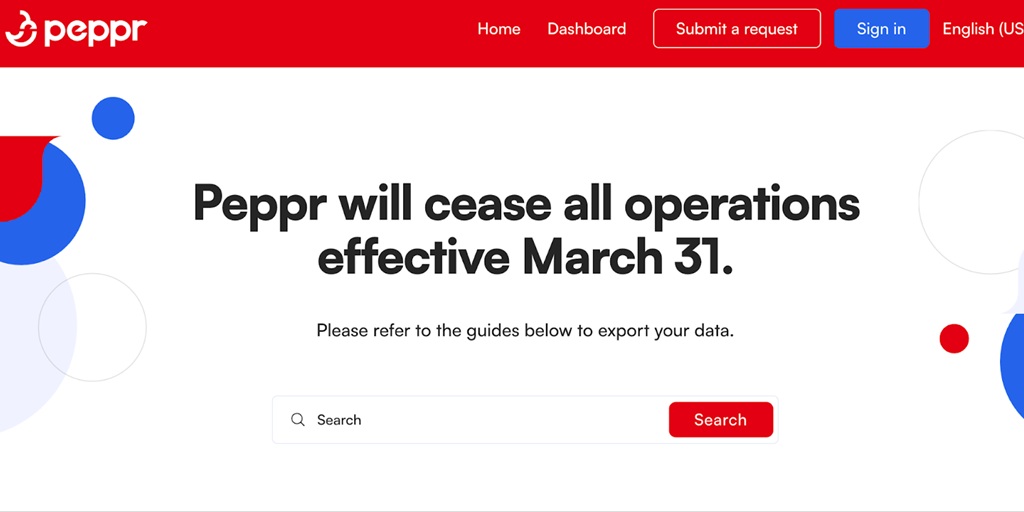
Less than a year after launch, U.S.-focused restaurant POS system Peppr has announced that it will cease all operations effective March 31, 2026.
Peppr was launched by Chinese food delivery & quick commerce giant Meituan, whose restaurant management systems were market leading in China. Peppr’s launch last year reflected an attempt to expand that expertise in the largest food service market in the world.
A dedicated team was set up inside Meituan’s Software and Hardware Services Business Group in 2023 to develop an overseas POS product suite that would become Peppr.
The “Software & Hardware Services” business group oversees shared bikes, power banks, as well as various SaaS solutions including restaurant management systems (RMS), hotel SaaS, and overseas SaaS – Peppr. Keeta-branded power banks that have appeared in some restaurants in London also came from this division.

Peppr was designed to target the broader market of independent restaurants in the U.S., rather than competing for the Chinese-operated restaurants in North America long served by players such as MenuSifu.
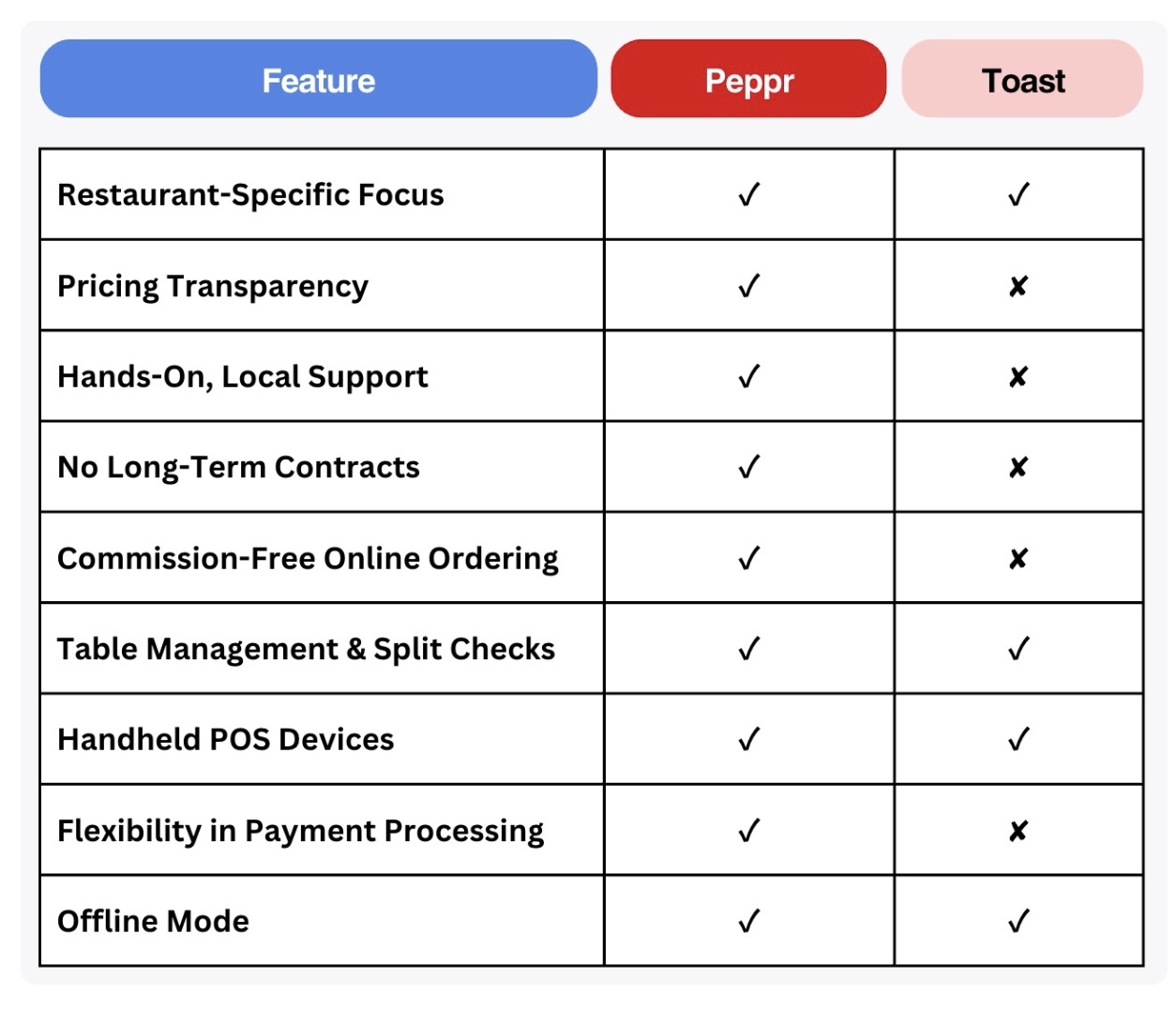
During its launch phase, Peppr positioned its product capabilities directly against incumbents like Toast, emphasising its functional breadth and marketing itself as the preferred solution for independent restaurants.
In order to enter the U.S. market, Peppr made substantial localisation efforts. The product was not a simple export of Meituan’s RMS in China; instead, it was largely designed from the ground up with the U.S. market in mind. For example, its features were adapted to accommodate tipping practices and other U.S.-specific workflows.
While in China, the RMS is sold in a limited selection of packages, Peppr broke its offerings down into modular components – POS hardware, ordering and delivery systems, kitchen display system and so on – allowing restaurants to select according to their specific operational needs.
At the brand and communication level, Peppr leaned into localisation. It’s headquartered in Dallas, Texas, and its tone, visual identity and external messaging were positioned to resemble a local restaurant tech company, with little visible trace of Meituan’s corporate imprint.
Recently, Peppr even introduced Peppr Grow, a fully managed digital marketing solution designed to help independent restaurants professionalise customer acquisition and retention.
Yet, after all, Peppr has chosen to shut down less than a year after the launch.
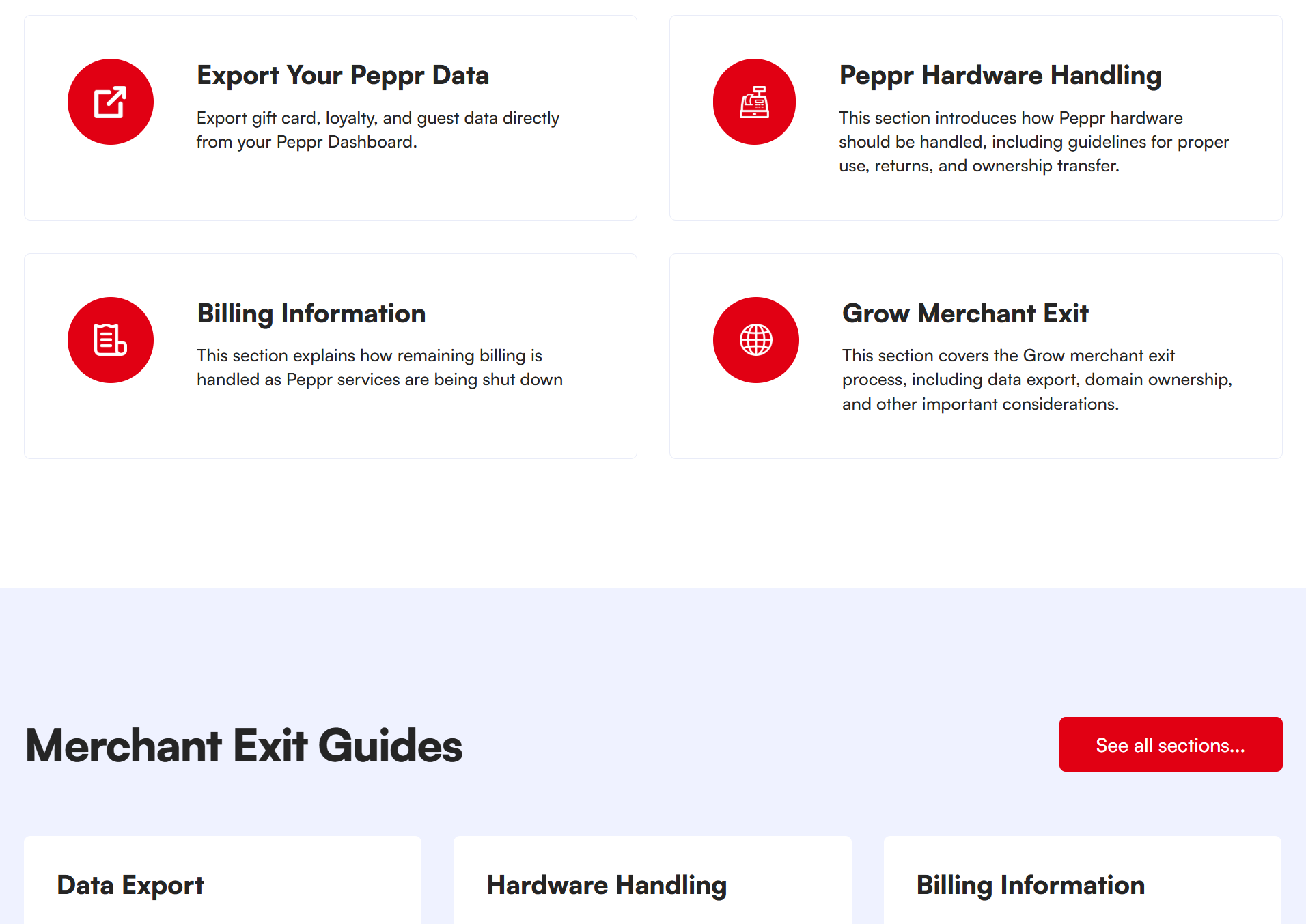
The company now provides detailed wind-down instructions: hardware and software handling, data migration processes, and exit guidance for merchants who subscribed to Peppr Grow. No new merchants will be onboarded.
Around Peppr’s exit, a number of explanations have surfaced – many of them are quite plausible.
One relates to resource prioritisation. Within Meituan’s broader strategic agenda, the U.S. has not been the highest-priority geography. Peppr could hardly get top-level commitment especially when Meituan faced fierce domestic competition in China during the ongoing food delivery and quick commerce war against Alibaba.
Another factor lies in regulatory and structural complexity. The U.S. market brings layered challenges across payments, data governance, taxation, and compliance, whose cost base and risk exposure differ materially from China.
Market maturity also plays a role. The U.S. restaurant POS landscape is deeply entrenched, with players such as Toast, Square, and Clover having spent years building stable products, distribution networks, and customer mindshare. Breaking into that equilibrium demands significant time, capital, and patience.
Beyond competition, there is the question of local depth. Restaurant SaaS depends on long-term service capabilities, sales relationships, and on-the-ground support infrastructure. For a new entrant, establishing these foundations can prove more demanding than building the technology itself.
These explanations describe the external environment Peppr was operating in. They are valid – but may not be sufficient.
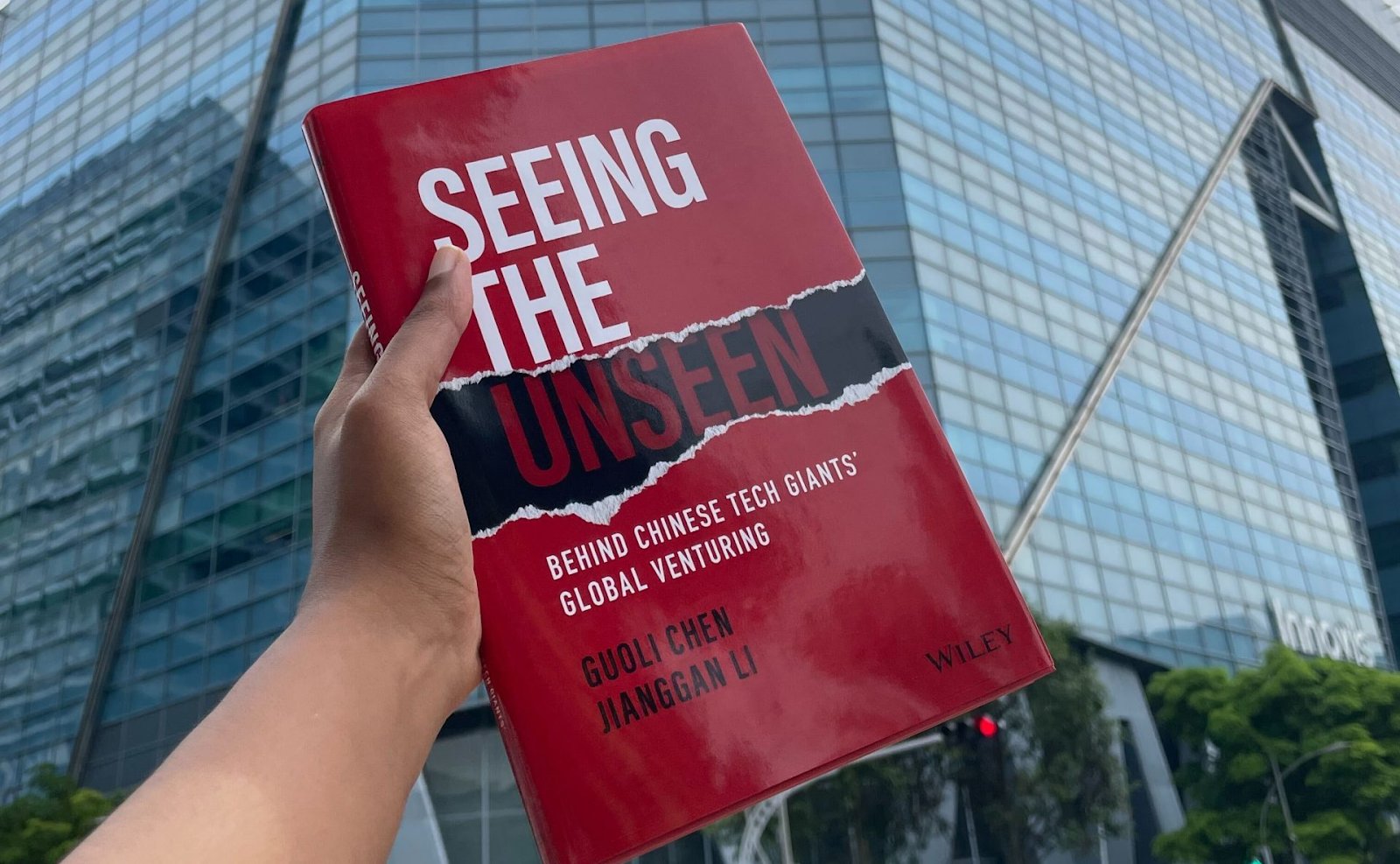
We spoke with several informed sources to better understand what may have gone wrong. In their view, a deeper issue was at play – one we have discussed repeatedly in our book Seeing the Unseen: it’s the organisation and culture.
China’s restaurant management systems are already highly mature. Building a competitive product from an engineering base in China is not the difficult part. The real challenge begins when that product has to be embedded into a market like the U.S. – a process that depends less on the product itself, and more on how well local execution is integrated with the headquarters’ priorities and organisational setup.
Leadership selection, team structure, allocation of decision rights, cross-border go-to-market alignment, and the organisation’s depth of understanding of local operating conditions all become defining variables. These are not abstract management questions; they actually shape day-to-day execution.
In China, operational frictions can often be absorbed by process discipline, execution intensity, and sheer organisational momentum. In the U.S., however, where local judgment, cross-functional collaboration, and middle-layer decision quality carry greater weight, even small misalignments can quickly compound. An organisation that has too much tight control from the HQ risks slow adaptation, while too much delegated decision power leads to challenges of resources coordination. Striking the balance is conceptually simple, but operationally difficult – especially across borders.
Peppr’s trajectory is therefore unlikely to be an isolated case. As Chinese companies push further into global markets – whether in technology infrastructure or chain retail – many will encounter a similar organisational inflection point.
Overseas expansion, much like building a startup, demands not just ambition but continued learning and commitment.
Iteration must lead to continuous structural improvement, but not repeated cycles of trial and error.