

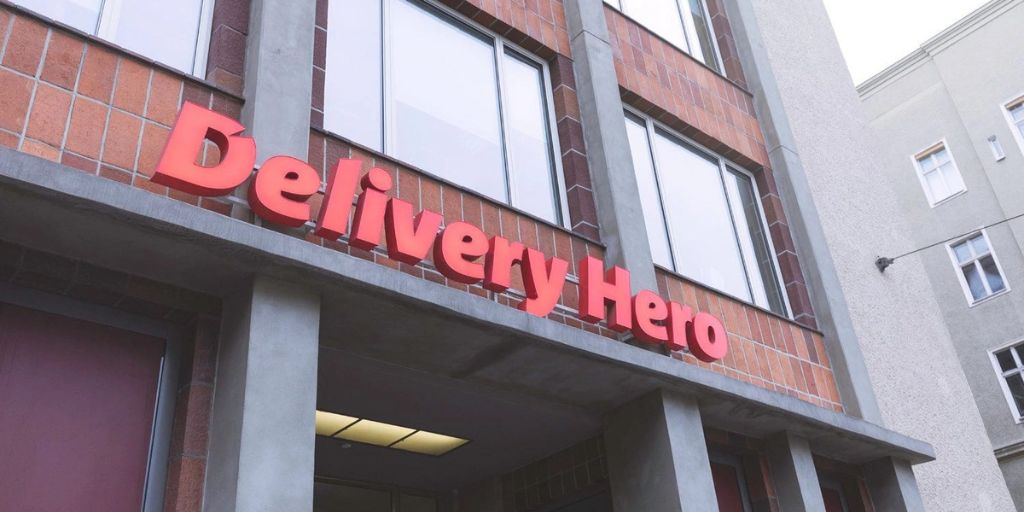
Yesterday (16 July), Uber announced a voluntary takeover offer for Berlin-HQ’ed Delivery Hero (DH) at €41.50 per share in cash. That values DH’s equity at US$14.8 billion.
Uber had earlier offered around €33 a share and been rebuffed; shareholders held out for €40-plus. €41.50 seems to be what it took to clear the bar.
Combined, Uber’s mobility and delivery footprint will now span 99 markets, with roughly US$236 billion in pro-forma 2025 Gross Bookings (at the order level you can read this as GMV – though the headline figure is mostly Uber’s rides, not food).
But Uber isn’t taking all of it. It keeps 50 of DH’s markets (~US$42 billion GMV in 2025); another 14 markets (~US$11 billion GMV) are bundled off to New York investment firm SSW Partners for about US$1.6 billion.
The main reason for this cheap divestiture is regulatory. Turkey is the cleanest example: Uber already bought 85% of Alibaba-backed Trendyol Go for ~US$700 million in 2025 (and Getir’s delivery arm this year), so DH’s Yemeksepeti – Turkey’s dominant platform – goes to SSW rather than Uber. SSW isn’t an operator; its role here, in the release’s own words, is to find these businesses “long-term homes”. Blunt enough.
The foodpanda businesses in SEA and Hong Kong, however, sit in Uber’s half. Which means Uber becomes a direct competitor to Meituan’s Keeta in Hong Kong, and to Grab across Southeast Asia.
The two profitable Gulf platforms that square off against Keeta – talabat and Hungerstation – plus Korea’s Baemin (which DH had put up for sale) all go to Uber as well.
In exchange, Uber commits to keep the Berlin HQ, leave Berlin staff untouched until 2029, and invest €2 billion in Germany over five years – a pledge to a country where the acquired company doesn’t actually operate.
Closing is expected in H2 2027, pending what will be a substantial pile of merger clearances.
Who goes to Uber, who goes to SSW
| To Uber (50 markets, ~US$42B GMV in 2025) | To SSW Partners (14 markets, ~US$11B GMV) |
| Baemin Korea; foodora Hungary; foodpanda Bangladesh, Cambodia, Hong Kong, Laos, Malaysia, Myanmar, Pakistan, Philippines, Singapore; Glovo Armenia, Bosnia & Herzegovina, Bulgaria, Côte d’Ivoire, Croatia, Georgia, Italy, Kazakhstan, Kenya, Kyrgyzstan, Montenegro, Morocco, Nigeria, Serbia, Tunisia, Uganda, Ukraine; Hungerstation Saudi Arabia; PedidosYa Argentina, Bolivia, Costa Rica, Dominican Republic, El Salvador, Guatemala, Honduras, Nicaragua, Panama, Paraguay, Peru, Uruguay, Venezuela; talabat Bahrain, Egypt, Iraq, Jordan, Kuwait, Oman, Qatar, UAE | foodora Austria, Czechia, Norway, Sweden; efood Greece; Foody Cyprus; Glovo Moldova, Poland, Portugal, Romania, Spain; PedidosYa Chile, Ecuador; Yemeksepeti Türkiye |
Our take
- The deal is essentially done. Uber had quietly built a ~36.5% economic interest in DH – 24.77% in voting shares plus 11.74% through derivatives. Now Prosus, holding ~17%, has irrevocably committed to tender. That takes Uber’s economic interest to roughly 53% – past the line.
- This is the through-line of our East Asia report. Last week we published Food Delivery Platforms in East Asia 2026, covering Japan, Korea, Taiwan and Hong Kong. Its central thesis was exactly this: DH retreating across East Asia, displaced by Asian operators – Meituan, Coupang, Grab.
- Our long term readers all know we’ve been critical of DH for years. HQ was, in effect, capital-markets operations with executives who never really understood or cared about delivery – riding financial engineering while meddling in product and operations. A pile of assets with no synergies, forced to accommodate HQ’s guesswork, while the people actually running markets on the ground bore the cost. In recent years many country GMs and senior managers simply stopped resisting – a defensive compliance that runs: “HQ is always right; I’ll do exactly what HQ tells me; and if it breaks, that’s not on me – I followed the plan to the letter.”
- DH peaked at €177 a share in early 2021 (Frankfurt); it’s being taken out at €41.50. That takeout price is smaller than Grab’s market cap today – and yet Korea alone (Baemin’s market: US$28.3 billion GMV in 2025, per our report) is bigger than all of Southeast Asia (US$22.7 billion). Niklas Östberg – who had earlier announced he’s stepping down – thanks the team in the release for 15 years of work. Fifteen years, to this.
- It’s the first time Uber and Meituan are at the same table. Uber Eats exited Hong Kong in 2021; through foodpanda it’s back – into the very market where Keeta made its 2023 overseas debut and has since overtaken foodpanda to become number one. The Gulf is more direct still: talabat and Hungerstation are DH’s most profitable assets outside Korea – profitable more by market structure than by operating skill, it should be said.
- Taiwan, in theory, is a win for Grab. Grab agreed in March to buy foodpanda Taiwan separately for US$600 million (closing H2 2026), and plans to fold the pink foodpanda brand into Grab green – erasing years of local brand equity in the process. Uber itself tried to buy foodpanda Taiwan, and was blocked by Taiwan’s FTC on Christmas Day 2024, on the grounds that the combination would reach ~90% market share. Grab’s deal is still under review. If it’s blocked, foodpanda Taiwan would pass to Uber along with the rest of DH – reconstituting the exact ~90% combination the FTC rejected two years ago. Both Uber and Grab can surely see that box.
- One more wrinkle: Uber is Grab’s largest single shareholder. It took ~27.5% (since diluted to ~14%) when Grab absorbed Uber’s Southeast Asia business in 2018 – the mirror image of Didi absorbing Uber China. Dara Khosrowshahi stepped off Grab’s board two days before our East Asia report was published; the read at the time was that it cleared the way for Grab’s Taiwan acquisition. With foodpanda SEA now landing at Uber, the competitive landscape might become messier. Whether Uber invests behind foodpanda in the region or simply holds the current line is unclear – it has no mobility business in Southeast Asia to bundle it with.
- A last detail. In the release, Dara praises DH’s “talented team” for building “an extraordinary business.” Call it a consolation prize to the deal makers. Operators might interpret it very differently.
How Uber integrates several dozen disparate businesses is anyone’s guess. What’s clear is that the intended logic is cross-platform synergy with mobility – and that little is settled until the process closes, sometime in late 2027.
Meanwhile, expect deal making for the orphaned businesses of DH, now under SSW.
P.S. For the deeper backstory, how DH assembled and then spent years dismantling this empire, and why a new generation of Asian operators built through competition are the ones now taking the assets, see our Delivery Hero deep-dive on Momentum Works Intelligence (MWI): Delivery Hero tried to copy the Prosus playbook. It went badly wrong.