



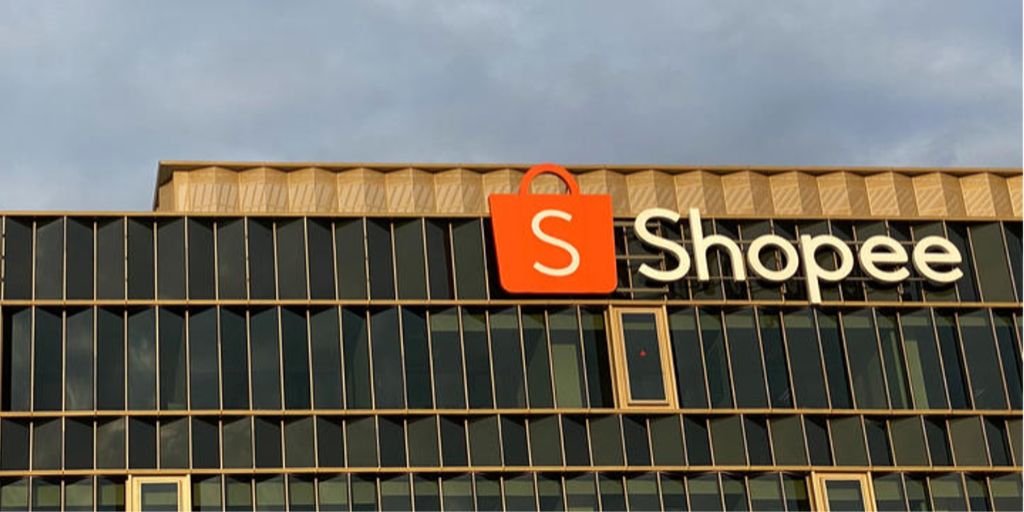
Some Shopee sellers in Brazil recently gained access to a new service called Entrega Turbo (“Turbo Delivery”).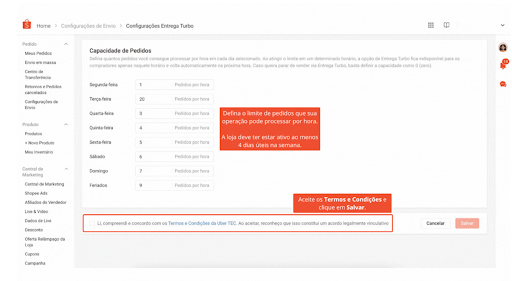
This is broadly similar to the “Instant Delivery” service that Shopee has rolled out across Southeast Asia, where sellers prepare orders and buyers receive them within hours. However, there is one notable difference: in Brazil, the delivery infrastructure behind the service is not Shopee’s own.
A crowded, contested market
Brazil is now one of the most contested ecommerce markets globally.
You have Shopee, which has already established a strong foothold; a rapidly scaling TikTok Shop; SHEIN, whose local execution has arguably been stronger than in many of its other markets; Temu, which nobody is really running seriously even though everyone assumes it is; and AliExpress, which has spent more than a decade building its presence in the country.
Against this backdrop, Mercado Libre, the local incumbent, is actively defending its dominant position and has been steadily upgrading its fulfilment experience. More importantly, its strategy appears increasingly long-term. The company has shown a willingness to sacrifice short-term profitability to strengthen its logistics moat. Earlier initiatives included lowering the threshold for free shipping. More recently, Mercado Libre expanded same-day delivery to Sundays across cities nationwide, further pushing consumers toward a new expectation: orders can arrive the same day, any day of the week.
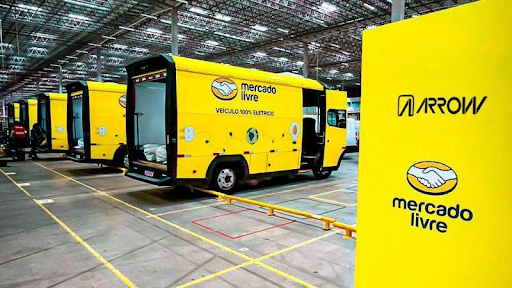
In comparison, both Shopee and J&T still have ground to make up against the self-built network Mercado Libre has spent years developing, and Chinese-owned players Zongteng and Anjun remain further behind.
Shopee’s quick commerce service in Brazil is powered by Uber
This is where Shopee’s latest initiative becomes interesting.
According to Shopee’s seller FAQ, the fulfilment partner behind Entrega Turbo is Uber – more specifically, Uber Direct, Uber’s white-label delivery platform. By Uber’s own account, Uber Direct is already live across 27 Brazilian states and more than 180 cities, and is open to anyone who wants to use it.
At first glance, Entrega Turbo looks like Shopee copying its Southeast Asia quick commerce playbook into Brazil. On the surface, the proposition looks nearly identical: both offerings promise rapid fulfilment and same-day delivery, and both turn platform sellers into nearby fulfilment nodes. One layer down, however, the fulfilment structure is, at least for now, quite different.
In Brazil, Shopee rents the fleet. In Southeast Asia, it owns one.
Shopee’s quick commerce push in Southeast Asia is largely supported by ShopeeFood’s delivery network, giving Shopee direct control over riders and dispatch operations. As we noted in our analysis of Sea Limited’s first-quarter results, quick commerce has become one of Shopee’s key strategic priorities. It is also one of the most difficult areas for TikTok Shop to compete against.
The reason is relatively straightforward – TikTok Shop does not own delivery capacity. The third-party delivery networks beyond ShopeeFood are, first, not necessarily able to work with TikTok Shop at scale, and second, are simultaneously developing quick commerce ambitions of their own. Either way, at least for now, TikTok Shop shows little interest in building a dedicated fulfilment network of its own, whether for ecommerce or quick commerce.
High-frequency quick delivery can strengthen platform stickiness: it keeps middle-class users inside the Shopee app, and may even prompt some shoppers who were about to order on TikTok to open Shopee first.
Shopee has already launched Instant Delivery in five of its six Southeast Asian markets. Singapore remains the only exception – notably, it is also the market where TikTok Shop’s ecommerce share remains in the single digits. 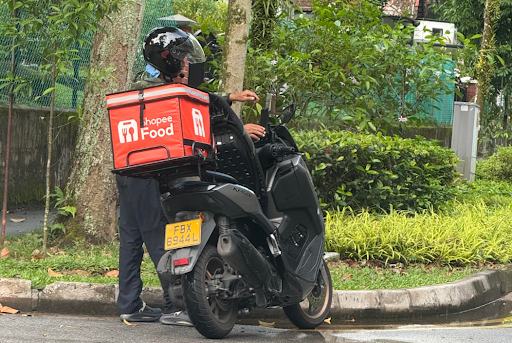
For Shopee, fulfilment is the moat
Sea founder Forrest Li has repeatedly highlighted how important quick commerce is to the Shopee ecosystem during last quarter’s earnings call.
In Southeast Asia, the fulfilment network itself has become a competitive moat. Despite operating in only four markets last year, ShopeeFood generated the region’s second-highest food delivery GMV, behind only Grab. Given its lower average order value, its share of total order volume is likely even higher.
Brazil, however, presents a different situation.
Shopee operates its SPX parcel network in the country, but it does not have an equivalent to ShopeeFood. For now, Entrega Turbo relies on Uber’s delivery infrastructure. This looks like a short-term move to validate the market. In the longer term, it would not be surprising if Shopee decides to build its own fleet and supplement the network with third-party partners where necessary.
Brazil’s instant delivery market is already crowded
While Meituan has slowed its expansion in Brazil, the country’s food delivery and instant delivery market is far from quiet. Didi’s 99food, relaunched last year, has already taken double-digit share in some cities. Amazon has taken a stake in Rappi, the Colombian-founded platform that was once Brazil’s second-largest instant-delivery player. And the local food delivery leader iFood recently confirmed a stake in Daki – the dark-store quick commerce platform tied to a Foodpanda co-founder, which had long struggled but recently turned profitable.
The moat requires control of both demand and fulfilment
One of the key conclusions from our Quick Commerce in Southeast Asia 2026 report is that Southeast Asia lacks neither riders, nor stores, nor traffic; what it lacks is the consumer habit. That habit is expensive to build, but Shopee, Grab and others are working hard to build it. In Brazil, the situation may be reversed.
Regardless, the strategic logic remains unchanged. The strongest position belongs to the platform that controls both the consumer relationship and the fulfilment layer, while delivering a compelling value proposition — whether that is through speed, affordability, or good quality.