

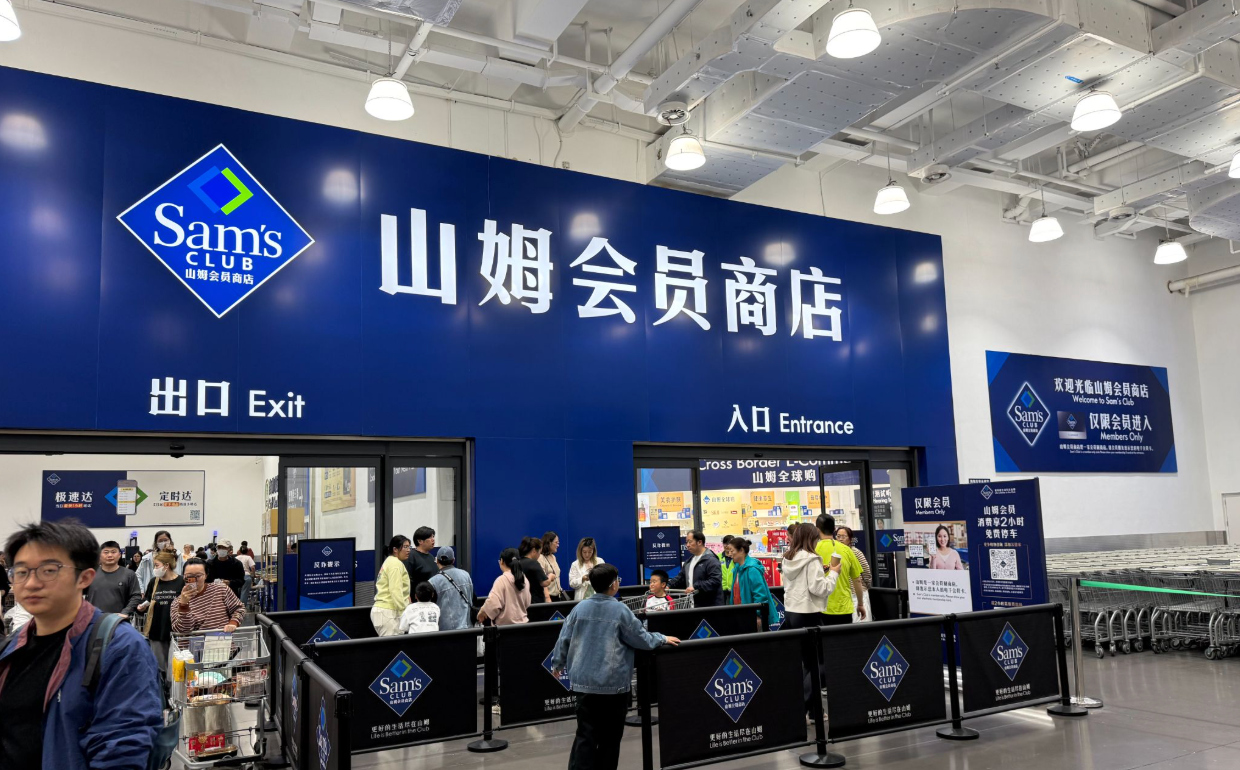
Many retailers in China are trying to copy the Sam’s club membership model by Walmart, but the journey isn’t smooth. Sam’s club’s success over the past few years has had a deep impact on China’s highly competitive retail sector. We’ve covered Sam’s Club in our previous articles “Sam’s Club is the real winner in China’s new retail war?” and “Sam’s Club model is the only sustainable model in social and live commerce?”
Here’s the latest take by Yilan Business (a Chinese retail publication) translated into English.
On 13th October 2026, Sam’s Club opened its 70th Mainland China store in the Eastern city of Jiangyin, drawing members from neighbouring cities. Seventeen days later, local rival RT-Mart’s M Light Membership Store, just 5.7 km away, announced that it would cease offline operations by the end of November.
Amidst this back and forth of retailers, some local companies were still trying to catch up. On 28th October, fudi (a rival membership store) signed an agreement to open its flagship in the Southwest metropolis of Chengdu. It will be the company’s first membership store outside Beijing.
Membership stores have been in China for 30 years, dating back to Sam’s Club’s arrival. Why has Sam’s been able to keep expanding while local companies have struggled to establish a sustainable operating model?
01 Membership stores are a business that requires long-term capital
At its core, the membership store business is built on members’ trust, centred on a carefully selected product range and supported by an efficient supply chain.
Consumers pay a membership fee because they expect the retailer to choose products for them and ensure their quality. The fee also gives retailers a source of income beyond merchandise margins. Whether retailers can keep earning that income depends on whether their products and services make consumers feel the annual fee is worth paying and persuade them to renew.
Sam’s Club already enjoys a strong market presence. For newcomers to the format, the most straightforward approach is to go up against its bestsellers and quickly make their own products competitive by pricing them lower.
In 2023, news outlet Daily People found that fudi sold a tiramisu for RMB79, versus RMB99 at Sam’s Club, and gave shoppers 300 grams more. RT-Mart’s M Membership Store launched its own premium grain-fed eggs to compete with Sam’s selected fresh eggs, pricing them RMB3.90 lower. Alibaba’s Hema X Membership Store launched a “Move the Mountain” pricing campaign, targeting such popular Sam’s items as durian mille crêpe, Swiss rolls, roast chicken and mochi.
Ronald Cai, the first general manager of Hema (Also known as FreshHippo) X Membership Store, says a single bestseller can rarely provide a lasting competitive advantage. China’s supply chains are already highly developed. Once a product proves itself in the market, other retailers can easily follow suit. What a membership store really needs is a product range that keeps drawing shoppers in, beyond a few bestsellers that can go up against Sam’s.
Hema X Membership Store previously devised a plan for its product mix. Around a third would come from proven bestsellers at Sam’s Club and Costco, around a third from products that had already proved themselves at Hema, and the remaining third from distinctive products developed by the membership store itself.
Proven products would reduce the risk involved in choosing what to stock, while products developed in-house would help distinguish the membership store from other retailers. The product mix would also need to change. Cai envisaged member households making two family shopping trips to the store each month. To keep the sense of a “treasure hunt” fresh, stores would need to turn over 20–30% of their assortment every quarter.
To offer a distinctive range and keep new products coming, retailers need the ability to set product specifications and develop products themselves, in addition to sourcing what is already available on the market.
Bao Yuezhong, a longtime retail industry veteran, said supermarkets and hypermarkets used to rely more on suppliers to offer products, leaving retailers to select them, negotiate prices and sell them. Today, retailers need to understand what consumers want, translate those needs into specific product standards and organise suppliers to carry out development and production.
For suppliers, meeting those requirements may mean changing raw materials, improving production processes or even moving upstream in the supply chain. A supplier company invested RMB200 million in a dedicated quail farm to meet Sam’s requirements for quail eggs. It manages the raising of the birds, egg collection, sorting and processing.
Suppliers are willing to invest if retailers can give them enough steady orders to spread the cost of product development, equipment and production changes.
The difficulty for newcomers is that they have few stores and limited purchasing volume. Suppliers have little incentive to invest, so it is harder to bring distinctive products to market. A less appealing range in turn makes it harder to attract new members and get them to buy again, making it even harder to reach scale.
To break that cycle, companies need to invest in stores, buying teams and supply chains before they reach scale, laying the groundwork for future product development.
Cai also said that when the Hema X Membership Store was starting out, the team proposed opening about 45 stores in three years. It hoped to establish a network quickly, raise the brand’s profile, attract members and use the performance of its first stores to negotiate better terms with property partners. As membership and sales grew, the business would be better placed to build an independent buying operation and get the whole model working.
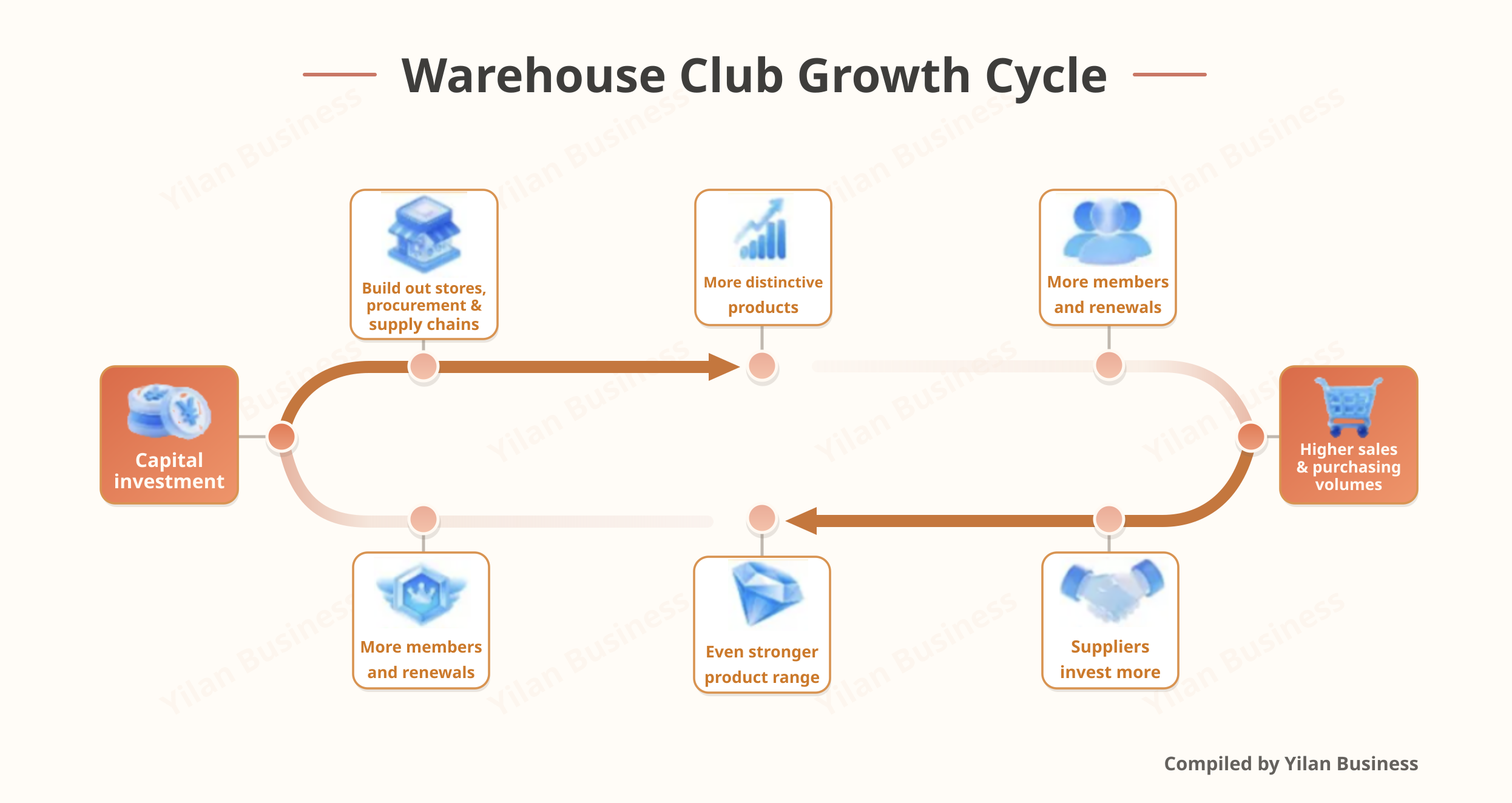 Even after the first stores open, companies must continue to bear the costs of product development, warehousing, distribution and day-to-day operations until repeat purchases by members and purchasing volume can support that spending. Membership stores therefore need long-term capital that can see them through the entire period it takes to build the business.
02 Ownership structure and control determine whether a long-term strategy can be put into practice
Whether long-term capital can truly support a business depends on more than whether the company has money. It also depends on who controls its allocation, who sets the investment horizon and where the business ranks within the group.
First, different types of shareholders have different investment goals and review periods. One shareholder may see an unprofitable business as a strategic asset worth developing, while another may see it as an underperforming asset whose losses should be cut quickly.
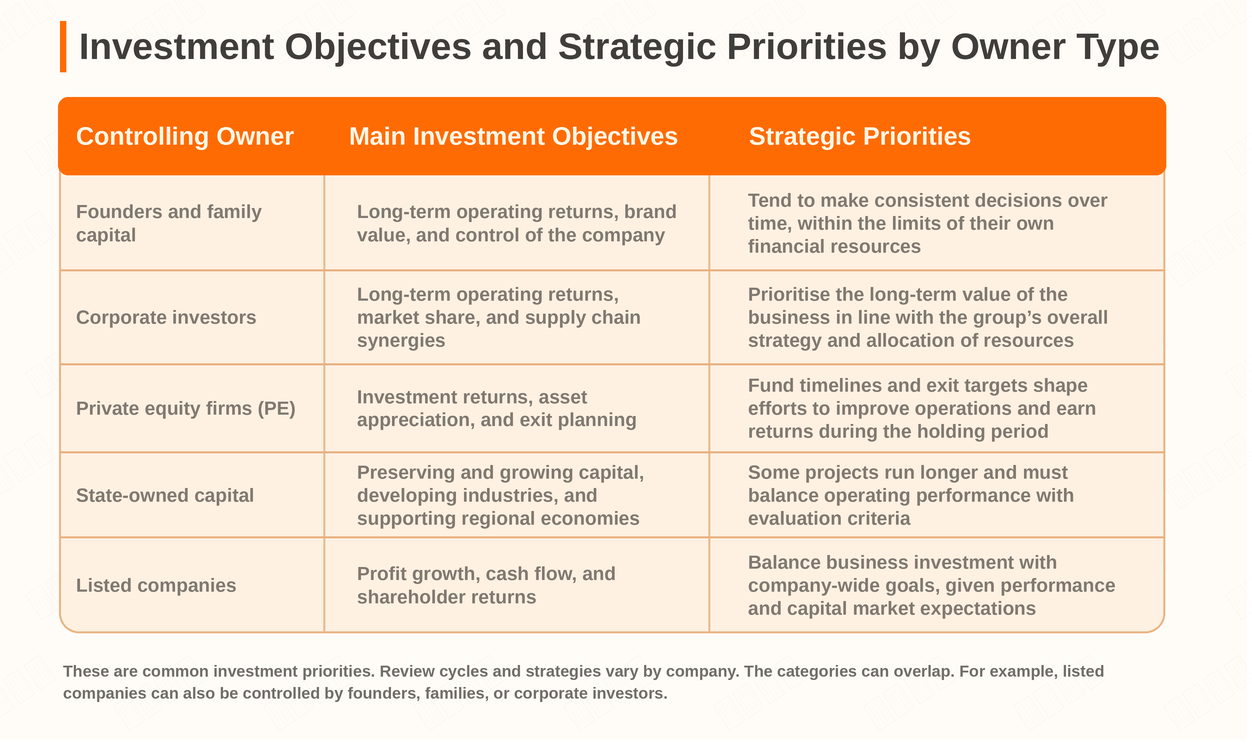 The changes at M Membership Store show how a change of shareholders can affect the conditions in which a business develops. In January 2025, Alibaba sold its 78.7% stake in Sun Art Retail – the parent of RT Mart – to private equity firm DCP Capital.
PE firms invest within a defined fund term and have plans for exiting. Alongside the company’s long-term development, they have to consider its cash flow, asset quality and potential for a higher valuation during the holding period.
That meant that if M Membership Store wanted to keep its paid membership model, it had to demonstrate that the business could improve profitability, raise returns on assets and increase Sun Art Retail’s overall value within the new investment horizon.
If it could not meet those requirements in the short term, further investment would weigh on financial performance. Scaling back or even exiting would then better serve the new shareholder’s objectives. In September 2026, M Membership Store issued refunds to members in bulk, formally ended paid membership and switched to the light store format.
Second, control determines whether the strategy can be put into practice.
Cai told Yilan Business that one of the three principles he and Hou Yi (the founder of Hema) initially agreed on was that the membership store should have an independent merchandising operation. In practice, Hema’s central merchandising team still handled most purchasing for categories that bring customers back regularly, including fresh foods, fruit, dairy and snacks. The X Membership Store team set out its product requirements, and the central team talked to suppliers.
The central merchandising team and the membership store had different operating goals. The central team sought efficiencies by sharing resources across store formats, while the membership store needed to offer a range distinct from those formats.
With the central team controlling purchasing in key categories, X Membership Store could only partly control which suppliers it used, how much it bought and how often it refreshed its range. Even when the membership store team knew what consumers wanted, it had to coordinate with the central team to make it happen.
Over time, this made it harder for the membership store to build up its own expertise in product development, supplier management and purchasing, and harder to establish a genuinely independent merchandising operation.
Finally, how a group prioritises its resources determines whether it can sustain long-term investment.
In February 2024, Alibaba chair Joe Tsai discussed focusing on core businesses and making changes to non-core assets. In March that year, Yan Xiaolei, who came from a CFO role, took over as Hema CEO. Hema raised its profitability requirements further.
Cai said that during his tenure, the first three stores all had positive store-level cash flow. That was a measure of how individual stores were doing. It did not show whether the membership store business as a whole was profitable. The head office team, warehousing system, independent buying operation and further store expansion still required ongoing investment from the group.
Once the group began emphasising profitability, these investments had to compete with other businesses for resources. Hema X Membership Store could not deliver enough profit in the short term and still needed further investment to grow, making it harder to secure priority for expansion and for building its operating systems. All X Membership stores eventually closed on 31 August 2025.
Shareholders therefore need to accept a long investment horizon, those in effective control need to maintain a consistent strategic direction, and the operating team needs enough autonomy. All three are essential. Even a business that starts out with funding and a strategy can lose the chance to keep building if shareholders change, the group changes direction or the operating team is given too little authority.
03 Why do Chinese retailers tend to change course?
Building a membership store ultimately comes down to which investors can be more patient.
First, Sam’s and its Chinese challengers entered the market at different points in its development, giving them different amounts of room to build a new retail format.
Sam’s entered China in 1996, when modern retail was taking shape and hypermarkets were expanding. Foreign retailers such as Carrefour and Walmart arrived in succession, followed by the rapid growth of chains including RT-Mart and Auchan. As modern retail channels expanded, suppliers gradually built up the capacity to produce and supply merchandise for large supermarkets and hypermarkets.
Chinese households at the time had limited purchasing power, car ownership was still uncommon, and families had yet to develop the habit of combining their shopping into larger trips. Membership stores thus had a relatively small consumer base. But China’s retail market was still growing, giving Sam’s more time to adapt to the local market and gradually adjust its merchandise and operating practices.
By the late 2010s, the consumer base membership stores needed had begun to mature. The rise of online retail also prompted traditional supermarkets and hypermarkets to look for new sources of growth. In 2019, per capita disposable income among urban residents reached RMB42,400. Online sales of physical goods already accounted for 20.7% of total retail sales of consumer goods.
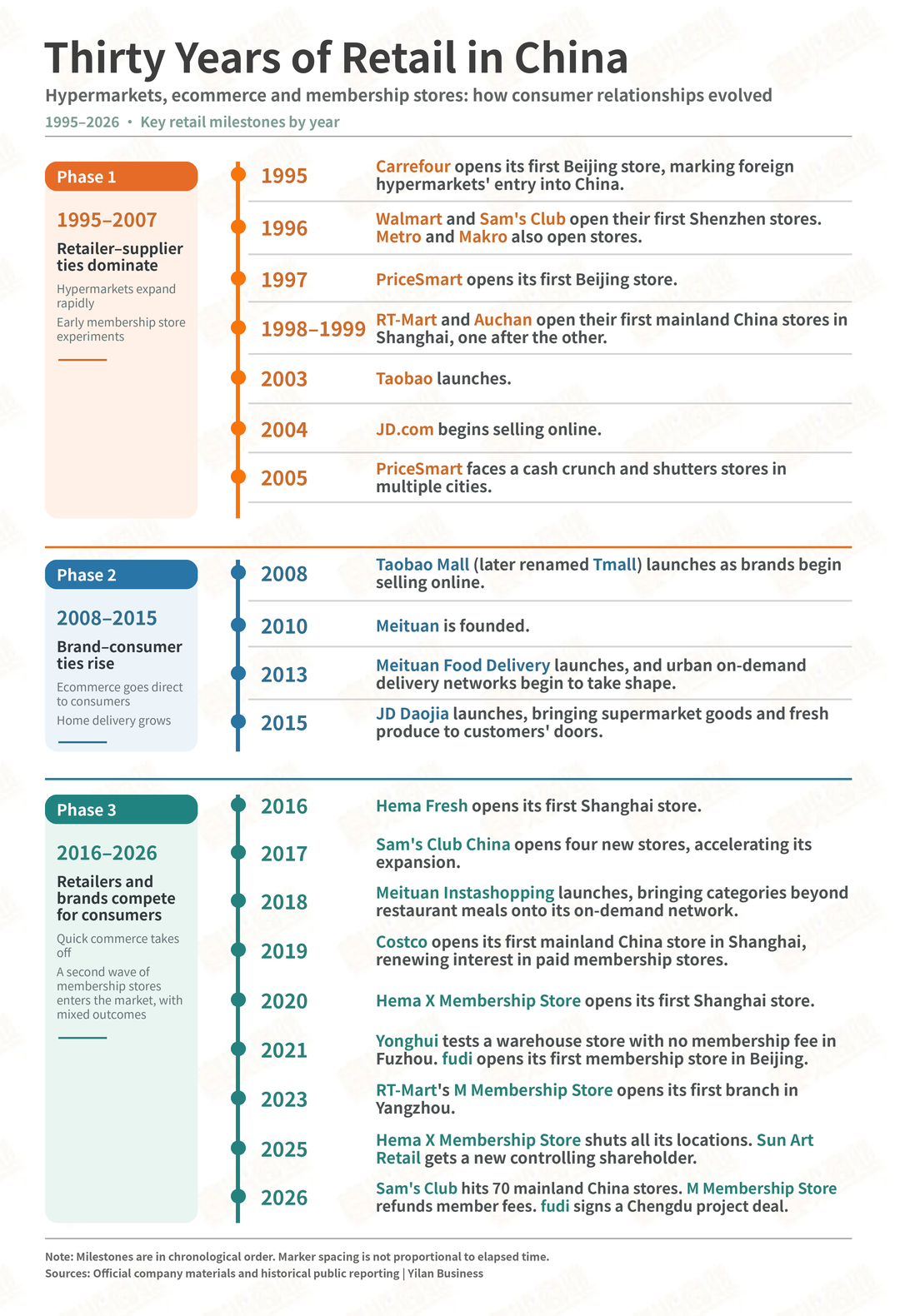 A second window opened for membership stores. In 2019, Costco opened its first mainland China store in Shanghai. Hema launched its X Membership Store in 2020. In 2021, Yonghui began looking to warehouse stores as a way to remodel its outlets. In 2023, RT-Mart’s M Membership Store opened in Yangzhou.
By then, traditional hypermarkets had entered a period of adjustment. The newcomers faced a Sam’s Club that already had the advantage of scale, as well as competition for household spending from on-demand retail and hard discounters. They also had to develop a new business while their parent companies were under operating pressure, leaving them less time to experiment.
Second, groups differed in how they allocated resources and how much authority they gave their operating teams.
Walmart has run Sam’s as a long-term membership store business. Early expansion was slow and included changes to its store network, but Walmart stuck with the format. It continued to build up its merchandise, membership and supplier base around the membership store model, while retaining the merchandising authority and operating autonomy the format required.
Some local companies, by comparison, set up membership businesses without building independent operating systems alongside them.
Those differences ultimately showed up in the businesses’ results.
Local retailers still have opportunities. Compared with financial investors constrained by fund terms and exit targets, some state-backed investors have longer investment horizons. They may also be able to use local commercial property, land and industrial resources to lower the cost of opening stores, giving the new format more time to develop.
Funding and resources are only the starting point, however. A membership store also needs a professional retail team that can independently develop products, manage suppliers and work with customers. The way traditional supermarkets and hypermarkets are managed may need to change to meet the demands of the membership store format.
After the Hema X Membership Store shut down and M Membership Store ended paid membership, fudi signed for its first Chengdu location, becoming one of the few local membership store brands still trying to expand across regions. Cai is sceptical about the move beyond Beijing. In his view, whether a membership store succeeds depends on whether investors can cover the upfront costs, whether the supply chain can deliver a steady stream of new products and whether the brand’s service can attract members and partners.
Whether the merchandise and operating expertise fudi has built up in Beijing can make members in Chengdu keep coming back will become clear only after the store opens. Until membership and purchasing volume reach scale, how long headquarters is willing to keep investing will determine whether the move beyond Beijing results in a single new store or a business it can replicate.