




Grab Holdings announced its Q1 2026 earnings this morning (4 May 2026 ET). After the earnings call, its pre-market share price rose slightly, by around 2.2%. One interesting thing is that Grab seems to be continuously exploring the format of its earnings calls. In the past, they hosted audio webcasts on Q4; last quarter, they adopted video livestream format; and this time, the webcast link goes directly to Zoom.
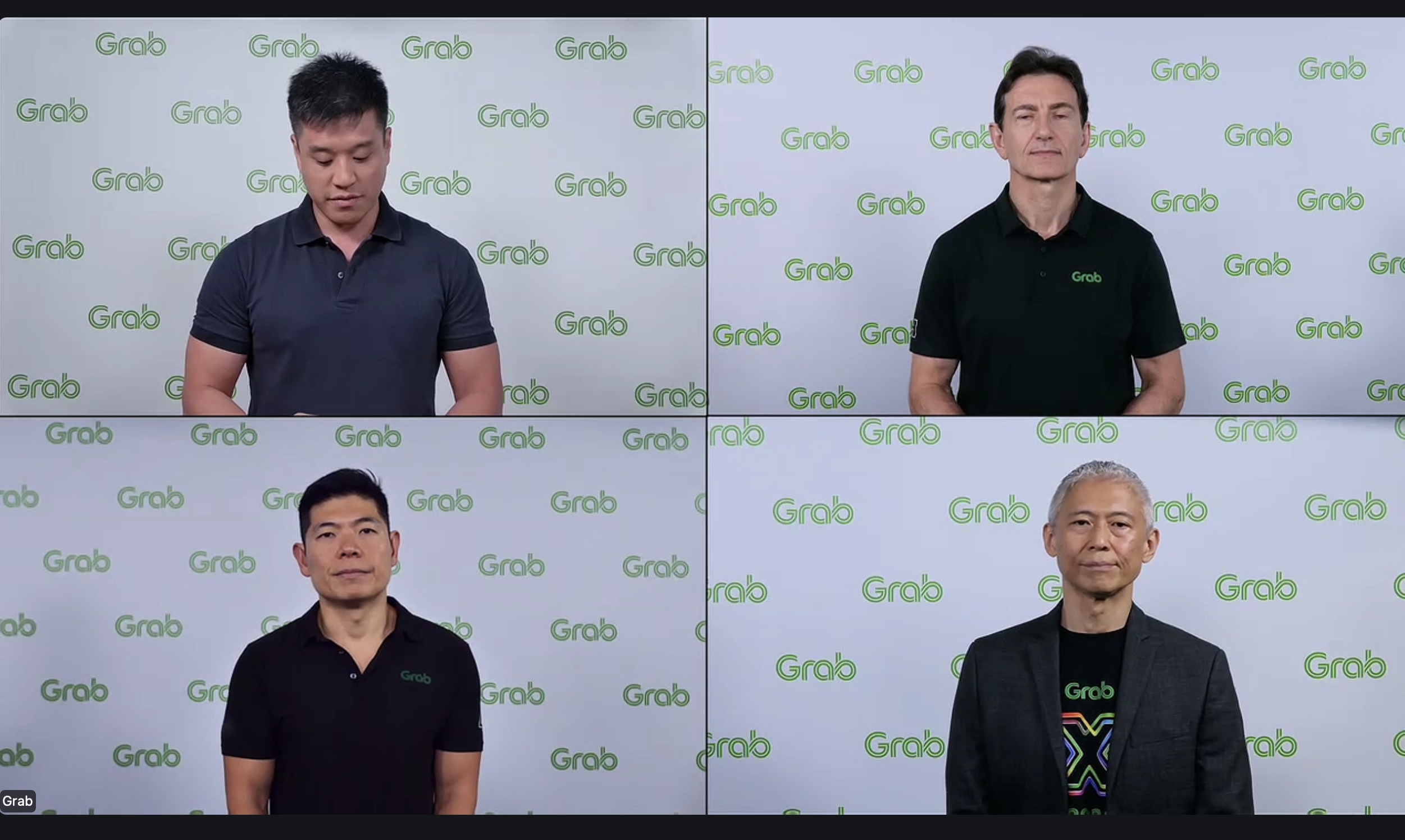
We will share our thoughts soon – but here is what we have captured from the Q&A section of the earnings call. You can find the prepared remarks by the management on Grab’s investor relations website.
Q&A Session
Q: Analysts from Morgan Stanley & Bernstein & HSBC:
What’s the impact of the ongoing Middle East conflict and higher fuel prices across your various operating countries? Has it started to impact business performance in the second quarter? And, can you quantify the impact and what is our strategy of managing long-term fuel risks?
A: Alex Hungate, President & COO:
This is a critical topic, and as I said in my prepared remarks. Q1 results actually give us a good solid foundation entering the year, and as you saw from the slide pack, the demand trends in April have remained resilient: our mobility business in April has seen weekly average transaction volumes sustained at 32+% year on year; and our deliveries business continues to see record high daily transacting users in April. So it’s a good start to the year.
The business, in fact, is in a structurally more resilient position today than it has been throughout our history. Product innovations we have made have really targeted affordability and reliability. Group Order, for example, has GMV up 74% YoY. And we launched Group Ride at GrabX last month, which is a similar concept for sharing rides to reduce pricing for individual consumers, and that’s now available across all six of our core markets. GrabUnlimited, of course, is very good value for higher-frequency customers, and it continues to account for 1/3rd of our deliveries GMV. So all of these are highly affordable products which keep the demand strong even when consumers are stretched.
We’re monitoring the fuel situation extremely closely, and of course we will not hesitate to act further if needed. In the medium term, we are committed to accelerate the EV transition to reduce our driver partners’ exposure to fuel price volatility. So, for example, in Thailand and Philippines, we have a drive-to-own program that connects our drivers with OEMs, like BYD and GAC, where we have deals of up to 70,000 vehicles available across six markets. With access to financing, they can own those more easily. In Vietnam, we’ve secured preferential charging rates also through our charging network partners, EBOOST and CHARGE+, which helps our drivers in the transition also. And finally, in Thailand, I am pleased to say that our total fleet supply has crossed 30,000 EVs on the platform, and demand for those from consumers is also strong, where they can select that EV option, and that demand has grown by over 35% YoY. So, this fuel crisis has become an opportunity in the sense that it helps us to accelerate that EV transition.
Q: Analysts from Bernstein & Macquarie:
For the financial services segment, your loan portfolio showed modest quarter on quarter growth, but there was a step improvement to your segment adjusted EBITDA. Could you describe the factors that led to these improvements and what can we expect in coming quarters, and how do you intend to drive that?
A: Alex Hungate:
Yes, you’re right – strong EBITDA improvement in financial services both quarter on quarter and year on year. So, that is the operating leverage that we’ve been talking about starting to come through very strongly now as we scale up our loan portfolio. Revenue growth accelerated 43% year on year, and 38% on a constant currency basis. And more than 1/3 of that incremental revenue dropped straight to the bottom line for financial services, demonstrating that operating leverage that we’ve been speaking about. The loan book growth is strong year on year, and importantly, the credit quality is improving alongside that, so loan disbursements grew 67% year on year to over a billion. But the growth was modest – you are right – this quarter, because of seasonal factors, and that’s a normal factor for the first quarter. The ECLs as a percentage of our gross loan portfolio has improved year on year though, and that does show – I think the improving quality of our credit models. We’ve been proactive on risk management though, so we’ve been tightening for some sectors, and in other sectors where conventional lenders have stepped away, we’ve seen more opportunities. In Q1, we applied those additional ECL overlays to account for that macroeconomic uncertainty with that selective tightening, also part of our change in the risk appetite.
Looking ahead, we do have some experience, of course, of managing these kinds of shocks to the macroeconomic situation. So, our underwriting models have already been through the similar fuel price shock that we saw at the start of the Ukraine conflict, not to mention COVID as well. And in both instances, our credit quality remained within our risk appetite throughout. So we continue to monitor the portfolio performance super carefully. We aim to generate healthy returns on risk-adjusted returns for our loan portfolio. And we are reiterating our second half 2026 breakeven target for financial services.
Q: Analysts from Citigroup & Morgan Stanley & Macquarie & Barclays & HSBC
Regarding recent news in Indonesia – Indonesia’s cap on rider commissions is now 8% – can you clarify if that is applicable to 4-wheels? What are the levers available to cushion the key negative impact from lower rider commission? What’s the likely impact on profitability due to the proposed change? And what’s the impact on the delivery segment, if any, from the proposed change? Maybe you can help quantify it.
A: Alex Hungate:
Okay, so it does appear that the immediate regulatory exposure is highly specific – the recent announcements have explicitly focused on Ojol online drivers who are our 2-wheel ride-hailing partners. The 4-wheel drivers earn well above the minimum wage, so we believe that they’re less of a concern for the government and regulators in Indonesia. That said, of course, we’re engaging very proactively with the relevant ministries, and trying to seek absolute clarity and technical aspects of how the decree will be implemented. It’s essential we believe that together with regulators, we shape a balanced implementation of this decree, so that our Indonesian mobility marketplace remains healthy and the driver partners’ earnings remain well-supported. It’s worth noting, as I mentioned in my prepared remarks, that 2-wheel mobility, the Ojol drivers that the decree referred to in Indonesia is less than 6% of our total mobility GMV. So, we are therefore reiterating our expectations for mobility margins to stabilise within the historical range and not go outside of that range.
Q: Analysts from Citigroup & Bernstein & DBS:
In relation to the 8% commission cap in Indonesia, is the likelihood of consolidation now looking higher in Indonesia as well? Does a shift in policy in Indonesia change your near to medium term investment or resource allocation priorities?
A: Peter Oey, CFO:
Look, I won’t comment on specific M&A speculation, but I’ll speak to how we view our position in this evolving landscape. With any M&A, we always take into account the regulatory environment. It’s really critical, and we want to work with the relevant agencies there also. Because there’s always synergies and dis-synergies that we could accrue from any transactions. And as I’ve always spoken in many, many quarterly earnings, we always have a very high bar when it comes to M&A transactions. When you specifically look at Indonesia, and also our M&A portfolio, we’ve always been taking a very diversified approach – you see that in the lines of our businesses, and you see that our product continues to expand. Also broadly, we’re entering our 9th market, which also shows our diversification into geographies. So, the way we always position the lens that we take is diversification, and that’s really important.
So, specifically for Indonesia, as Alex just mentioned, it’s really important that we have a very constructive and a very healthy ecosystem, both for our driver partners, consumers, as also for our restaurants. So specifically for Indonesia, our strategy remains fundamentally unchanged, despite what we’ve seen over the weekend, and also the way we approach the strategies in Indonesia. Our Indonesia mobility business continues to grow double digits year over year. It remains very, very stable quarter on quarter in spite of the seasonal headwinds. And as I am always reiterating, we are very highly disciplined in our capital allocation, so when we evaluate any strategic opportunity, it is strictly through the lens of long-term shareholder value, and also, how can we diversify our Grab business.
Q: Analysts from Citigroup & Mizuho
Given a step up in partner incentives to offset elevated fuel costs, how has this impacted demand elasticity and translated into revisions to your near-term financial outlook for mobility? Should we expect levels to remain elevated, or do you see offsetting levers such as EV adoption and cross-border rides that could bring incentives back down in the second half, and support the sequential EBITDA ramp up implied by your full year, 720 million guidance?
A: Alex Hungate:
Yes, Q1 you can see that driver incentives were elevated. To specific drivers, though one is and most importantly, was the confluence of lunar new year and Ramadan within the first quarter – both in the first quarter this year, creating acute supply pressures as usual during those two festive periods. The second factor was, of course, the fuel crisis. Towards the end of the quarter, during March, we started a deliberate decision to support our driver partners with the elevated fuel prices across some countries in the region. So as we move into the second quarter, of course, the festive-driven incentive pressure normalises, but fuel does remain an important variable that we’re watching very, very closely. The targeted earning support will continue through into the second quarter, but no longer with the seasonal impact. We expect this first quarter to be a peak in the driver incentives. We are reiterating the full year guidance, therefore, of 700 to 720 million for adjusted EBITDA, assuming that peak, and not that it’s a run rate, but it’s more like a peak.
But I would say we’ve got multiple levers available to us, including if necessary more emphasis on advertising and financial services monetisation to defend the overall margin trajectory for the full year, if those fuel pressures persist through the full year. In the medium term, if those elevated fuel prices continue, we would have to pass some more of the costs on to consumers. But, of course, we’ll do that very judiciously because we want to maintain healthy demand for our driver partners through this difficult time. Finally, I think it’s worth emphasising: we saw that the impact of AI marketplace optimisation this quarter was very powerful, and we did use it to manage, for example, incentive spend for consumers – you can see that the incentive spend for consumers became more efficient during this quarter. And so, going into the full year, we will also have that powerful capability at our disposal to try and manage some of the volatility and incentive spends.
Q: Analysts from Morgan Stanley & Mizuho
On AI monetisation, are you building toward a merchant and driver SaaS revenue stream that sits outside the current commission rate structure, or are these going to be remaining bundled into the existing take rate? What AI tools are you investing in mainly into this quarter?
A: Anthony, Group CEO & Co-founder:
Look, our approach to tools like Merchant AI and Driver AI Assistant Coach has been to solve everyday problems that our driver and merchant partners face. There’s no reason why our partners should not have access to these tools that will enable them to grow their customers and earnings. If we get that right, the tools and the partnership right, we build something competitors can’t easily replicate, and it creates high loyalty, high engagement, which results in them choosing us as their primary platform – not just because of the tech, but because of the trust, and of course, growing earnings for them. This has translated into concrete results within our ecosystem: on a year-on-year basis, not only do we see the growth in the number of active margin partners, but their earnings also grew 12% during the quarter; for our mobility business, total active driver partners increased 4% quarter on quarter and 16% year on year to reach another all time high in spite of macroeconomic uncertainty. So when we build these AI tools well, and when we genuinely partner and outsource them, the economics tends to follow naturally.
Q: Analysts from Morgan Stanley & Mizuho & Barclays & JP Morgan
Regional corporate costs increased year on year to 114 million for the first quarter. Can you help us understand how much of the step up is AI infrastructure cost, whether it’s tokenisation or cloud, versus general inflation as well as FX? And how should we expect the AI spend to start translating into measurable cost savings elsewhere in P&L that can offset this higher regional corporate cost run rates?
A: Peter Oey:
Sure, let me start by saying that the step up that you saw in the first quarter of regional corporate costs was a conscious decision. We made that decision as a management team to invest in the AI infrastructure that we’ve been talking about for many quarters. Anthony just answered a question regarding AI and what we’re deploying to our partners, as well as now, we’re starting to deploy to our consumers also at the same time. And that really underpins the Grab intelligence layer that we spoke a lot about actually a few weeks ago at the GrabX event regarding the new 13 new product AI experience features that we’re rolling out. So, we are investing in AI, specifically towards the tokenisation stack that we saw in the first quarter, and also the cloud capacity that needs to run and that powers those tokenization at the same time.
Now, the early returns on those investments are critical and also we can’t discount, because that’s also showing up in the numbers, and Anthony just also shared some of those on the driver side and the merchant assisted by where they’re seeing the impact on earnings, which is really a critical part of that healthy ecosystem. If you look at the adoption of these driver AI systems, which is now over 50%, we’ve generated over 1.25 million interactions in just two months since we rolled it out. We’ve seen also for merchants that are using the AI assistant, their GMV is also up double digits on a year on year basis. So they’re thriving as a merchant, and we’re benefiting also as a platform from that. And, these are the types of things that we want to see more and more coming out from these AI rollouts, which is really critical.
Now, if you strip out all these AI investments, and we saw some FX headwind also from the weaker USD, our underlying cost base, which is really important, remains lean and disciplined, and that’s been a mandate at how we run Grab. So, I am not expecting any further step ups from regional corporate costs. We expect the regional corporate costs to stabilise around the levels that you saw in the first quarter for the rest of 2026.
Q: Analysts from Morgan Stanley & JPMorgan
Grab has announced there’s an acceleration to repurchase 400 million dollars of shares at the end of March itself. Nevertheless, the basic and diluted shares have increased quarter on quarter. So what is the impact of dilution from stock based compensation? And with regard to the share repurchase program, would you consider upsizing this given the current stock price?
A: Peter Oey:
If you step back, we announced a 500 million dollar share buyback program early this year, and I announced also a 250 million dollars accelerated share repurchase, and an additional 150 in contingent forward purchase on 24 March. So, a total of 400 million dollars has been accelerated only in the market for five to five trading days in Q1 itself, so you can’t look at that in isolation now. Both these programs. I expect them to be executed over the next 4 months. So, I’ll share a lot more in the next quarterly earnings when we look at the Q2 results. Now, in terms of share count, it would amount to roughly around 2% of our total share count, which will more than offset the dilution from stock-based compensation. So that’s how we’re viewing it. As a reminder, there’s still another 100 million left to go in the share buyback program. And we’ll continue to have discussions around capital allocations with our board.
Q: Analyst from Mizuho
Regarding the grocery contribution, you mentioned that GrabMart is only 10% of delivery GMV, but growing 1.7 times faster than food. When you look at the grocery TAM in Southeast Asia and the economics of the GrabMart model itself, where does GrabMart need to be to contribute to delivery GMV by 2028 to underpin the 1.5 billion dollars EBITDA target? At what point does grocery become a margin accretive segment rather than a drag to the blended deliveries economics?
A: Alex Hungate:
So, GrabMart is an exciting segment. I mean, the TAM is very large, arguably larger than food delivery altogether, so we are doing a lot to accelerate the product innovation. Particularly, the front end, the AI powered shopping agent, which we think will transform the ease with which consumers can, for example, create a weekly shopping basket, and then improve the targeting for GrabMall cross-sell as well. And by the way, GrabMall grew more than double-digit quarter-on-quarter, so I think very, very good signs for both of those things. Overall, as a result, the MTU is growing into grocery at 2.6 times the rate of food MTU growth on a year on year basis. So that shows you that it’s really expanding the top of our funnel, which is extra important in the age of AI in terms of generating data and deepening the long-term value relationships that we have with our consumers. And then the order frequency that we saw was 1.8 times higher than the food only users, which illustrates that long-term value enhancement that I was speaking about.
So, over the long term, the north star is very clear. We’ve got global peers who have achieved like 20-40% market penetration as a percentage of their deliveries business overall. So, it’s definitely the right model that we’re pursuing. And with regards to the three-year guidance that you asked about, we expect the GrabMart will maintain its current growth momentum and outpace deliveries’ growth throughout. And therefore, the higher basket sizes, the engagement, and the lifetime value we can achieve reinforce our conviction to achieve a long-term sustainable economics alongside it, as part of a comprehensive super app LTV relationship with customers powered by AI. So that’s how we think about it, rather than standalone vertical by vertical. That’s the power of our approach, and that power becomes enhanced in the AI world where our optimisation across all those verticals, to get to the right LTV customers is particularly powerful.
Q: Analyst from JPMorgan
The first question is regarding the deposits: deposits have remained flat quarter on quarter. The question is, what are the challenges that Grab is facing in growing its deposit base? The second part of the question is on the loan book and securitisation: would Grab consider securitising its loanbook to free up capital to grow the business forward as well?
A: Alex Hungate:
First of all, we actually don’t have any issue at all in raising deposits. We’ve been really gratified at the trust that consumers have in the Grab brand, the Grab ecosystem, and our capabilities to protect their money. And if you look at the pricing of our deposits, we are never the most aggressive in the market. We’re able to actually gather sufficient deposits to create the right shape of the balance sheet. So there is no point having excess deposits, particularly in this yield curve environment. So what you’re saying is us carefully managing the level of deposits to make sure that we optimise for P&L purposes. If we needed to raise more deposits, we’re very confident that we can do that.
A: Peter Oey:
Now, on the topic of securitisation, it’s a potential tool for us to be able to recapitalize or recycle on a long-term basis. Particularly, as the loan book grows, just to remind everyone, we have two parts of our lending book: we have the banks’ piece, which is backed by the customer deposits; and then you’ve got also our grant financial services, non-bank side, which is on balance sheet, equity-wise. If you look at our current priority, it is scaling the lending through our digital banks. We have deposits of roughly 1.6 billion dollars. There is still a lot of headroom in terms of the loan to deposit ratio that we could deploy towards those loans. We are still on target to get to the 2 billion dollar loan book by the end of the year. So, our priority now is to make sure that our digital bank’s capital structure is efficient, and those deposits are an important component of that. But long term, there could be options for us to recycle, but that’s not an immediate priority right now.
Q: Analyst from HSBC
Regarding Foodpanda Taiwan’s recently announced acquisition, can you share the progress and what are the key milestones to watch and likely timings of those milestones?
A: Alex Hungate:
Well, maybe a very brief final answer then. So, we’re in the middle of the approval process with regulators. So, no real updates today, but we’ll make sure we provide updates as soon as we get any further feedback. Thank you.
[THE END]
Disclaimer:
This transcript was compiled by Momentum Works from the publicly available earnings call of Grab Holdings held on 4 May 2026. It is intended solely for informational and analytical purposes. While we strive for accuracy, the transcript may contain unintentional errors or omissions due to audio quality, accents, and real-time interpretation.
All spoken content remains the copyright and intellectual property of Grab Holdings. Please refer to the company’s official recording or transcript for complete accuracy and authoritative reference.
Any analysis, commentary, or opinions provided by Momentum Works are independent, based on our own research and perspectives, and do not represent the views of Grab Holdings or any other organisations mentioned.