



HEYTEA is a well loved brand amongst our friends – many Southeast Asian executives we know would buy it every day on a business trip to China.
The brand, founded in 2012, has also been very popular in China. At its peak, queues stretched for hundreds of metres at its outlets, and every visitor would very eager post their HEYTEA experience on social media – an act called “打卡” (“check-in”) in Chinese.
It may not be apparent to friends outside China that HEYTEA has hit a wall. The number of stores, according to a Chinese tracking site, has declined from 4,610 in 2024 to 3,930 in 2025.
Furthermore, since February 2025, all new franchise applications have been paused.
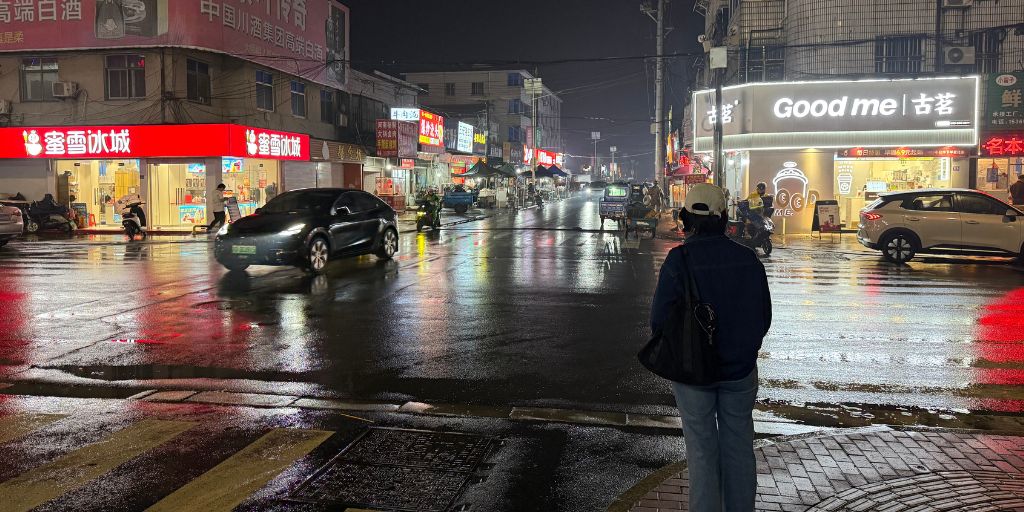
In contrast, Good Me – a less well known bubble tea brand, expanded fast. The company made RMB3.1 billion (US$456 million) profit in 2025, growing 110.3% from the previous year. It had a total of 13,554 stores at the end of 2025, 3,640 more than a year ago.
More impressively, Good Me’s same store sales have risen every year for ten years – it has never declined.
For perspective: the same store sales of Chagee, a much more famous brand, has been declining for six consecutive quarters.
Why is Good Me outperforming HEYTEA – and even Chagee? Xiaomasong (小马宋, real name Wang Yong, 王勇), a marketing strategist who has been advising Good Me since 2016, recently posted a video explaining why.
We captured some of his key points below.
- In 2016, Good Me’s founder was puzzled: HEYTEA was the hottest brand in China, while Good Me had spent 6 years opening 600 stores and nobody talked about them. He asked Xiaomasong: “should I just do as HEYTEA does?”
- As a matter of fact, Xiaomasong’s team had studied HEYTEA’s model at the time and found a flaw in HEYTEA’s business model – the customers do not come back. The reason is the price. RMB30 for a cup of tea was too expensive for everyday consumption. As a result customers would buy a cup, take a photo, and share the experience on social media.
But they won’t come back everyday. - The lack of returning customers led to lower density of stores, and challenges in the supply chain. Xiaomasong compared HEYTEA’s and Good Me’s procurement costs for strawberries. The strawberries are typically grown in the region of Yunnan (a plateau province bordering Vietnam, Laos and Myanmar). Yunnan is close to 3,000 kilometers away from Shanghai or Beijing – and a one way drive would take at least 25-30 hours.
For optimal results, strawberries need to be 90% ripe when they reach the stores. Good Me, with around 2,000 in two adjacent eastern provinces alone, was able to build its own supply chain with warehouses. They would buy strawberries directly from the farm – and arrange for deliveries to store once every two days.
In contrast, HEYTEA, which does not have the store density, had to buy strawberries directly from local wholesale markets at almost twice the price. The supply is not only more expensive, but also less reliable. What happens if the wholesale market runs out of quality stock? - To this day, Good Me is the only bubble tea brand in China that can deliver fresh produce to stores once every two days. Its logistics has been acknowledged as the strongest in the industry. The brand that no one paid attention to quietly worked on expanding their infrastructure. This allowed Good Me to cut down on procurement costs, giving them a clear advantage that HEYTEA cannot compete against.
- HEYTEA could have countered this with smart investments, according to Xiaomasong. Flush with funding at its heyday, HEYTEA invested in Seesaw Coffee, 混果汁, a string of brands that were similar to themselves – premium and marketing-focused. But this means that they are all equally unable to build a supply chain that could rival Good Me.
- Xiaomasong believed that HEYTEA should have instead invested in Mixue or Good Me itself. With this partnership, Good Me or Mixue would run the supply chain, HEYTEA would run the top end (marketing, sales), while enjoying the same low cost procurement. Then its high prices would bring high profit (instead of high prices with no profit).
- HEYTEA has recently pivoted to expand to county-level cities, lowering their price per cup. Xiaomasong recently met with a HEYTEA franchisee in eastern China who was having a hard time. The franchisee had already closed 3 of his 4 stores in the area. Xiaomasong reasons that a RMB20 cup of tea is still too expensive for daily consumption. The business will have a great opening day because everyone knows the famous brand, but once the buzz passes, without repeat customers, the stores become unsustainable.
One quote that Xiaomasong used in closing was quite interesting:
“Every brand that comes to us believes success comes from marketing and branding. That is a wrong point of view. Because there’s no business that can survive for long purely on marketing. They must have a very strong organisation skill behind them.”
Good food for thought here.