
Every summer, Qingdao, a coastal city in eastern China famous for its beer (branded Tsingtao, using an older romanisation of the city’s name), hosts one of the world’s largest beer festivals.
The 36th Qingdao International Beer Festival, held from 17 July to 15 August this year, featured more than 2,300 beers across three main venues. For 30 days, the city became a destination for beer lovers, tourists and plenty of brands trying to get their attention.
For most brands, participating in such a festival would mean securing a spot inside the venue, setting up booths, organising promotions and encouraging visitors to share their experiences on social media.
Chinese food delivery giant Meituan took a different approach. It stayed outside the festival venues and built its campaign around the rest of the city.
The thinking was fairly straightforward. A major festival brings visitors and spending to a city, but much of the consumption happens beyond the festival grounds. People still need to eat, travel, shop and entertain themselves. Even residents who never visit the festival may be influenced by the atmosphere it creates.
For a platform like Meituan, which connects consumers with local restaurants and delivery services, this presents an interesting opportunity.
And the company found a particularly Chinese way to go about it.
Beer barrels, barbecue skewers and a moving advertisement
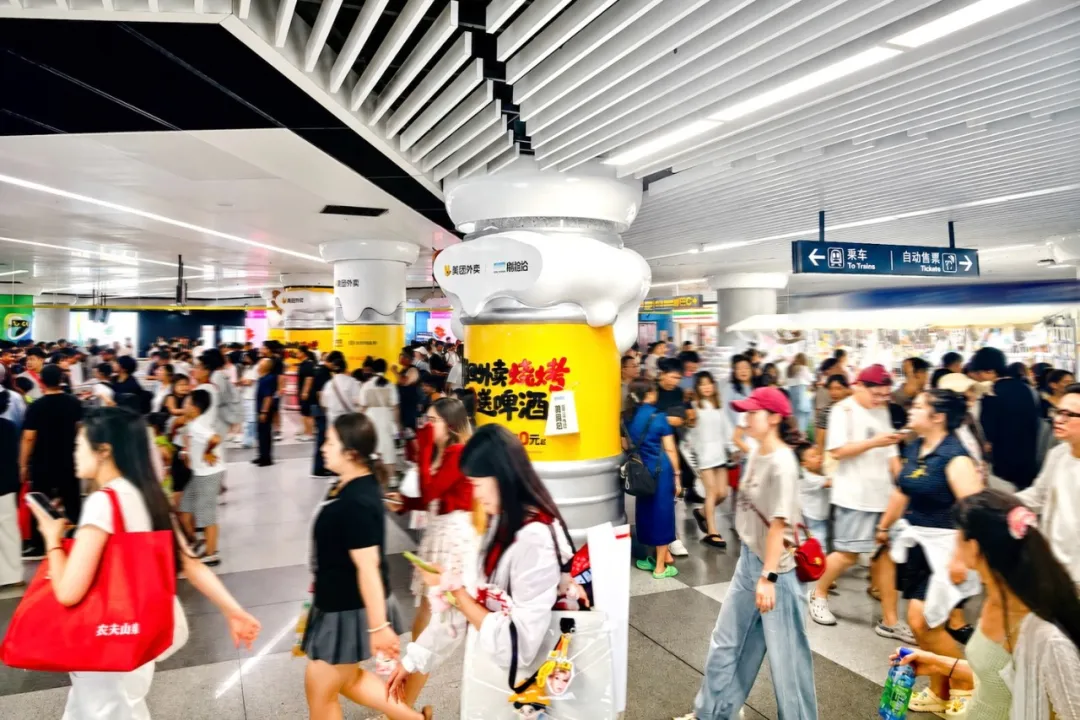
One of the more eye-catching elements of Meituan’s campaign was a series of giant beer barrels installed at Qingdao’s May Fourth Square metro station, complete with oversized barbecue skewers sticking out of them.
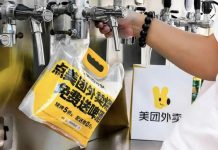
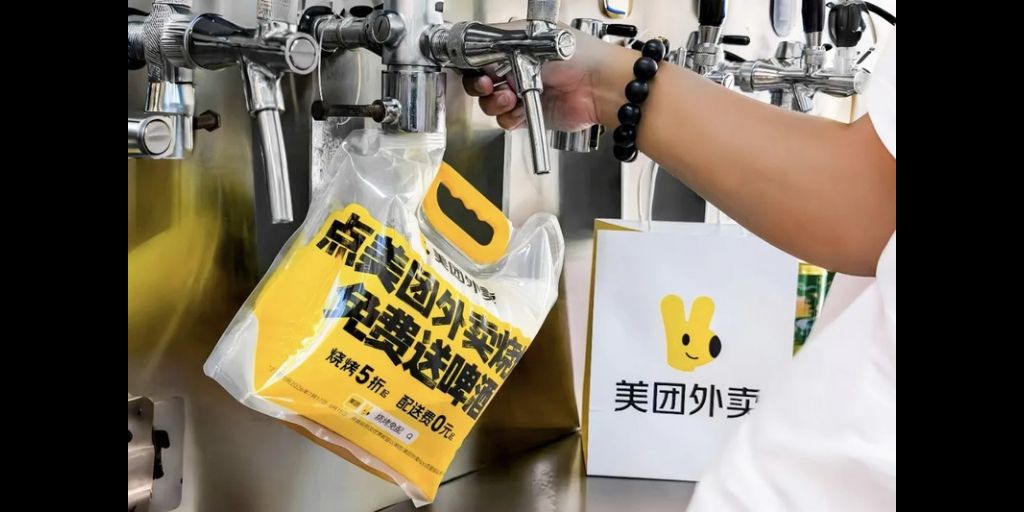
These were inspired by Qingdao’s distinctive tradition of buying fresh draft beer in plastic bags or carrying it home in small containers. Beer sold this way is a familiar part of local street life, and the campaign borrowed that imagery to connect with the city’s identity.
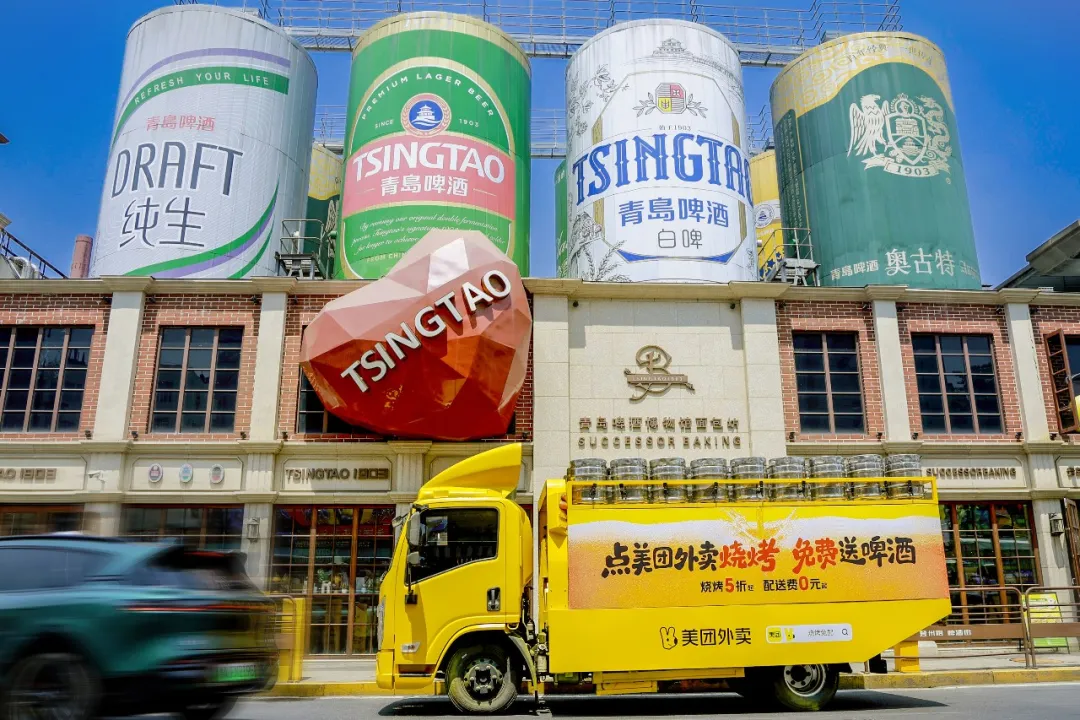
Meituan also deployed promotional vehicles along routes connecting Qingdao railway station, popular tourist areas, residential neighbourhoods and the Laoshan beer festival venue.
During the day, the vehicles reached tourists visiting the city’s attractions. In the evenings, they moved through neighbourhoods where residents might be considering what to have for dinner or a late-night snack.
The installations were supported by metro and outdoor advertising, alongside content distributed through Douyin, Kuaishou and Xiaohongshu.
From a creative perspective, the campaign was amusing enough. But the more interesting part was what Meituan wanted people to do after seeing the giant beer barrels.
The festival was about beer. Meituan wanted to sell barbecue.
Beer and barbecue are a natural pairing in China, particularly during the summer. Qingdao’s beer festival gave Meituan a ready-made reason to remind consumers of that combination.
The campaign promoted barbecue discounts, free-delivery offers and, in some cases, complimentary beer with barbecue orders.
Consumers were encouraged to open Meituan or its food delivery app and search for 烧烤免配 – roughly, “barbecue with free delivery” – to access the promotions.
This is where the campaign became more interesting than a conventional outdoor advertising exercise.
Meituan could work backwards from the transaction it wanted to generate. Beer provided the occasion and the cultural association, while barbecue was the category that local restaurants could prepare, package and deliver.
The company also worked with participating restaurants to create barbecue-and-beer bundles that consumers could order directly. Some merchants received customised packaging and promotional materials, extending the campaign into the actual delivery experience.
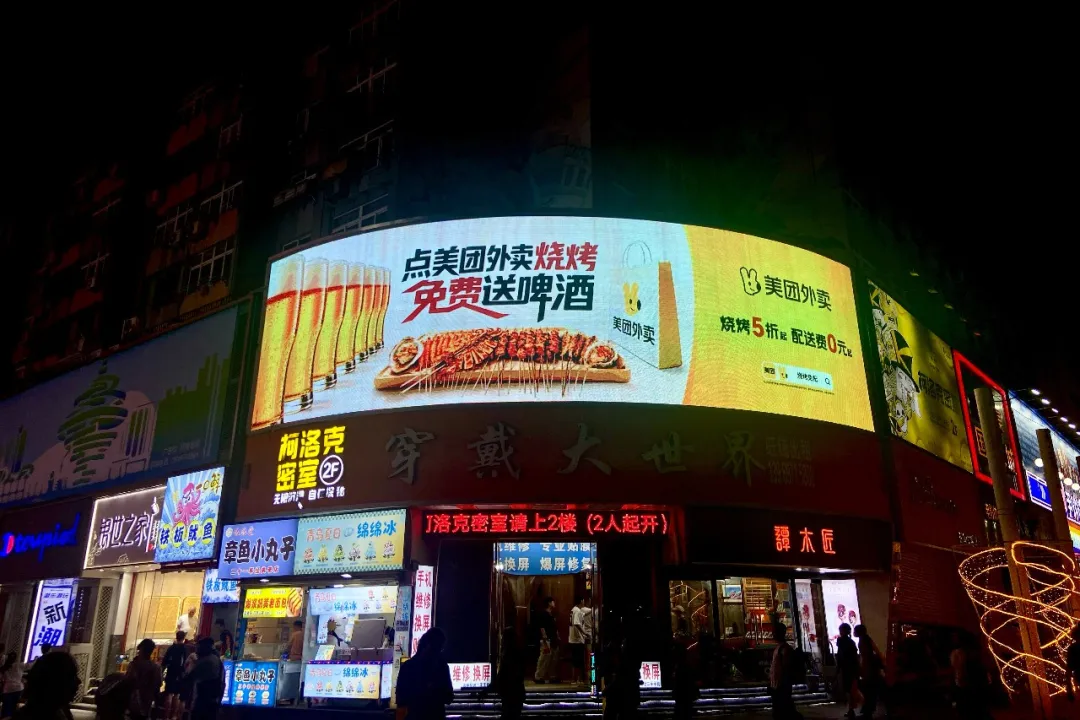
Consider the journey from a consumer’s perspective.
Someone sees a giant beer barrel at the metro station, perhaps comes across a related video on Douyin later, and decides that barbecue sounds like a good idea for dinner. Rather than having to remember a particular restaurant or offer, they can search for the campaign phrase on Meituan and find participating merchants nearby.
The advertising, the promotion, the restaurant supply and the delivery service are all connected through the same platform.
Of course, this doesn’t mean every person who saw the campaign ended up placing an order. The published campaign account describes merchant interest and consumer engagement, but does not disclose enough transaction data to determine its incremental sales impact or return on marketing spend.
Nevertheless, the mechanics are worth understanding.
What makes platform marketing different?
For a beer brand, sponsoring a beer festival makes obvious sense. It provides opportunities for sampling, brand exposure and direct sales inside the venue.
For other consumer brands, the festival can be an occasion to reach a large audience and build associations with a particular lifestyle or occasion.
Meituan has another set of possibilities.
It already has relationships with thousands of local restaurants, an app that consumers use to find food, mechanisms for distributing promotions, and a delivery network to fulfil orders.
This means it can use a festival to stimulate demand for a category across the city, including among people who have little intention of attending the event itself.
The distinction matters because Meituan can connect its marketing activities to transactions much more directly than many conventional advertisers can.
A restaurant promotion doesn’t necessarily need to persuade consumers to visit a specific location. The platform can show them nearby participating restaurants, match them with relevant offers, and arrange delivery.
It can also coordinate both sides of the marketplace. Consumer-facing promotions help generate orders, while merchant partnerships ensure there are suitable products available when consumers decide to buy.
The campaign therefore depends on operational capabilities that Meituan has spent years building, well beyond the marketing team’s creativity.
There is also a broader point here about how Chinese internet platforms approach marketing.
For these platforms, advertising and transactions are often closely integrated. An outdoor campaign can direct consumers to a search term, a livestream can link directly to a product, and a promotion can be coordinated with merchant supply and fulfilment capacity.
The resulting activities may look like conventional brand marketing from the outside, but the mechanics behind them can be quite different.
In Qingdao, Meituan used a major festival to create an occasion for food delivery, drawing on local culture, participating merchants and its existing delivery infrastructure.
The beer festival ended on 15 August. Whether the campaign generated lasting changes in consumer behaviour remains unclear.
But the execution illustrates something interesting about the business Meituan is in: when a city celebrates, the platform has ways to participate in the spending without necessarily participating in the celebration itself.