





Indonesia may not be banning Chinese ecommerce – but it is clearly sending a stronger message.
On Saturday, Finance Minister Purbaya Yudhi Sadewa voiced their concern about the growing dominance of Chinese products and platforms in Indonesia’s digital commerce ecosystem. He said he had received numerous public complaints regarding the increasing prevalence of low-cost imported goods from China across local platforms.
“If this continues without intervention, it would be as if we are handing over our domestic market directly to China,” Purbaya was quoted as saying.
He also said that the government is now formulating strategies to ensure a more balanced digital trade ecosystem, such that “domestic products can compete and regain prominence in our marketplaces”.
What signal does this send – and should we take it seriously?
A few thoughts:
1. Indonesia is a vast country with a lot of diverse interests and undercurrents – we all know that. The noise and complaints inside Indonesia about TikTok Shop’s control of Tokopedia has been going on and off for a while. This is the first time a senior ranking government minister is directly addressing this through a statement;
2. This needs to be taken seriously. In 2023, Indonesia’s then Minister of Cooperatives and SMEs Teten Masduki told the parliament that Indonesia should ban TikTok Shop. Nobody heeded much attention as Teten’s ministry had little regulatory authority over ecommerce. A few weeks later, the Indonesian government pushed through a ban of TikTok Shop, catching TikTok-parent ByteDance completely off guard – people understood that Teten was there to send a signal;
3. ByteDance was able to find a workaround within weeks through a negotiated takeover of money-losing Tokopedia for its parent GoTo Group, turning many adversaries into advocates. TikTok Shop must have learnt a lot from this episode;
4. Shopee long understood the need to navigate Indonesian complexities, trusting local management and taking active steps to address policy makers’ concerns in a very timely way: training of ecommerce skills for the local ecosystem, helping MSMEs export, and restricting cross border. Since the 2023 purchase of Tokopedia, TikTok Shop has learnt some of these navigational tactics as well;
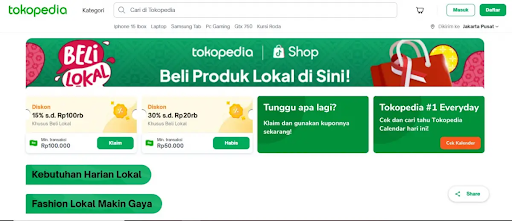
5. We expect close engagement and some swift actions by TikTok Shop to address government concerns, in order to not repeat a 2023 debacle. Although now the climate is different now – with a new administration and a more uncertain global environment – the room for misreading policy signals may be smaller than before;
6. TikTok Shop is no longer small, it is structurally competing against Shopee in Indonesia’s fast changing ecommerce landscape.In 2024, we estimated market share at 46% for Shopee vs 11% for TikTok Shop. Since then, TikTok Shop has more than doubled its GMV. (Momentum Works Ecommerce in Southeast Asia 2026, will be released in the coming weeks);
7. With Tokopedia – still preferred for many premium, branded goods – TikTok Shop’s market share (end Q1 2026) is now closing in on Shopee;
8. Across multiple countries in the region, there are attempts to regulate, control and tax ecommerce and cross border ecommerce. Thailand started imposing VAT on small value cross border goods bought online; Vietnam’s new ecommerce law, coming to effect on 1 July this year, puts the burden of verification and taxation of sellers (including cross border) to the platforms.
As a result of direct government objections, cross border B2C ecommerce into Indonesia is now very small relative to the country’s size.
However, even today, an estimated 70–80% of the goods sold on Indonesian ecommerce platforms are manufactured in China.
Taxation and regulations may deter opportunistic cross-border flows – but they do not change the underlying structure of supply.
The bigger question is not whether Indonesia can slow down foreign platforms.
It is whether it can build a domestic supply ecosystem strong enough to compete – or whether global supply chains will simply adapt and re-enter in different forms.