


The scale and the business engine behind 20,000+ stores
This article is Part 4 of the eight-part chronicle on Luckin Coffee’s rise, collapse, and reinvention. It is the excerpt of a sharing by Luckin Coffee CEO Guo Jinyi in 2024, translated into English here.
You can also read the other parts of the series here: Part 1, Part 2, Part 3, Part 5, Part 6, Part 7, Part 8

Over 300 Million Customers and 22,000+ Stores
In July 2024, Luckin Coffee opened its 20,000th store in Beijing.
As of today, the total number of Luckin stores has surpassed 22,000.
From June last year to this July, we opened 10,000 new stores, which resulted in Luckin experiencing its first loss in three years—a loss of 100 million RMB in January this year.
However, our original plan was to open 3,000 stores. So why did we end up opening 8,000 more than planned?
At the time, we assessed that customer demand existed, the market had capacity, and that we needed to quickly widen the gap between us and competing brands to establish a scale advantage, which led to our rapid expansion.
However, after experiencing a loss in Q1, we swiftly adjusted our strategy and achieved an operating profit of 1.5 billion RMB in Q3.
How did Luckin adjust so quickly?
The key is not just in tactical adjustments but in the fact that throughout this rapid expansion, from our controlling shareholders to the board of directors and the management team, there were no internal conflicts.
Luckin’s corporate governance is what truly deserves attention. Understanding how we turned a Q1 loss of 100 million RMB into a Q3 profit of 1.5 billion RMB is less important—without addressing the fundamental issues, tactical moves won’t be effective.
Store Formats Are Becoming More Diverse
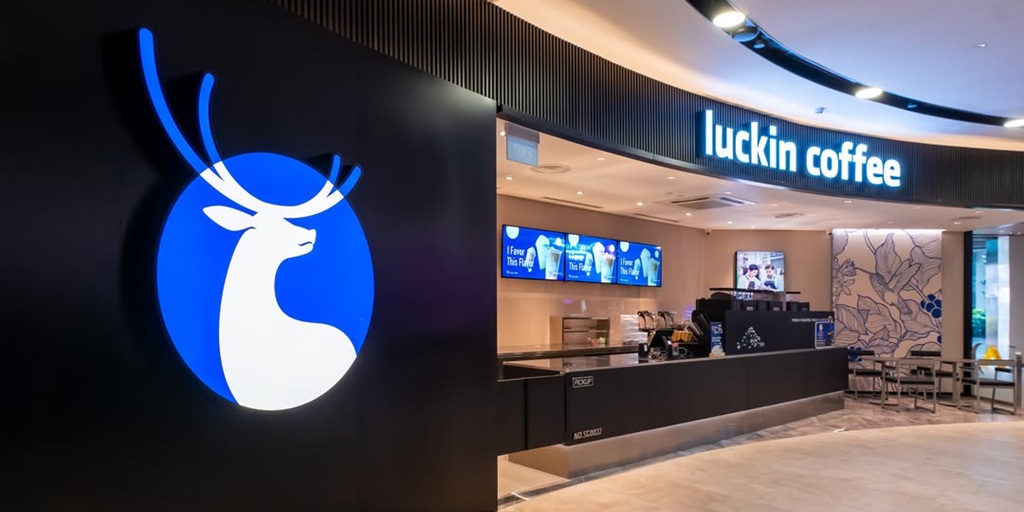
Luckin’s store formats are becoming increasingly varied, including Luckin Enjoy (leisure stores), pickup stores, and flagship stores.
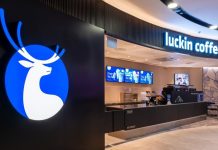
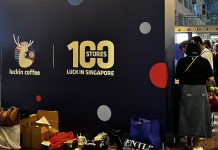
We now have 47 stores in Singapore, making Luckin one of the top three coffee brands in the country. The stores in Singapore are fully self-operated—we registered our own company, leased our own locations, and hired our own employees to provide services.
Why are we operating stores directly in Singapore?
Because it is likely that in other Southeast Asian countries, we will adopt a brand licensing (franchise) model.
The essence of franchising is that the franchisor must first be profitable before leading franchisees to success. If we ourselves cannot make a profit, how can we expect franchisees to do so? That would be irresponsible.
Thus, Singapore serves as a critical testing ground for building our brand, refining our operational systems, and understanding overseas business models.
Our first stores in Malaysia are set to open in Q1 next year. We are also exploring opportunities in the U.S. market.
However, we are not in a rush to expand overseas.
In the global coffee market, the Chinese market is an “easy money” market, while the overseas market is a “fierce competition” market.
Coffee consumption in China is far from maturity—not even at an initial stage of maturity—it is still experiencing continuous, unilateral growth.
In contrast, many overseas markets are already mature consumption markets. In these regions, without structural changes in costs such as rent, labor, and raw materials, and without optimizing customer experience, product quality, service processes, and brand perception, we would struggle to succeed.
The overseas markets exist, but we must have a clear strategy and well-honed execution before entering them.
For now, China remains our home base.
Continuous Investment in the Supply Chain System
When it comes to coffee products in China, the biggest challenge in popularizing coffee consumption is that many people find it unpalatable.
I personally enjoy drinking espresso and Americano, but for people who don’t usually drink coffee, it tastes no different from traditional Chinese herbal medicine. After drinking it, the caffeine can irritate the stomach, potentially causing discomfort, which might deter consumers from trying it again.
Our goal is to strike a balance—to allow consumers to experience the pleasure that caffeine brings to the body while also providing the familiar taste and texture of milk tea.
We have been continuously working toward this balance.
As of today, the proportion of Chinese consumers who can truly understand and differentiate good coffee is still quite low. However, we believe that one day, more people will develop an appreciation for coffee, which is why we are committed to continuous investment in coffee craftsmanship.
Just recently, we signed our largest procurement deal in Luckin’s history—a five-year agreement to purchase 240,000 tons of coffee beans from Brazil.
Brazil is the world’s largest coffee-producing region, producing 3 million tons of coffee beans annually, while the global production is 10 million tons. China, by comparison, produces only 100,000 tons but consumes 200,000 tons.
When Brazil’s Vice President Geraldo Alckmin visited our store in Beijing, we discussed how Chinese consumers currently drink only 10 cups of coffee per person per year. With confidence and patience in cultivating the market, this number could potentially grow to 100-200 cups per year over the next 10 to 20 years.
Ongoing Investment in the Supply Chain
- Luckin accounts for 40% of China’s imported coffee beans and 60% of imported Brazilian coffee beans.
- Our coffee machines, sourced from Swiss brand Schaerer, make up 49% of imported machines in China.
- We purchase 59% of the imported coconut milk in the B2B market.
- For orange juice, Luckin has become the largest distributor, holding 50% of the B2B market. Every day, we sell 500,000 to 600,000 cups of our popular Orange C Americano, and our procurement volume continues to expand.
Focusing solely on coffee, we are investing across the coffee-related upstream and downstream supply chain.
To date, Luckin has built and operationalized three factories.
During the coffee processing stages, such as natural drying and wet processing, a large amount of wastewater is produced and discharged into rivers. To address this, we established a benchmark wastewater treatment plant in Baoshan, Yunnan, which is also a fresh coffee fruit processing facility.
Unlike Brazil, where large-scale coffee plantations are possible, Yunnan must take a premium, specialty coffee approach. Our goal with this factory is twofold:
- Reduce pollution from the coffee production process.
- Produce high-quality Yunnan specialty coffee beans that can compete in global competitions, fetch premium prices, and benefit local coffee farmers.
In addition, we have two operational roasting plants that roast raw coffee beans into ready-to-use roasted coffee for our stores:
- One in Fujian, with a capacity of 15,000 tons.
- One in Kunshan, with a capacity of 30,000 tons.
Two more factories are already in the pipeline:
- The Qingdao plant is under construction.
- The Xiamen plant is set to begin construction in the first half of next year.
- Each will have a capacity of 55,000 tons.
Once these four factories are completed, Luckin will have a total roasting capacity of approximately 150,000 tons.
To put this into perspective, Japan imports 400,000 tons of coffee beans annually, with about 150,000 tons used in retail stores. In contrast, China currently imports only 150,000 tons per year.
With the market growing rapidly, we must proactively expand our coffee roasting capacity ahead of demand.
Luckin’s scale is so vast that any disruption in the supply chain could be catastrophic, making it impossible to recover or repair. Therefore, supply chain resilience is our top priority.
Major Events in the Marketing Industry
Each year, we launch over 100 new SKUs, and this year alone, we have collaborated on more than 30 brand partnerships.
What we focus on is not just blockbuster products or large-scale marketing campaigns, but creating major industry events.
How does Luckin manage to roll out 100 new products successfully? What is the key to making this happen?
- Brand Awareness Must Explode – Driving Traffic is Essential
- The brand must generate significant buzz and excitement to attract a large customer base.
- The Product Must Taste Good
- If the product is not enjoyable, the more customers we attract, the more complaints we will receive. Quality is paramount.
- Supply Chain Preparedness is Critical
- Key ingredients such as coffee beans, milk, coconut milk, and orange juice must be stocked at least a year in advance.
- If a product becomes a sudden hit, we must be able to restock quickly while maintaining cost control and supply chain stability.
The most critical factor:
Our 120,000 store employees must be capable of consistently preparing each cup, even with the frequent introduction of over 100 SKUs.
When switching between products, employees need to remember the details. If we overestimate demand, product transitions may result in significant waste.
I frequently ask senior executives to visit stores regularly and experience the process firsthand—“Can you remember everything with such a complex workflow?”
Sometimes, without systematic innovation, it would be nearly impossible for employees to manage and remember all the different products effectively.
[Next part: The power of the brand]
You can also make reference to the following Momentum Works reports and articles for more:
- Inside Luckin Coffee
- Coffee in Southeast Asia
- Chinese F&B in Southeast Asia
- Quick Commerce in China 2025
- Food delivery in Southeast Asia 5.0