



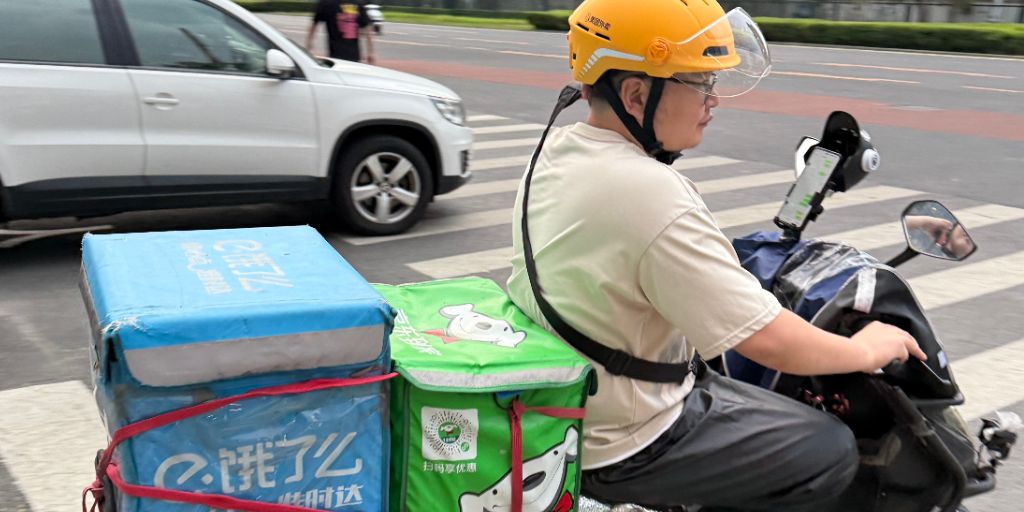
Yesterday (2 July 2025), Alibaba’s Taobao announced a bold move: it will inject an additional RMB 50 billion (US$7 billion) over the next year into subsidies for consumers and businesses on its food delivery and quick commerce platform, Taobao Shangou (translated as “instant retail” or “instashopping”).
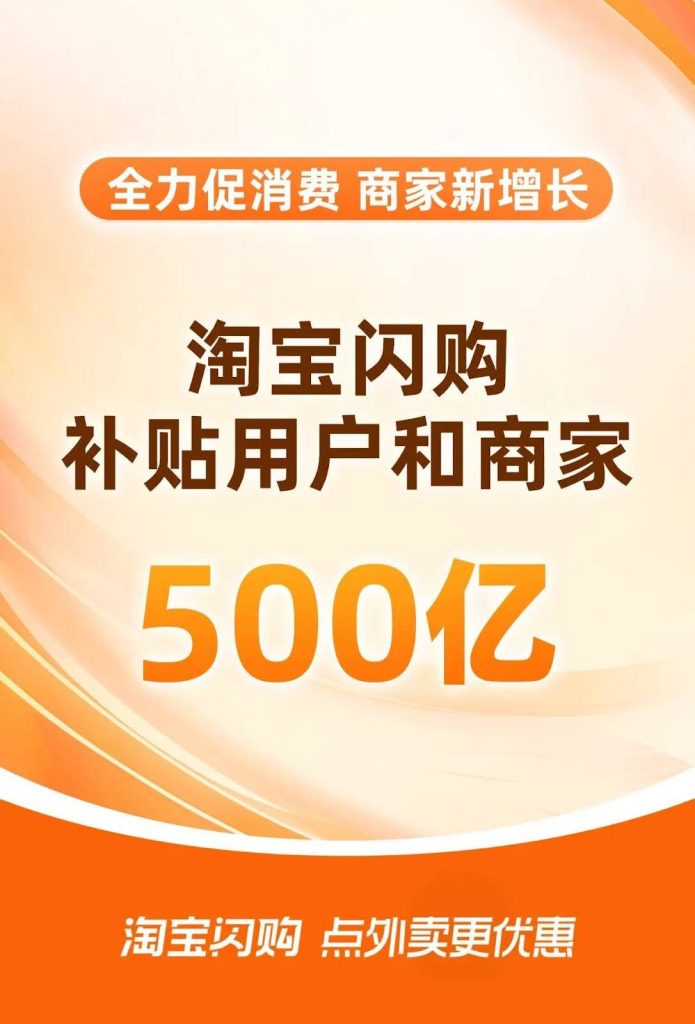
We have translated the official announcement into English here:
Starting July 2, Taobao Instashopping (Taobao Shangou) will directly subsidise a total of RMB 50 billion to consumers and merchants over the next 12 months.
Leveraging technological and business model innovations, Taobao Shangou is building an efficient and collaborative consumer platform. Just two months after launch, daily orders have exceeded 60 million, with massive online traffic also driving offline consumption.
By offering large-value coupons, free-order cards, and officially subsidized fixed-price products, the platform brings users more affordable, convenient services and experiences – further stimulating consumer spending.
At the same time, store subsidies, product subsidies, delivery subsidies, and commission waivers or reductions are being introduced to help merchants grow their business.
So to sum it up: Taobao Shangou – ordering food delivery just got cheaper!
A few thoughts on what this means:
- Taobao is already better positioned than JD.com in quick commerce.
It has nearly 400 million daily active users, strong brand relationships via Tmall, and a nationwide on-demand delivery network through Ele.me (Alibaba’s food delivery arm). - Ele.me is being brought closer to Taobao’s core leadership.
In a recent reorganisation, Ele.me’s CEO now reports to Jiang Fan, who oversees Alibaba’s China e-commerce business. This streamlines command and control across Alibaba’s quick commerce push. - Alibaba sees Meituan as a serious threat.
Meituan, best known for food delivery, is rapidly moving into general merchandise and quick commerce. Many brands now fulfil 30–45 minute deliveries from their brand stores via Meituan. If prices are equal across platforms, customers may prefer instant delivery over next-day e-commerce. - Alibaba can afford this arms race.
In its last fiscal year, Alibaba generated RMB 158.8 billion in free cash flow and RMB 114.5 billion in net profit — about three times Meituan’s free cash flow and profit. In addition, Alibaba also has access to a cash cow through its shareholding of Ant Group; - JD.com is in a tough spot.
With Alibaba going on the offensive and Meituan defending aggressively, JD’s quick commerce business may struggle to keep up. Its subsidy budget could be the first to dry up. - Quick commerce in China may become commoditised.
In urban areas, every platform may soon offer similar products from the same types of stores — turning the game into one of operational efficiency, rather than differentiation. - Meituan has strengths in execution.
It has proven to be more data-driven, operationally focused, and experienced in managing frontline logistics — giving it an edge in this efficiency-driven competition. Also, Meituan founder has vowed to “take all necessary measures to win this war”; - Could this domestic battle slow Meituan’s overseas ambitions?
With expansion plans in Brazil and the Middle East, will fighting on home turf distract Meituan or drain its resources?