



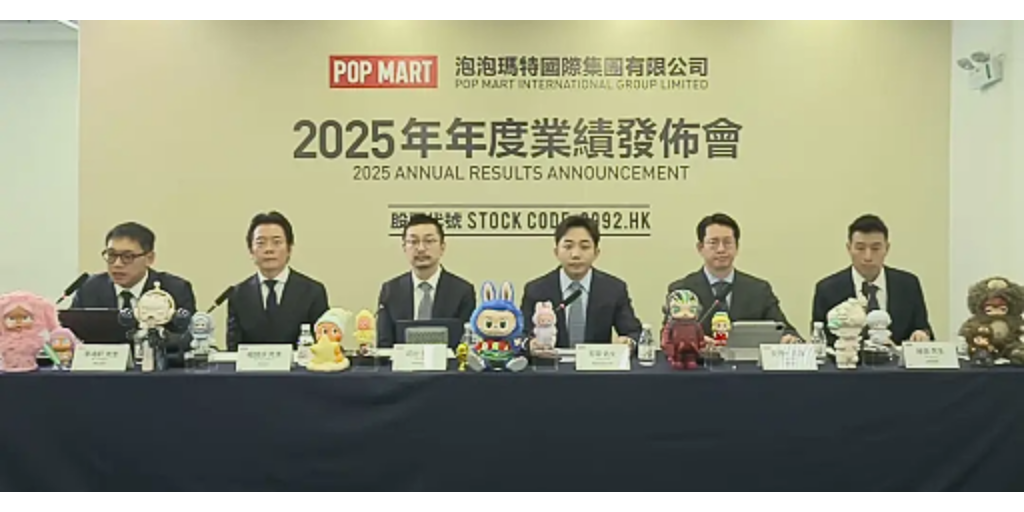
Investors are worried about Pop Mart, the Chinese toy retailer behind the Labubu dolls. Its share price dropped more than 30% after the company announced its 2025 earnings last month.
This was despite exceptionally strong results – revenue grew 184.7%, while profit increased 308.8%.
The concern is straightforward: as Labubu’s popularity fades, does Pop Mart have another hit to sustain its momentum? Or will it go the way of many one-time successes?
Monsters (the series that includes Labubu) contributed 38.1% of Pop Mart’s 2025 revenue.
Most of these concerns are supply-side: whether Pop Mart can continue to create successful IPs.
But from the demand side, the question looks different.
Will consumers continue to seek emotional value from affordable, trendy toys? Will that demand grow, decline, or simply shift?
And more importantly – will that demand continue to be captured by Pop Mart, or by whoever is better at reaching and converting consumers?
Wang Ning, founder of Pop Mart, described the company as “a novice race car driver abruptly thrust into an F1 competition”, now needing to “enter the pit stop, refuel and change tires”.
Pop Mart is an interesting case study for brands and retailers today – in an environment where social media, discovery, and ecommerce are increasingly intertwined.
We are seeing similar patterns across Southeast Asia. Demand is shaped earlier through content and discovery. Conversion happens within platforms. Fulfilment determines experience – and is amplified through social media.
In this system, a strong product is not enough. Existing distribution can become a constraint.