


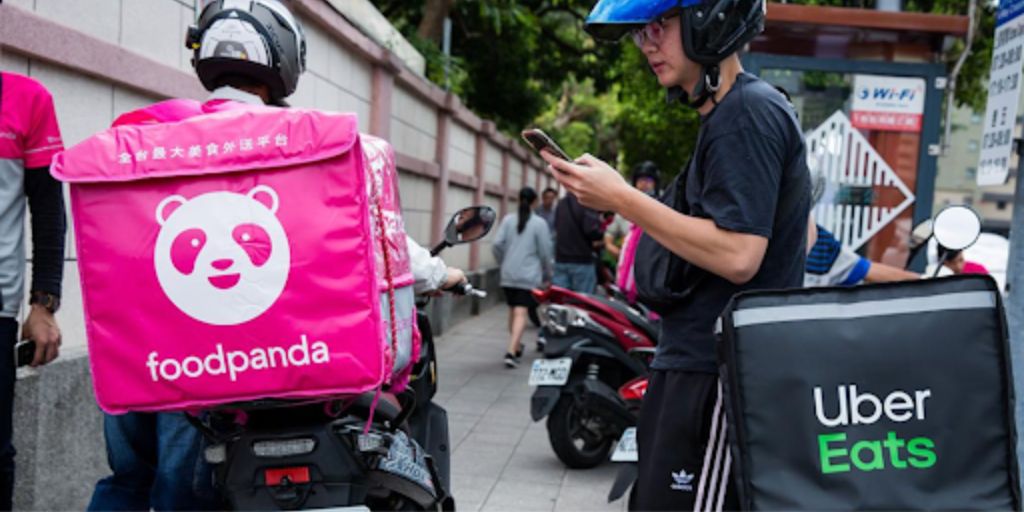
On Monday (23 Mar), Grab announced that it will acquire Delivery Hero’s Foodpanda Taiwan business for US$600 million, marking its first expansion of its core food delivery business beyond Southeast Asia.
Some thoughts:
1. The price is significantly lower than what Uber had previously agreed to pay for Foodpanda Taiwan business.
Back in 2024, Delivery Hero had reached an agreement with Uber to sell the Taiwan business for US$950 million. As part of that deal, Uber would also invest US$300 million in Delivery Hero’s holding company.
However, at the time, none of our industry contacts in Taiwan believed the deal would receive regulatory approval. Then, as expected, the Fair Trade Commission blocked the transaction on Christmas Day in 2024.
2. Taiwan is arguably the best asset in Delivery Hero’s Foodpanda portfolio. Foodpanda in Taiwan holds a slight market share lead over Uber Eats (our estimate is between 55%/45% and 52%/48%), and is profitable. We estimated that in 2024, revenue per order was around 36–38% of GMV, with gross margins of 6–7%;
3. Momentum Works has long argued that Delivery Hero should divest its Foodpanda operations in Southeast and South Asia and focus on Taiwan. However, the issue has probably not been willingness to sell – but the difficulty of achieving a good price. Previous discussions with Grab on selling the Southeast Asia business did not materialize;
4. What Delivery Hero lacks most right now is cash. The company has historically relied on convertible bonds to fund acquisitions and expansion.
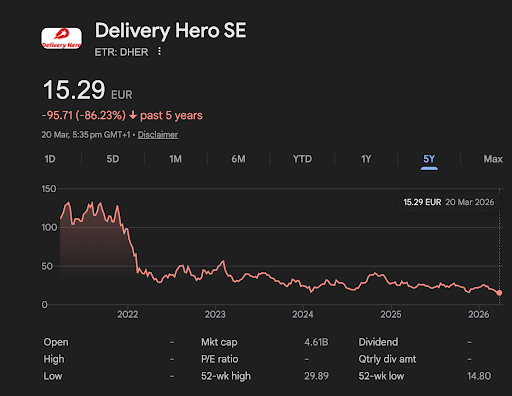
But with its share price down nearly 90% over the past five years, and its core profit-generating markets – Korea, Saudi Arabia, and the UAE – facing both competitive and macro challenges, its room for maneuver is increasingly limited.
Earlier this month, Aspex Management, a Hong Kong-based institutional investor holding more than 9% of DeliveryHero share, publicly urged CEO Niklas Östberg to either deliver a turnaround or step down.
 5. Beyond Taiwan, Korean media recently reported that Delivery Hero has been exploring a potential sale of its Korean platform Baemin since late last year. Grab and Meituan were both mentioned as potential buyers, although the reported asking price of US$4.9–5.6 billion would be significantly higher than the US$600 million paid for Taiwan;
6. For Grab, this deal represents a long-awaited opportunity to expand beyond Southeast Asia at a relatively reasonable price.
Taiwan’s economy is more than half the size of Indonesia’s with 8x GDP per capita. With an annual food delivery market of around US$3.6 billion, gross profit of more than US$0.6 per order, strong supply, dense urban consumer demand & strong purchasing power, there is meaningful upside beyond just delivery profitability.
7. It is also a proven profitability model which Grab is acquiring. Shopee being Taiwan’s largest ecommerce platform proves the operational synergies a Singapore-based tech platform can build in Taiwan.
8. Interestingly, Grab and Uber will be back in competition in Taiwan. While Uber remains Grab’s largest shareholder (~13%), Grab CEO Anthony Tan has majority voting rights and we expect the two companies to compete. The first challenge will be to address the upcoming Delivery Worker Act. The other potential challenge will be geopolitical.